17
17

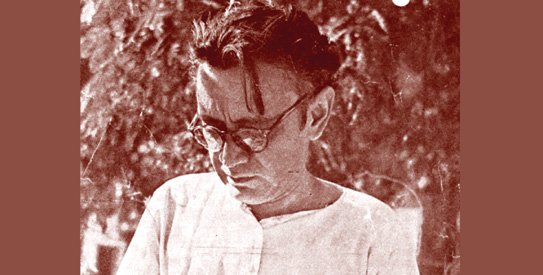
Shock and disbelief! That is what I felt when I heard from a very responsible Pakistani publisher, back from a recent visit to India, that the works of Sa’adat Hasan Manto are being published in Pakistan, edited and censored. It took some time before I could accept that the guardians of morality and piety in our homeland could easily do it.
When Manto was alive, living in Lahore, eking out a living with his pen, court cases for obscenity were filed against him. To save him from being sentenced to years of hard labour in jail, his friends had to declare him insane. He was sent to a mental hospital where he spent some time before returning to the outside world, the bigger mad-house as he called it, with his masterpiece, “Toba Tek Singh”, a short story that is the pride of Urdu fiction, a literary marvel so subtle, moving and hilarious that it remains unsurpassed in its finesse to this day. One wonders and wonders how he striked upon such a brilliant concept!
What was Toba Tek Singh? In the wake of the partitioning of the subcontinent, heart-rending bloodshed and mayhem reigned everywhere. There was an exchange of population as millions of Muslims, Hindus and Sikhs left for territories which were now Pakistan and India, assigned to them according to their respective religions. There was a transfer of assets and perhaps the two young states exchanged Hindu, Sikh and Muslim prisoners as well.
Setting his story in a pagal khana (mental asylum), Manto envisions an exchange of Hindu, Sikh and Muslim lunatics. Having heard of what was happening in the outside world, some inmates of the mental asylum adopt the identities of Congress and Muslim League leaders.
(One of them thinks he is Master Tara Singh.) There is much sloganeering of “long live” and “down with” enlivening the mental hospital. One of these inmates is known as Toba Tek Singh because he belongs to this small town in Punjab and in what he mumbles incoherently, only the words Toba Tek Singh can be deciphered. “You have to go to India,” he is told. “Where is Toba Tek Singh?” he asks. No one is sure, but someone tells him that it has come to Pakistan, or perhaps gone to India. How could Toba Tek Singh come and go, and not be where it has been since eternity? His feeble, insane mind fails to accept the truth of the situation. He refuses to go anywhere and while being pushed and pulled by the Indian and Pakistani Border Security Forces, falls dead on the border dividing the two countries.
Manto was permanently and most virulently attacked for “obscenity” all his life. He was labeled a “sex maniac” accused of wallowing in filth and dirt. Let us, for our enlightenment, look at one of his lesser known stories, “Nangi Awazain” (Naked Sounds). The main protagonists are two brothers, Bholo and Gama. (Manto named them after two well-known wrestlers perhaps to leave us in no doubt of their ‘manliness’.) They live in an over-crowded hovel, a block of tiny flats in a slum in Lahore. When Gama gets married, the voices and sounds in the dark so inhibit him that he is unable to consummate his marriage. This incapacity becomes known to others and his wife walks out after a few days, leaving him distraught and nearly insane. Is this story about sex? No. As any reader could discern, it is about the human need for privacy of which our overwhelming urban population is deprived in over-crowded quarters. Manto perceived of sexuality as energy, a life force delicately interwoven in the human persona.
This enraged his detractors, our moral brigade, because for them sex is shameful and dirty, something to indulge in stealthily in the dark recesses of the mind, hence the very word tied their innards into millions of knots. Sex, for them, is also the dirtiest of invectives, a God-gifted power to the male of the species with which they can insult, hurt and humiliate their adversaries most devastatingly. To suffer the indignity of living his brief life among such ideologues was the tragic fate of one of the greatest writers in the world.
In “Boo” (Smell), another story for which Manto was tried in the courts for obscenity, he tells us about the wedding night of a well-to-do bridegroom and the daughter of a rich family. The bride is smothered in gold and expensive French perfumes, and at this moment the bridegroom remembers a poor Ghatan, a working-class Marathi woman whose soiled blouse and the flesh underneath exuded the scent of rain-soaked earth. For Manto, the sexual act was co-mingled with the elements, with water and earth and the winds. The story exposes how gold and brocades and all the riches we aspire for suffocate the beauty and sanctity of desire and union, which was meant by nature to be like the “scent of rain-soaked earth”.
“Thanda Gosht,” (Cold Flesh), the story for which Manto was going to be sentenced to hard labour in prison, tells the story of a marauder in the midst of communal slaughter, plunder and rape. In an already plundered, empty house, he comes across an unconscious young woman of the targeted community and tries to rape her, only to realise that she is dead. The recognition that he was trying to rape the corpse of a woman so horrifies him that it renders him impotent forever. The real human and social denotations of communal bloodshed and violence with all its horror, its violation of decency and outrage of human values becomes glaringly manifest in the last few lines of this unforgettable story. Since the protagonist was shown as a Sikh, beside obscenity, Manto was also accused of ridiculing the honour of Muslims.
“Do we have no sense of honour that we let Sikhs violate the corpses of our women?” his prosecutors said, realising little what lust for bloodshed and rape of other communities lurked behind these apparently morally outraged accusations.
So Manto is gone — Manto, Sa’adat Hasan. Loving father of his two daughters and adoring husband of Safya, who figured in many of his sketches, who wrote about pimps and prostitutes, the scum of the earth and their inviolable human dignity despite the suffering and insults heaped upon them by society. He also wrote lovingly about Muhammad Ali Jinnah and Iqbal. A certificate of patriotism may be issued to him. Let us simply ignore and not dit out what he writes for Allama Iqbal:
“Iqbal had prayed to God, ‘mera noor-i-baseerat a’am kardey’ (let my enlightened vision become common to all). But when I see your name linked to soaps and hair oils and laundromats, I have a sneaking suspicion that your enlightened vision, dear poet, is likely to flounder in the dark alleys of ignorance and narrow-minded blindness for a long time.”
Sa’adat Hasan Manto was born on May 11, 1912, in Ludhyana district. Educated in Amritsar, he began writing at an early age. His literary career began with extensive translations of contemporary Russian literature. His first collection of short stories was published in 1936. He moved to Bombay where, to make a living, he began to write for radio and film and edited film magazines.
In 1948, Manto moved to and settled in Lahore and died there in 1955. Most of his great short stories reflect these turbulent times. He left a large body of work, containing the stories of his delightful sojourn in the Bombay film industry, innumerable sketches of celebrities and very ordinary people, Hindus, Muslims, Sikhs, Christians, Parsis and Jews, the entire web of the vibrant society of this great metropolis. It is a wonderful experience to read his collected works. Just make sure it is a Indian pirated edition. You may then get the original, uncensored text.
The writer is a poet.