0
0

KARACHI, Dec 31: The Karachiites suffered another day of transport problem with few buses, minibuses and coaches on Saturday as transporters kept their vehicles off the road following a strike they jointly observed with the owners of CNG stations, affecting almost every segment of daily life.
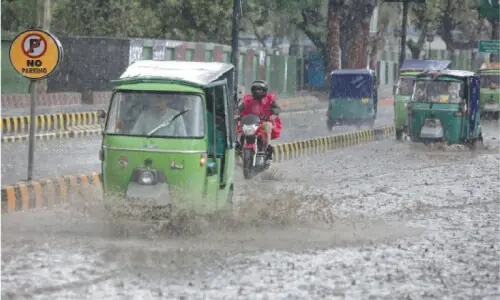
The protest was called against CNG loadshedding, which forced the CNG stations to remain closed at least twice a week and left commuters — students, workers and members of almost every class of society — stranded on roads. Large crowds were seen at bus stops, and people paid much higher fare to taxicabs and auto-rickshaws to reach their destinations.
Though the transporters have announced resuming regular operations, the Karachiites’ sufferings are likely to continue as they warned of ‘more protests on the same line’ next week.
“We have not yet decided the details of the next phase of our protest,” said Irshad Bukhari of the Karachi Transport Ittehad.
“It’s most likely that we evolve a joint strategy with the CNG station owners, who initially decided to keep the stations closed today and invited us to join them in the protest. But it’s definite that our protest will continue until the government comes up with a lasting solution to the problem.”
When asked about the number of buses that did come out on the roads on Saturday, he said almost 70 per cent of the public transport stayed off the road.
“Currently in Karachi alone we have 8,000 minibuses, 7,000 coaches and 3,000 buses running on roads,” he said. “Of the minibuses, 60 per cent have already converted to CNG. Similarly, 40 per cent of the coaches and the same number of buses are running with CNG as fuel. So you can imagine the number of buses which can’t be operated due to CNG stations’ closure.”
The transport strike also hit the regular business, as traders said they witnessed much smaller number of shoppers than usual.
“Transport is the core of any business,” said Ateeq Meer, a senior leader of the All Karachi Tajir Ittehad, a common platform of more than 150 city markets.
“It’s always a trickle down effect every time transporters call a strike. Naturally, the main markets or wholesale markets which are in the south district of the city are the worst affected. The markets in residential areas or the other districts of the city do not suffer as much.”