1
1

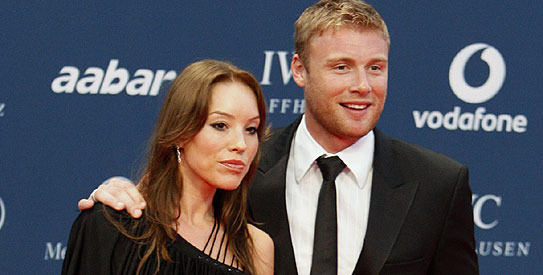
LONDON: Former England captain Andrew Flintoff briefly considered quitting the game after hitting an “all-time low” during the 2006-07 Ashes whitewash in Australia, the player told a BBC programme discussing the mental health of top sportsmen.
“I was supposed to be this character who was unflappable,” the 34-year-old said in “Hidden Side of Sport”, which will be screened on Jan. 11.
“I was having a drink with my dad on Christmas eve 2006 and as we made our way home I started crying my eyes out.
“I told him I'd tried my best but that I couldn't do it any more, I couldn't keep playing. We talked and I dusted myself down and carried on. But I was never the same player again.”
“I was captain of England and financially successful. Yet instead of walking out confidently to face Australia in one of the world's biggest sporting events, I didn't want to get out of bed, never mind face people.”
Flintoff's comments will strike a chord with former England team mate Marcus Trescothick, whose stress-related illness forced him to turn his back on the international game.
“On that (Australia) trip I was probably at an all-time low both personally and professionally. It was hard for me to speak about it to people, even in the dressing room,” Flintoff said.
Struggling with injuries, a patched-up Flintoff retired from tests in 2009 after helping England regain the Ashes following the 2006-07 drubbing, the first 5-0 Ashes series result for 86 years.
Flintoff also found it hard to deal with the unwanted headlines following his infamous pedalo incident during England's ill-fated 2007 World Cup campaign in the Caribbean.
He was stripped off the vice-captaincy after his late-night antics in which he had to be rescued on the water after a drinking session.
“I didn't read any of the press (about the pedalo incident) and I'm glad, because I was feeling so low that if I'd read that at the time it might have tipped me over the edge,” he said.
“The whole time I was on the field and throughout that World Cup all I could think about was that I wanted to retire.
“I didn't understand what was happening to me. I knew when I got back to my room I couldn't shut off, which is why I started having a drink. It got to the stage where I was probably drinking more than I should.”
The father-of-three finally retired from all forms of the game in September 2010, after a 79-test match career in which he scored 3,845 runs at an average of 31.77 and took 226 wickets.
He also scored 3,394 one-day international runs in 141 matches, taking 169 wickets.