0
0


ISLAMABAD: An emergency National Assembly session beginning on Thursday sets the stage for a parliamentary fightback by the government against a spate of judicial and other provocations which have heightened political tensions and fuelled speculations about a new standoff with the judiciary.
The PPP-led coalition government is likely to use the session to demonstrate its parliamentary strength and backing to its policies through a debate or a voted resolution as a counter to perceived moves to destabilise it before it completes its five-year term in March next year.
But that aim might have to wait until Friday because the first sitting of the session, due to begin at 6pm, is likely to be adjourned for the day without taking up its agenda to mourn the death of veteran politician and head of government-allied PML-F Pir Pagara after a prolonged illness and of a PPP member from Punjab, Mian Azeem Khan Daultana, in a road accident on Tuesday.
The immediate cause of calling the session two weeks ahead of schedule was a shock ruling on Tuesday by a five-judge Supreme Court bench casting aspersions on the conduct of even President Asif Ali Zardari and Prime Minister Yousuf Raza Gilani while recommending that a larger bench consider six options to penalise or spare government functionaries for alleged violation of an earlier court ruling for pursuing criminal cases dropped under a controversial and now-defunct National Reconciliation Ordinance of former president Pervez Musharraf.
But the debate could cover other issues as well, including another controversial case before the Supreme Court over alleged role of the government, or its former ambassador to the United States Husain Haqqani, in a memo critical of Pakistani military leadership sent last May to the then US military chief.
A new element and a possible fuel for the debate emerged on Wednesday when the army came out with a statement through its Inter-Services Public Relations (ISPR) directorate, taking exception to the prime minister’s reported remarks in an interview with a Chinese daily that replies submitted by army and Inter-Services Intelligence chiefs to the Supreme Court in the memo case were not routed through “competent authority”.
But despite early alarm bells sounded by some private television channels on Wednesday afternoon, the situation appeared defused by a subsequent government order sacking the defence secretary, Lt-Gen (retd) Nadeem Khalid Lodhi, for “gross misconduct” and creating “misunderstanding” between institutions and by the prime minister’s remarks to reporters later in the evening that the ISPR statement, which said the two statements had actually been routed through the defence ministry, had been issued after Chief of Army Staff Gen Ashfaq Parvez Kayani had consulted him.
For the house debate, the PPP appears to be quite worked up to take on judges over the NRO case — with assassinated former prime minister Benazir Bhutto as the main accused in money-laundering charges brought before a Swiss court in the 1990s by then PML-N government of Nawaz Sharif — with her late mother Begum Nusrat Bhutto and President Zardari as co-accused — and could recall the superior judiciary’s role in the past of backing military dictators and harbouring an alleged bias against the party.
In a recent interview with a private television channel, the president ruled out his party government writing to the Swiss court to reopen the cases, saying the PPP would not itself seek a “trial of the grave of the martyr” or of Nusrat Bhutto, while he himself enjoyed constitutional immunity from prosecution due to his presidential office.
The discussion in the lower house could indicate how the government plans to respond to the six options suggested by the Supreme Court bench, one of which threatens the possibility of a declaration to hit the prime minister’s qualification as parliament member — and a similar action against the president — but also proposes giving opportunity to the president to claim immunity as well as a judicial restraint to leave the decision to the Pakistani people or their elected representatives in parliament. Legal experts are expected to debate whether the views of a majority in parliament would meet the requirement of the last-cited option.
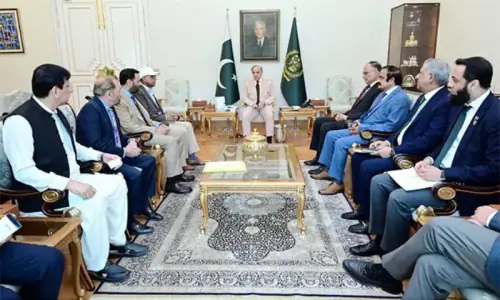
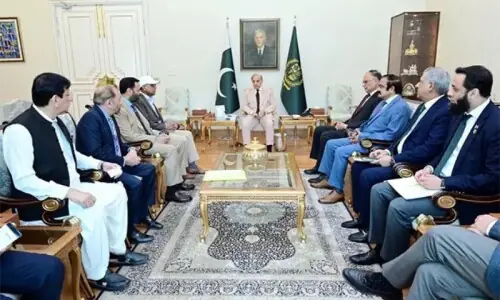
The decision to call an urgent National Assembly session was taken after both the prime minister and the president, in his capacity as PPP co-chairman, met leaders of allied parties on Tuesday, and a combined meeting of their parliamentary groups as well as one of opposition PML-N are due to be held before the start of the session on Thursday.