6
6
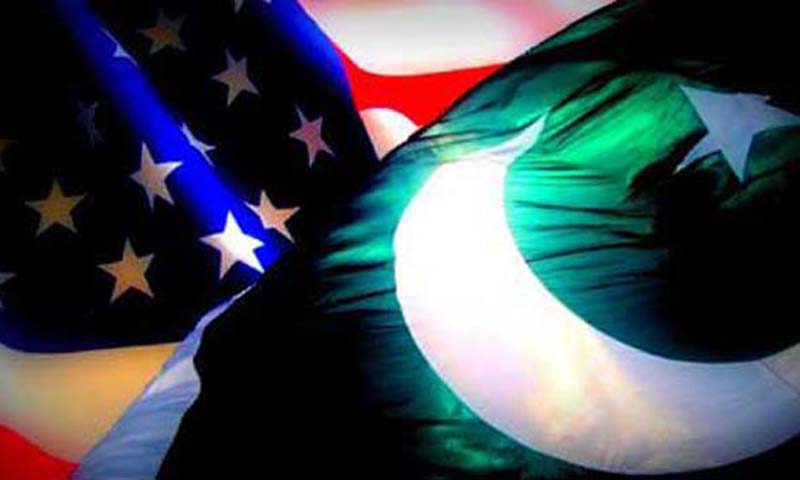

As Pakistan continues to untangle its national crises, a key issue playing out in the background is the country’s relationship with the United States, which deteriorated after the raid to kill Osama Bin Laden on May 2, 2011 and further declined after the Nato air strike that killed 24 Pakistani soldiers on November 26, 2011.
Pakistan has since started a parliamentary review of its relations with the US, which goes beyond the attack and tries to set new parameters for bilateral ties.
Pakistan’s newly-appointed ambassador to the US Sherry Rehman, who presented her credentials to US President Barack Obama on Wednesday, said the parliamentary review will present an opportunity for both the US and Pakistan to reset ties on more consistent, transparent and predictable lines.
“In the absence of an apology, Pakistan had no option but to take it to parliament for a review. However, I am clear that no one from Pakistan is looking for a confrontation with any state, and hope that the review will present an opportunity for both countries to reset ties on more consistent, transparent and predictable lines,” she said.
At a regular briefing at the State Department, spokesperson Victoria Nuland expressed similar views, saying that the United States wanted a strong, long-term relationship with Pakistan.
“We believe we both need a strong, continuing, cooperative relationship across the range of important issues, political, economic, security. We want to get back to the full range of business together, and we want to do that as soon as the Pakistani side is fully ready to have those conversations with us,” she said.
In response to the border-post attack last November, Pakistan blocked the supply routes of Nato trucks traveling through the country, forced the US to vacate Shamsi airbase and threatened to shoot down drones flying over Pakistani territory.
The fragmented ties between Pakistan and the US have called into question the very nature of the relationship going from at least an ostensible ally to more murky territory.
In light of the ongoing review, Pakistan has gone further as sources from the US State Department revealed that Islamabad has asked special envoy Marc Grossman not to stop in Pakistan during his current tour of the Middle East, on which he is consulting US allies to discuss their involvement in the Afghan reconciliation process.
State Department spokesman Mark Toner said the Pakistani government felt that it would be best to wait until this parliamentary review is concluded.
He, however, emphasised that Pakistan continued to have “a central role” in the Afghan reconciliation process despite the challenges the two sides had faced in the past months.
“There is no other solution here but to work through our differences, Pakistan absolutely has a central part in the Afghan reconciliation process,” he said.
Ambassador Rehman also met Secretary of State Hillary Clinton and other senior officials before presenting her credentials and all these officials stressed the need for a stronger relationship with Pakistan.
“I really see my role as an envoy who will have to navigate the highs and lows of this important relationship by defending Pakistan to the best of my abilities, and by authentically sharing the views conveyed to me with the governments of both countries,” she said.
It remains to be seen how the relationship between Pakistan and the Unites States will unfold given the political climate in the country.
With the Pakistani government under immense pressure from the judiciary, the opposition and the powerful military, there are number of possible outcomes that will play a key role in the future of the Pak-American relationship.
One of the likely outcomes of the current crisis is the holding of elections before the current parliament, dominated by the PPP and its allies, completes its term in March 2013.
A second possible outcome is that Prime Minister Yousuf Raza Gilani may be forced to step down. The Supreme Court had issued a contempt of court notice against Gilani, alleging that he is not honestly discharging his duties and complying with court orders related to reopening corruption cases.
The apex court wants the government to end the blanket amnesty it granted graft-tainted politicians under the National Reconciliation Ordinance (NRO) and has hinted that it will consider declaring the PM "not...an honest person" if the government fails to act against corruption.
Such a step could disqualify Gilani from the national assembly and require that a new prime minister be elected. But after today’s court appearance by Gilani, such an outcome seems unlikely.
A third outcome is the impeachment of President Asif Ali Zardari. The Supreme Court wants the government to pursue a dormant corruption case in Swiss courts against Zardari and his wife, the late Benazir Bhutto.
The PPP and Gilani’s government contend that Zardari is guaranteed immunity from prosecution under Article 248 of the Pakistani constitution. It is a point that the court has conceded is worthy of further investigation.
Zardari is also coming under fire for a secret note allegedly written by former ambassador to the US, Husain Haqqani, offering to reorient the country's security apparatus in line with Washington's regional objectives in exchange for US support for the government in the event of a military coup.
The affair, now known as "Memogate" is the subject of judicial and parliamentary investigations. If Zardari is found involved in any way, he may face impeachment proceedings in parliament.
While the likelihood of any given scenario playing will vary, there is little doubt that all scenarios will affect Pakistan’s ties to the United States, which in turn play a vital role in Afghanistan and various parties involved in that region.