0
0

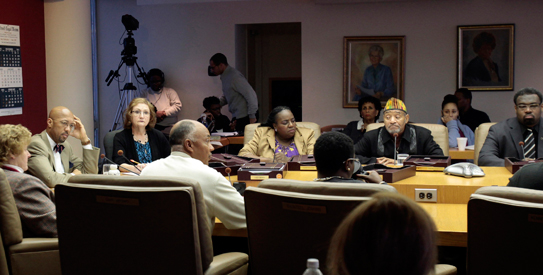
The Big Three US automakers may be on the rebound but the original Motor City, Detroit, is still battling to turn the tide of decline. One of the people leading the fight is Charles Pugh.
An ex-television broadcaster known for a swanky wardrobe and outspoken presence, he was solidly voted in as president of Detroit's city council two years ago, carrying a mandate to clean up corruption and undo decades of mismanagement.
But battles over strip-club legislation, water bills and inflated budgets defined his early days in office.
“We were the public piata,” he recalls. “I wanted to quit.”
Two years later, the auto industry's Big Three – General Motors, Chrysler and Ford -- have moved on from the worst of the financial crisis, but the city has fallen further into the mire.
With $350 million in annual retiree pension and health-care costs and a shortage of cash, Michigan state officials are considering installing an emergency manager to run the finances of the state's largest city.
Under the worst-case scenario, Pugh's city council – which costs about $1 million per month to operate, or more than the cost of the public works department -- could be stripped of its power to approve contracts, scrutinize budgets and handle zoning issues.
Pugh, a Democrat who counts Detroit singer Aretha Franklin among his friends, has his own set of problems.
After taking a two-thirds pay cut to join government, he shelved his cable TV service, started packing his lunch and paired back cell service. It wasn't enough -- his tony midtown Detroit condo is headed back to the bank via foreclosure or short sale.
“I can no longer afford it,” he said. “Going through this whole fiscal crisis with the city, I learned you can't live at your means or just above. You have to live below.”
Detroit has long been in short supply of leaders willing to face up to such cold realities of life.
In 1970, Detroit was the fifth-biggest city in America with 1.5 million people. Now, it has a population of about 700,000.
In recent decades, mayors and council members have assumed a reversal of that ongoing population decline would spur economic revival, bolster tax revenue and repair a deteriorating quality of life.
Pugh, who is weighing a run for mayor next year, isn't sticking to the script. “We're no longer a big city ... we're going to get smaller,” Pugh said. “Our population probably will end up around half a million.”
DETROIT'S BEST-DRESSED MAN That is just one of many unconventional opinions carried by the 40-year-old council president.
A lot about Charles Pugh is unorthodox. On a typical day, the Food Network plays on the city-issued television hanging in the corner of his office. Twice named Detroit's best-dressed man by an upscale magazine (once as news show host at a local Fox network affiliate, once as council chief), Pugh's look changes daily thanks to his collection of a dozen sets of designer eyeglasses, which he wears strictly for fashion purposes over a pair of contact lenses.
Weekends, he has been running the streets of Detroit to prepare for a first marathon as well as to interact with citizens. Last weekend, in the dead of winter, he ran a 20-mile route down to the city's riverfront, and back north through abandoned neighbourhoods, waving and smiling to people along the way.
The following Tuesday, during a meeting with council members asking them to meet with a governor-appointed task force trying to sort out Detroit's finances, Pugh veered off into a monologue about the importance of encouraging grocery stores -- of which there are alarmingly few -- to offer fresh, healthy food.
“Jenny Craig ain't got nothing on me,” he said, noting that he has employed better eating habits to shed 54 pounds recently.
From his personal life to public policy, he is frequently blunt. He came out as gay in a newspaper interview in 2004, and is one of the only politicians in the city's 300-year history to challenge the traditional way of managing the water department, which is Detroit's crown jewel.
The water department collects millions in revenue from an array of cities surrounding Detroit. But that money -- and debt collected against those contracts -- can only be used to fund the water department, so city officials are essentially barred from using it to fix the fiscal crisis.
“Detroit people are forbidden from talking about anything at all that may result in relinquishing any control with our water department,” he said. “But I think that we need to have a serious conversation with the public to say that our water is not helping us reduce crime, it's not helping us keep the lights on, it's not helping us keep the parks clean.”