0
0

Each day that he struggles to buy food for his family, vegetable seller Hasan Sharafi shoulders part of the burden of Iran's defiance of the West over its nuclear programme. He can hardly bear it.
“Prices are going up every day, life is expensive. I buy chicken or meat once per month. I used to buy it twice per week,” the father of four said in Iran's central city of Isfahan.
“Sometimes I want to kill myself. I feel desperate. I do not earn enough to feed my children.”
With just a month to go before a parliamentary election, Iran has been hit hard in recent months by new US and European economic sanctions over its nuclear programme, which Tehran says is peaceful but the West says is aimed at making a bomb.
In conversations in towns and cities across Iran, people complained of rapidly deteriorating economic conditions, likely to be the main issue in an election that exposes divisions between President Mahmoud Ahmadinejad and hard-line opponents.
The last time Iranians voted, in a 2009 presidential election, Ahmadinejad's disputed victory triggered eight months of violent street demonstrations. The authorities successfully put down that uprising by force, but since then the Arab Spring has demonstrated the vulnerability of governments in the region to uprisings fuelled by anger over economic difficulty.
“My father lost his job because the factory he used to work for 30 years was closed last month. I am so pessimistic. Why is this happening to us?” lamented mathematics student Behnaz in the northern city of Rasht.
“I don't know whether the prices are rising because of sanctions. The only thing that I know is that our lives are ruined. I have no hope for the future.”
Iran's leaders deny that sanctions are having an economic impact, but are also calling for solidarity in the face of them.
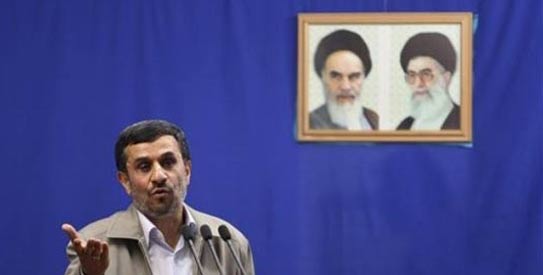
In a defiant speech on Friday, Supreme Leader Ayatollah Ali Khamenei told Iranians sanctions would make them stronger.
“Such sanctions will benefit us. They will make us more self reliant,” he said in a televised address marking the anniversary of Iran's 1979 revolution. “Sanctions will not have any impact on our determination to continue our nuclear course.”
BREAD ON THE TABLE Such rhetoric resonates with some Iranians, who say they are willing to endure pain to defend a nuclear programme that has become a symbol of national pride.
“America uses the nuclear issue as an excuse to replace our regime with a puppet regime to control our energy resources. But we will not let them. Nuclear technology is our right and I fully support our leaders' view. Death to America,” said student Mohammad Reza Khorrami in the northern town of Chalous.
But the West is hoping sanctions will turn ordinary Iranians against their leaders, and there are clear signs of discontent.
When you ask Iranians about the nuclear issue, many seem to see it as a distraction from the real question of economic hardship.
“I am not a politician. I don't care about the nuclear dispute. Soon, I might not be able to afford food and other basic needs of my children,” said Mitra Zarrabi, a schoolteacher and mother of three.
“What is the nuclear dispute? Don't waste my time asking irrelevant questions,” said 62-year-old peddler Reza Zohrabi in a marketplace overflowing with imported Chinese goods in the city of Kashan. “I'm not interested in talking about politics and the nuclear issue. I have to find ways to put bread on my family's table.”
Iranian authorities say 15 per cent of the country's workforce is unemployed. Many formal jobs pay a pittance, meaning the true figure of people without adequate work to support themselves is probably far higher.
Hemmat Ghorban, 32, sits in a square in Mashhad city with a group of men, waiting to get work as day construction workers.
“I used to sell fruit in a small shop in Zanjan city,” said Ghorban, who was forced to close his shop because of the increasing rent and high price of materials.
“Today I earned nothing. How am I going to support my family? Soon my family will be homeless. Sometimes I go without work for three or four days.”
The new sanctions include measures signed into law by President Barack Obama on New Year's Eve that would ban any institution dealing with Iran's central bank from the US financial system.
If fully implemented, the law would effectively make it impossible for countries to pay for Iranian oil. Washington is imposing the sanctions gradually and offering waivers to prevent chaos on international energy markets, but countries seeking those permits are expected to reduce trade with Iran over time.
The European Union, which collectively bought about a fifth of Iran's 2.6 million barrels per day of oil exports last year, has announced it will halt Iranian crude imports. Other countries are scrambling to comply with US and EU measures.
Since the sanctions have only begun to bite, far greater pain is looming as oil is 60 per cent of Iran's economy.