0
0

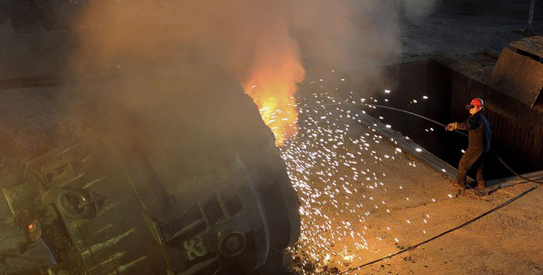
SHANGHAI/BEIJING: China is likely to reduce the amount of iron ore it buys from Iran from March due to concerns that sanctions may disrupt exports worth over $2 billion a year to the world's largest consumer of the raw material, traders said on Wednesday.
Iran is a political ally of China and one of its biggest crude oil suppliers. Iran was also China's fifth biggest supplier of iron ore in 2011, selling some 17 million tonnes, but traders said they expected purchases to shrink in coming months as the sanctions may disrupt shipments and payments.
“There is a huge risk ahead, and many just haven't realized it yet,” said a senior executive at a Shanghai-based trading firm that has a long-term partnership with an Iranian supplier.
“It's easy for the United States to freeze our business, forcing large Chinese iron ore traders, which have large trading volumes with Iran, to be more cautious when making bookings.
It's not worth taking the risk,” he added. Although Iranian ore accounted for just 2.4 per cent of China's total 686 million tonne imports last year, its absence will push up prices as China scrambles for alternative supplies of the raw material used to make steel.
“Iran is one of the major sources for lower-rate iron ore.
Without Iranian ore, Chinese buyers will be forced to look for more cheaper materials from Southeast Asia, Latin America, and Africa,” said Han Xun, China manager with the Steel Index.
“It may also seek to buy more from dominant suppliers like Australia and Brazil.”
The United States expanded financial sanctions against Iran on Monday, adding to a European Union ban on Iranian oil imports from July and sweeping US measures which target Iran's central bank and foreign institutions doing business with it.
The Western sanctions are aimed at pushing Iran to end its nuclear programme, which Tehran says is meant to produce energy, not weapons. Iran, however, has refused to negotiate guarantees that the programme is peaceful.
RUSHED SHIPMENTS Chinese buyers usually pay Iranian suppliers via a representative office set up in Dubai, in the United Arab Emirate, or in other countries. The money is then transferred from banks in those countries to Tehran.
The Shanghai-based trader, who requested anonymity, said the United States would find it easy to trace payments made by major trading firms to Iran.
An iron ore buyer based in eastern China's Shandong province said some of his Iranian suppliers had rushed shipments, a sign that they too were worried about potential payment problems.
“We made two bookings due to be delivered separately in early and late February, but our Iranian supplier delivered the two shipments together in early February due to concerns that they might not be able to deliver later in the month,” he said.
“I expect imports from Iran to show a decline in March.”
Last year, China's commerce ministry warned traders against buying Iranian ore, saying shipments were often substandard and late.
Trade, however, was up 14 percent on the year in 2011 and some Iranian sellers said that so far, it was business as usual.
“We do not think that sanctions can have any negative effect on the export of iron ore to China as we sell on the basis of telegraphic transfer in advance to our accounts in Dubai, Italy and Tajikistan,” said a Dubai-based Iranian trader via email.
“Shipments are also going smoothly to China.”
Another Shandong-based buyer of Iranian ore, however, said be believed several shippers were not taking Iranian cargoes.
“I've heard that more and more foreign shipping companies are unwilling to cooperate with Iran due to sanctions,” he added.
Some Chinese traders said they would continue to purchase iron ore from Iran for as long as they could pay for, and receive, it because it was cheaper than other sources.
“Many Chinese traders, and miners, want to take the opportunity to buy the ore to make more money,” the Shanghai-based trader said. “Though I am still making bookings from Iran, I am extremely cautious.”