1
1

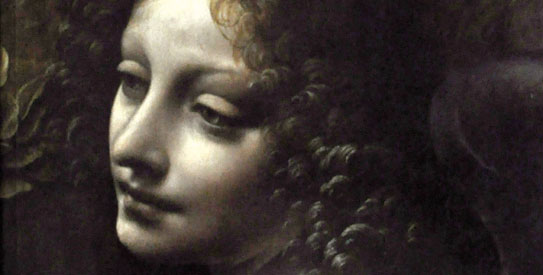
As the National Gallery’s celebrated exhibition “Leonardo da Vinci: Painter at the Court of Milan,” sponsored by Credit Suisse, draws to a close, one is left with the sad feeling that this act, the greatest collection of Leonardo works ever amassed, is a very difficult one to replicate. Several of the 14 surviving masterpieces, largely or solely by the hand of the Master, are now too fragile to be transported. The curators at London’s National Gallery spent five years assembling 9 priceless Leonardo paintings scattered in European museums and 54 amazing Leonardo drawings, of which 33 are from the Royal Collection, for this “once-in-a lifetime” show.
Visitors usually view art works in museums during the summer in Europe and North America. This National Gallery exhibition, in what was a dismal grey winter in London, manages to display not only so many of Leonardo’s rare surviving paintings and drawings but also 25 works by the great Master’s associates.
This is an unprecedented feat for most museums and collectors are reluctant to part with their treasures. During this Leonardo showing in London, resignations from two senior officials at France’s prestigious Musee du Louvre (the home of the largest collection of Leonardo masterpieces) followed a controversial restoration of da Vinci’s Virgin and Child with St. Anne.
Where’s the Mona Lisa?
Why the National Gallery chose to focus only on Leonardo’s 18 years in Milan, (from 1482 to 1499) when he was Court Painter to Duke Ludovico Sforza, becomes clear when one considers the obstacles likely to be encountered by the holding of a wider ranging retrospective. If the works from Leonardo’s early Florentine period and those from his later sojourns in Florence, Rome and then Paris were to be included, would, say, Florence’s Galleria degli Uffizi have been easily willing to part with the precious Leonardo works in its collection?
Which brings us to the leading question in the popular imagination: Why wasn’t the Mona Lisa there?
I can only venture to provide a round about answer.
Firstly, Leonardo’s portrait of La Giaconda — easily the world’s most famous painting — belongs to the later Florentine period following Leonardo’s years in Milan. Furthermore, any possible move to a London exhibition for Leonardo’s later masterpieces from the Musee du Louvre — the permanent home of the Mona Lisa, the Virgin and Child with St. Anne and of his St. John the Baptist — collectively present a virtually insurmountable obstacle when Virgin of the Rocks and La Ferroniere from the Milan period of the Louvre collection had already been generously loaned amidst much nervousness from officials at the Louvre.
Under such circumstances the appearance in one venue of the Master’s unfinished St. Jerome in the Wilderness from the Pinacoteca Vaticano, of the State Hermitage Museum’s Litta Madonna from St. Petersburg, and of The Lady with an Ermine from the Czartoryski collection in Poland, constitutes a triple coup. On display with these is the Louvre’s stunning La Belle Ferronniere, the Biblioteca Ambrosiana’s Portrait of a Young Man: The Musician, and the Madonna of the Yarn-Winder.
These masterpieces are nothing less than a sustained miracle for visitors to the exhibition. And to be able to view such magical works of art alongside the two counterpoised Virgin of the Rocks – the Louvre version and the later one from the National Gallery – makes for an exquisite journey devoted entirely to pleasure and to the immense gratification of the aesthetic senses.
For the yet unsatiated, the climax presented by the final room of the Gallery where the recently cleaned Christ as Salvator Mundi or Saviour of the World has been unveiled, provides a finishing touch to a composite experience that overwhelms any remaining skeptics, and is an experience simply unlikely to be encountered once again in one’s lifetime.
Limited space prevents dwelling on a multitude of additional works of art on display at the exhibition by the Leonardeschi – the associates and assistants of Leonardo. Prominent among the Master’s collaborators were Ambrogio de Predis, Giovanni Antonio Boltraffio, Marco D’Oggiono and Francesco Napoletano.
Add to this 54 preparatory drawings from Leonardo’s extensive notebooks and you encounter a veritable Renaissance treasure trove that not only serves to illuminate Leonardo’s marvelous painting technique and its evolution at the court of Milan, but also reflects the considerable curatorial experience to-date of the experts at the National Gallery in evaluating, identifying and restoring paintings from the late quattrocento at the court of Milan. Leonardo studies will never be the same again once this London exhibition stimulates further research. This alone would justify why the holding of niche exhibitions rather than wide-ranging spectaculars provides a valuable and sober course to this venerable London institution.
Why are there two Virgin of the Rocks?
I will make three additional closing comments here. The first relates to the magical experience of standing in a museum hall at the National Gallery squarely between the Louvre version and the National Gallery’s later version of the Virgin of the Rocks. It was an experience that not even the great Master was able to witness since the two paintings were never together in the same place even during his lifetime.
The mirror to nature held up in the Louvre version is representative of Leonardo’s early Milan period when an Aristotelian ethic is upheld; the idealization of divinity and its concomitant tonal harmonies in a modified Platonic perspective being a contrasting description of the later version at the National Gallery.
It is not precisely known why Leonardo painted two versions of the important doctrinal statement of the Immaculate Conception. Financial wranglings over payments to be made by the elite-infested Confraternity of the Immaculate Conception led to the Louvre version being possibly gifted by Duke Ludovico Sforza of Milan to the Holy Roman Emperor Maximilian on the occasion of his marriage to Bianca Sforza, the Duke’s niece. While I confess myself as partial to the Louvre version, the tonal refinements — notwithstanding the unfinished patches — of the haunting National Gallery version leave one with little doubt with respect to the consistent unities it demonstrates of the Master’s imprint.
Why so many portraits ???
A second inescapable experience centres around Leonardo’s tremendous impact as a portrait painter. Before his Portrait of Ginevra de Benci, painted in Florence prior to his arrival in Milan and so one of his earliest preserved works, aristocratic women were always depicted in strict profile. Leonardo’s innovative use of the three-quarter pose in portraits together with his characteristic technique of sfumato — the soft, ‘smoky’ handling of paint and outline — transformed portraiture forever.
In The Lady with an Ermine, Cecilia Gallerani, the stunning mistress of Ludovico Sforza cradling her unusual pet, turns her head as if to listen. Art historian Luke Syson calls this work “the crown jewel of Leonardo’s very, very small surviving oeuvre… one of the great milestones in the history of art.” He sees it as “one of those moments where suddenly an extraordinary mind and an extraordinary hand achieves a leap forward.” He believes that this painting represents the arrival of psychological depth in portraiture, the moment when Leonardo’s ambition “to show the essence of a human being, both from the outside and the inside, suddenly comes into its own.”
With the radically new three-quarter profile perspective adopted by da Vinci in The Musician, in La Belle Ferroniere and in Cecilia Gallerani’s portrait, a revolution in portraiture was accomplished. Add to this the realistic perfection achieved by turning to one side by Cecilia Gallerani – emphasized by the muscles in her neck and her direct gaze at the viewer – and one is transported into another realm, another dimension. This anatomical perfection is further emphasized in the unfinished St.
Jerome in the Wilderness , where the outstretched arm of the penitent saint foreshadows the stretched arm of Mary in the Virgin of the Rocks.
My final observation on this exhibition is about the section upstairs in the Sainsbury Wing designed to examine the importance of The Last Supper which I believe to be the greatest of the Master’s works. Painted on a wall of Milan’s Santa Marie delle Grazie’s Refectory, this masterpiece cannot be moved. The understandable absence of this fresco however fails to be even partially compensated by the hanging of Giampetrino’s 8-metre long, full-scale copy painted just twenty years after The Last Supper’s unveiling. An array of preparatory drawings (largely studies in portraiture) from the Queen’s collection does not and cannot compensate for the vacuum felt by the looming absence of the original fresco but the opportunity to earlier view the full blown Burlington House cartoon of Leonardo’s Virgin and Child with St. Anne and the infant St. John the Baptist does, however, serve as a minor consolation.
One finally departs with a feeling of gratitude at an opportunity to view a lingering and ethereal reincarnation of the Edessa Mandylion as part of the Leonardo industry’s latest bequest to an impoverished 21st century — the portrait of Christ as the Salvator Mundi. As the exhibition catalogue remarks: “There are several remarkable features, all painted with startling delicacy and precision: the curling highlights in the hair, the brilliant irregular pleats in the tunic, the grand sweep of the cloak…” This, coupled with a transparent rock crystal orb held in Christ’s left hand, which is perfectly visible through the non-distorting prism of a quartz, leaves an indelible impression in the mind of the viewer.
The National Gallery, London, justly deserves the kudos this dazzling exhibition has received.