0
0

KARACHI, Feb 12: The third Karachi Literature Festival ended on a musical note preceded by some interesting panel discussions and conversations with authors at the Carlton Hotel on Sunday.
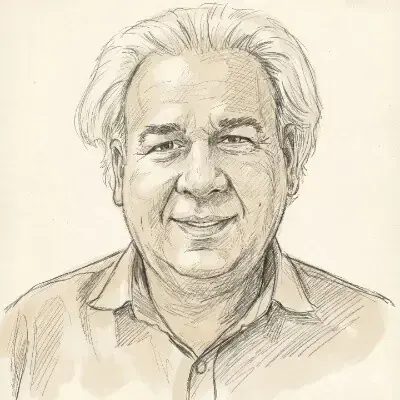
The highlight of the second and final day of the festival was a delightful dialogue with celebrated Indian author Vikram Seth. Only if the moderator of the event, Shaista S. Sirajuddin, had been just as spirited as Mr Seth, things could have moved at a better pace and with more enthusiasm. Asked about his latest book, The Rivered Earth, the writer said his publisher wanted him to pen the sequel to his famous novel A Suitable Boy, but he was not making progress. As an interim measure the publisher wanted something in hand and found a libretto (small book of music) which the author had written to go along with Alec Roth’s music. From there on the idea for The Rivered Earth (libretti) generated.
Vikram Seth, during his talk, read out his poems in style (including from ‘Arion and the Dolphin’) and enthralled the jampacked audience in the hotel’s ballroom. As per the moderator’s request, he tried to go backwards (and subtly suggested it was boring) to trace his literary trajectory. On the issue of whether music shaped his writing, he said it did, both in terms of form and content, citing the example of his novel An Equal Music. Talking fervently about music, he conceded he could not write to music because he either got lost in it or found it irritating. This led him to go into his childhood and narrate family tales and taste in music, with the proud admission that he found difficulty with ‘baysura’ singers. He also recounted the time when wanting to come up with a novel he returned to his parents’ (family) house, and coincidentally all his other (grownup) siblings also came for different reasons. This made him comment, “Home is the place, if you have to go they have to let you in.”
The high point of the sitting came when Mr Seth read out a versification of one of Ghalib’s letters to Yousuf Mirza, claiming that even if Ghalib had not been a poet and had only written letters, he would have been one of the greatest prose writers – animated, humane. What Mr Seth read took many by a pleasant surprise. The English versification was beautifully recited, keeping the eloquence and innate pathos that the letter contained. He should versify all of the greatest Urdu poet’s epistolary communication and publish it.
Most of the questions that the audience hurled at Vikram Seth (and he seemed eager to listen to them) were pedestrian. However, when someone asked about autobiographical elements in An Equal Music, he articulated, “This is an unanswerable question. One can’t write a love story without having felt love (and lost). One has to borrow, imagine and draw upon one’s own heart.”
A much anticipated event of the festival was a conversation with filmmaker Sharmeen Obaid-Chinoy whose documentary ‘Saving Face’ has recently earned an Oscar nomination. The 120-seating capacity hall overflowed with film buffs and the mismanagement by volunteers caused discomfort to some people. Sharmeen Chinoy told the gathering that she began her career as a print journalist for Dawn and her first big story was on the illegalities that took place at the passport office. When 9/11 happened she was in college. She thought it was important to tell stories and educate people. In Dec 2001 she decided to make a documentary on the Afghan refugee children and from then on her journey as a filmmaker commenced.
Ms Chinoy then showed clips from her documentaries (with the strict instructions that they shouldn’t be shot by media cameras) including from ‘Women of the Holy Kingdom’, ‘Iraq: The Lost Generation’ and a couple from ‘Saving Face’.
The first formal session of the day, moderated by Maniza Naqvi, was on the subject of literary criticism. The panelists included Hanif Kureishi, Muneeza Shamsie, Alok Bhalla and Stefan Weidner. On the question as to what good criticism was for, Muneeza Shamsie said there was a time when there were no book reviews in Pakistan. Then things changed. Criticism became important because it imparted immediacy to the subject and put things in cultural and historical context. Alok Bhalla said the moderator’s question could be likened to ‘what good are birds for?’
He said criticism was an activity of the civilised mind and was needed to discriminate between what mattered and what did not, what was ephemeral and what was not. Stefan Weidner said literary criticism was needed to start a discussion about literature and gave many examples from German literature. Hanif Kureishi argued it was important for a writer who his/her reader was. People who wrote should have a sense of the reader and the reader’s needs. He emphasised young writers in particular should keep the reader in mind.
Reacting to the moderator’s bringing up of James Joyce’s ‘Ulysses’ in the discussion, Alok Bhalla said the function of the novel was not to write editorials. He said critics’ function was to place things in context. They required great text to draw the difference between someone like Joyce and Chetan Bhagat. Weidner said giving Joyce’s example was extreme. Hanif Kureishi told his colleagues that Anthony Burgess had written something very good on ‘Ulysses’ but it was not criticism. Literary criticism was to do with taste and opinion.
The most surprisingly insightful session, not on books though, was on satire/comedy wittily moderated by journalist Nadeem Farooq Paracha. The hall was bursting at the seams with attendees and the two panelists Saad Haroon (standup comedian) and Ali Aftab (from the rock band Beghayrat Brigade) did not disappoint them. In fact, Ali Aftab’s take on the role of the establishment in Pakistan and how members of the army behaved in society garnered applause. As to why satire was important, Saad Haroon said he always gravitated towards the genre. Ali Aftab commented satire came out of contradictions and our society had contradictions. He told the audience that in 1960 Justice Munir asked the ulema to give a definition of a Muslim, but consensus could not be had on the definition. Similarly, the name of our country was Islami Jamhooria Pakistan yet there had never been jamhooriat in Pakistan. He said fundamentalism had increased in Punjab and when his band released the song Aalu Andey they did receive ‘friendly advice’ from some quarters. He said a TV anchor called them English speaking lads whereas the fact was that he could not speak English. He said while politicians had shown patience in taking all the jokes made on them on TV and other media, nobody dared make fun of army generals or members of the judiciary.
About his short TV stint Saad Haroon said there were very few comedy writers in the country and those were doing their bit were underpaid. He paid tribute to the famous PTV show 50/50 stating it was the best satire show -- he and his team were trying to live up to it. The sitting was peppered with funny one-liners and remarks made by the panelists as well as the moderator.
The launch of the book ‘The Oxford Companion to Pakistani History’ edited by Ayesha Jalal was an important one and generated quite a bit of debate when one of the speakers Hameed Haroon pointed out the omissions of some names in the book.
The closing ceremony was marked by speeches from Ameena Saiyid, Asif Farrukhi and the British Council’s Martin Fryer, followed by Hanif Kureishi’s comments on the festival. In the end musician Salman Ahmed of Junoon performed.