0
0

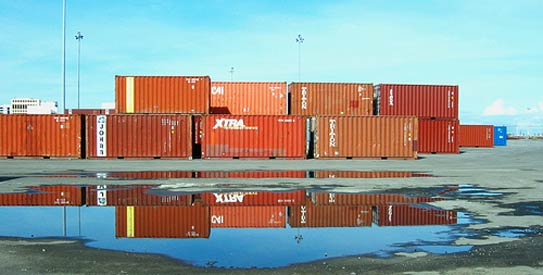
Export of most commodities witnessed a rise after the Great Recession 2008-09 and the trend is still continuing. But a few sectors have lagged behind. Their export earnings have either declined, remained static or lost growth momentum.
In FY10, textile exports had posted about eight per cent growth before rising by another 35 per cent in FY11. But the growth rate turned negative in the first half of FY12 not only because of the base effect, low international demand and depressed cotton prices but also due to energy shortages and low investment in capacity building.
Rice exports that had increased 10.5 per cent in FY10 fell negligibly in FY11—a commendable performance as July-September 2010 floods had devastated paddy crop. In the first half of the current year, rice export earnings are showing a declining trend because India has lifted a three-year old ban on export of non-Basmati rice and there is over-supply of the commodity in international market.
“But we could have maintained growth in export earning if we had made enough investment in better rice milling, grading, polishing, packaging and if the government and rice growers would have done something to increase the per-acre crop yield,” according to Haji Abdul Majid, an official of Rice Exporters Association of Pakistan.
Export earnings of tanned leather had risen 17.5 per cent in FY10 and a huge 36 per cent in FY11 despite loss of hundreds of thousands of cattle heads during the super floods in 2010. But during the first half of the current fiscal year, the growth rate has plunged to less than one per cent.
On the other hand, exports of leather manufactures had recorded a fall of 15 per cent in FY10 before rising by almost the same percentage in FY11. And now in the first half of FY12 export earnings of leather manufactures have shown a negligible growth of less than one per cent. Why this erratic trend? “Domestic supply issues aside, I understand that lack of investment in leather goods designing and a general tendency to avoid risky value-addition has been at the root of the problem,” admits a former chairman of Pakistan Leather Garments Manufacturers and Exporters Association. “Nowadays the use of velvet, for example, is common in high value-added products. And that helps the exporters earn far higher margins on leather garments but in Pakistan this kind of value-addition is rare or non-existent in most cases.”
Exports of engineering goods have hovered around $250-$300 million for the past few years despite enough potential for expansion in this industry. “One of the reasons why engineering goods exports are not picking up fast is that instead of going for manufacturing, precision engineering tools for industrial sector focus remains on producing conventional engineering items,” says an official of Pakistan Machine Tool Factory, adding that recently some new varieties of engineering machines and tools have, however, been brought online with the help of the Pakistan Engineering Council.
“Engineering machines for power sector, especially those used in green energy is in high demand all over the world. Today we are trying to tap this potential with the help of Chinese expertise and investment but we should have focused on it much earlier,” said the official.
“Besides, monopolistic attitude of our auto industry hinders experiments in auto engineering that can reduce the cost of production of cars and light commercial vehicles. And finally instead of becoming an exporter of engineering goods used in construction industry, we still continue to import them because of lack of private sector investment in this area. Shipbuilding and defence engineering goods that are patronised by the state are doing much better on the other hand.” Over last few years, Pakistan has lost much of its export markets for carpets and rugs to Iran and China for a number of reasons including the manufacturers’ inability to catch up with the latest trends and lack of government support.
Iran and Afghanistan dominate the markets for hand-made traditional carpets and China has emerged as a big exporter of machine-made carpets and rugs. In case of Afghanistan it is the cheapest skilled labour equipped with experience in carpet weaving passed on to them from generations and availability of animal wool at very low prices that keeps the country competitive in carpet markets.
And in case of Iran it is innovation in carpet designs and the use of finest quality of wool which keeps its famous Persian carpets popular among foreign users. Cheap Chinese labour along with high-tech machines whose production capacity is many times that of human workforce continue to fuel exports of Chinese carpets and rugs.
In Pakistan, carpets and rugs were produced on a large scale, both for local use as well as for exports till the end of 1990s when millions of Afghan refugees were living in this country. But after their gradual return to their homeland, the supply of carpet weavers became scarce and lack of government support forced carpet manufacturers to enter new businesses.
After the lifting of textile quotas in 2005 most yarn makers focused on making woollen yarn for use in manufacturing of woollen clothes and were least bothered about the increasing cost and tighter supply of woollen yarn for carpet manufacturing. Carpet manufacturers, on the other hand, began meeting part of their requirements through woollen yarn imported from Iran and China.
For some years, the cost of Chinese woollen yarn was such that they could still manufacture fine quality carpets for local use and exports. But gradually Chinese woollen yarn became costlier Iranian woollen yarn was already expensive and our carpet makers began to abandon carpet manufacturing altogether or scaled down their operations instead of making efforts to overcome these problems. The government, on the other hand, could not spare enough funds to be spent on technological upgrading of carpet weaving industry.
It also failed to collaborate with the private sector for setting up vocational training institute to train carpet weavers for compensating the reduction in the workforce after the return of Afghan refugees to their homeland.
The most important setback was that neither the private sector nor the government thought of introducing computers in carpet designing. It was only in the second half of the last decade that a few leading carpet makers replaced their old manual carpet designing with the computerised designing software. Today our export earnings of carpets and rugs have come down to less than $150 million from about half a billion dollars about ten years ago.—Mohiuddin Aazim