0
0

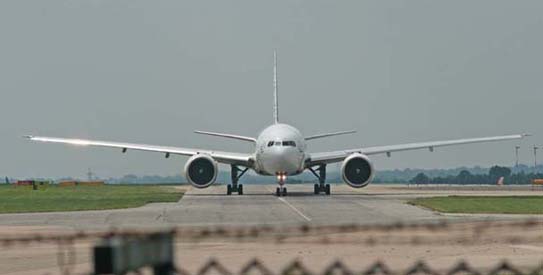
KARACHI: At least 19 engines of PIA aircraft had to be removed unscheduled since February last year owing to faults developed during flights, it has emerged.
Over one and a half dozen incidents within a span of one year put under question the quality of work being carried out by airline maintenance personnel who seem to have been compromising on air safety.
While the national flag carrier’s spokesperson could not be reached, another official said he would collect the facts before responding to any query in this regard.
However, the Civil Aviation Authority maintained that it was not an issue of air safety rather one related to financial problems.
Sources said most of the 19 affected aircraft, 10 to be specific, appeared to be the latest entrants to the PIA outdated fleet — the ATR 42s. Five of the other aircraft were Airbus A-310s, Boeing B-737s and a Jumbo Boeing-747.
The sources said that September was the worst month for PIA when six of its aircraft developed engine faults. Five aircraft developed engine faults within six days between Sept 3 and 9 and two of them on the same day i.e. Sept 3. All the five had to undergo an unscheduled removal of their engines.
The sources said that the first aircraft that needed an unscheduled removal of its engine last year was ATR-42 having registration number AP-BHI and serial number SN EB0226.
It had ingested pigeons that had caused severe internal contamination during its flight on Feb 2, 2011, they added.
The engine No 2 of Airbus A-310 with registration number AP-BDZ and serial number SN 695-497 had to be replaced on March 1, 2011 owing to failure of its BSI.
On April 18, the engine No 1 of another Airbus, A-310 with registration number AP-BEG and serial number SN 695-408 had to be removed as its BSI was ‘unsat’.
The fourth incident involving an ATR-42 with registration number AP-BHM and serial number SN EB0297 occurred on April 24 when the ITT of its engine No 2 was found high and its BSI also failed.
On May 28 another ATR-42 with registration number AP-BHJ and serial number SN EB0303 underwent an unscheduled removal of its engine No 2 owing to its high ITT.
Yet another ATR-42 bearing the engine number AP-BHO and serial number SN EB0290 developed a fault in its engine No 1 on July 18 after it emerged that the BSI and its two blades aerofoil were missing. ‘Secondary damage’ was also reported. The engine had to be removed unscheduled.
On July 28, the engine of a Boeing B-737 bearing registration number AP-BCA and serial number SN 720-453 was removed unscheduled because its hot section was damaged due to over boosting.
The engine No 2 of another Boeing B-737 having registration number AP-BEH was replaced unscheduled as its EGT margin had been consumed, making the take off thrust EGT limited.
The next two incidents involved ATR-42s having registration numbers AP-BHJ and serial numbers SN EB0285 and EB0297. The incidents occurred on Aug 24 and Sept 3 when BSI of both the aircraft engines failed. Also on Sept 3, another ATR-42 with registration number AP-BHO and serial number SN EB0303 got the BSI and IFSD of its engine No 1 failed.
On Sept 6, an Airbus A-310 bearing registration number AP-BEQ and serial number SN EB695-492 had to undergo an unscheduled removal of its engine No 1 after its LPT blades failed.
The next three incidents involving ATR-42s bearing registration numbers AP-BHI, AP-BHN and AP-BHN and serial numbers EB 0006, EB 0253 and EB 0225 happened on Sept 8, 9 and 22, respectively. All the engines had to be removed due to the BSI failure.
The engine number No 1 of an Airbus A-310 bearing registration number AP-BEG and serial number 695-497 had to be removed owing to vibration and high oil consumption on Oct 1. The 17th incident involved a Boeing B737 with registration number AP-BFT and serial number 720-230 whose engine had to be removed unscheduled on Oct 1 owing to a leakage in its forward vibration pickup.
On Oct 27, an Airbus A-310 bearing registration number AP-BDZ had to abort its takeoff as its engine failed.
The latest incident involved a Boeing 747 Jumbo bearing registration number AP-BFW and serial number SN 12072. The aircraft engine No 3 had to be removed after ‘flame out / bearing failure’.
The sources said that the number of incidents involving unscheduled engine removal within a short span of time was unusually high.
They said the airline had hired an expert and was paying him a tax-free salary in dollars besides extending other fringe benefits involving millions of rupees to head its engineering department and bring in additional maintenance business from other airlines.
Airline, CAA version Despite repeated attempts, Dawn could not reach PIA spokesperson Sultan Hassan.
Its media coordinator Tahir Khalique, however, said that he would try to collect facts before responding to Dawn queries.
The CAA spokesperson said that PIA had to cut costs and it could not change all the engines in one go. Instead, he added, it would replace the faulty/damaged parts according to the need.
The spokesperson did not agree with the view that when an aircraft engine developed a fault in the air it became a serious air safety issue. He insisted that it was not a matter of air safety but the airline’s economy, asserting that the CAA did not compromise on air safety.