



 0
0

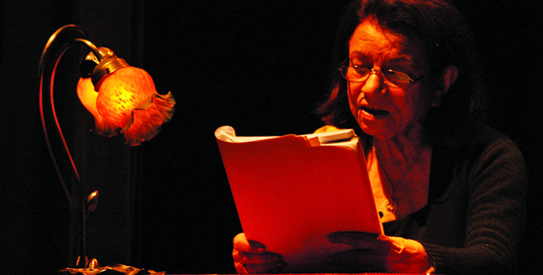
As a part of Faiz Ahmed Faiz’s centennial celebrations, Ajoka Theatre from Lahore paid a rich tribute to the poet by staging the play, at the Alhamra from Feb. 13-15.
Based on the letters of Faiz and Alys during his imprisonment, the production of this new play by Ajoka was an effort to pay tribute to the great poet and his extraordinary wife. Extracts from the letters and poems written in prison were read during the play to enable the audience to relive the arduous period in the life of one of the most glorious couples of our times.
The presence of Yasmin Tahir in the play along with Naeem Tahir was a pleasant surprise because she had reappeared on stage after some 30 years. She read the letters written by Alys while Naeem read Faiz’s. The stage was simple but impressive with two reading tables and fancy lamps.
The dances by Wahab Shah and Nighat Chauhdry in between the reading to the poetry of Faiz sung by various singers was fantastic. Dasht-i-Tanhai, Guloon Mein Rung Bharay, Bahar Aaye and Rung Perhan are but a few examples. The dances were performed to the audio recordings of Faiz’s poems by Tina Sani, Zia Mohyeddin, Madam Noorjehan, Nayyara Noor, Firdousi Begum, Iqbal Bano, Radhika Chopra and Runa Laila that added charm to the play directed by Madeeha Gauhar with the selection of letters by Shahid Nadeem. The choreography was by Wahab Shah and Nighat Chauhdry.
Shahid Nadeem explained to Images on Sunday why he chose these letters to make them a part of the play. He said that the play was more of a performance piece, and emphasised on the fact that unlike Faiz’s inspirational poetry and his activities as a trade unionist, a journalist and a Progressive Writers Association leader, he was quite reticent and unexpressive in his personal life. He rarely expressed his emotions or shared his intimate thoughts outside his poetry. He was a man of few words and modest to the extreme. His prison correspondence with his beloved wife Alys is, however, an exception.
Nadeem said the letters included in the play were written during 1951-55, adding that Faiz’s letters are a fine specimen of his mastery over English and of his Urdu prose. These letters give a rare insight into his emotional state during imprisonment, his longing for his family, his city and his love for nature. Through the correspondence between Faiz and Alys, one gets valuable information about the emotional and social context of some of Faiz’s most poignant and powerful poems.
Nadeem said that the letters Alys wrote to Faiz are equally significant and fascinating. “Published as Dear Heart, they reveal Alys as a woman of great fortitude and commitment. She was forced to fight for her husband’s freedom and to clear her name, while taking care of two little girls, managing her job at the Pakistan Times, and tolerating the ever-present CID men outside her house. She fought like a tigress (and as a proud Anglo Saxon) with the establishment. Alys emerges as a dedicated wife committed on the legal front, as a journalist and as a mother. Her unwavering belief in her socialist ideals shines through these letters and shows how significant was her influence on Faiz’s political consciousness,” he added.
The topics of the correspondence include legal matters, the solidarity of loyal friends, the political events within Pakistan and the world, the growing up of their daughters and their hopes of “singing tomorrows”. It is interesting to note that in spite of their shared ideology and world view, they do debate on their different reactions to oppression and injustice.
Faiz responds like a generous Sufi “forgiving those who have gone astray” and Alys gets furious at the suffering caused by the forces of evil. But the dual devotion of both to their beloved and their ideal never falters. These letters, which retain their romantic gloss in spite of being tainted by the censors (they call it “public love-making”) are also a testament of the times when the ruling elite of the newly-found state of Pakistan were petrified of a communist takeover and determined to put Pakistan’s weight in the imperialist basket in the heightening cold war.
“Rozan-i-Zindan Se is Ajoka’s tribute to the great poet and his extraordinary wife on the occasion of the Faiz Centenary,” said Shahid.
The director Madeeha Gauhar said “The play which was more of a performance piece was a new experience for me as a director. Mostly there was letter-reading in the play and we thought that instead of young actors these letters should be read by seasoned artistes. I felt very happy when Naeem Tahir and Yasmin Tahir gave their consent to read the letters in the play. I also had in mind that letters written between husband and wife should be read by a couple.”
Gauhar added that though the play was studded with fantastic contemporary dances by Wahab Shah and Nighat Chahudry, undoubtedly the play was for a selected audience being more of a performance piece than a play. She held the efforts of Wahab Shah in high esteem because he took lessons from Naheed Siddiqui to learn Kathak for the project. Both the dancers performed extremely well.


























