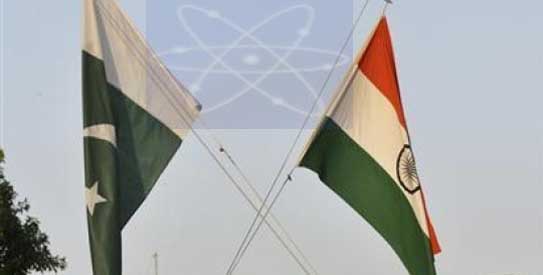
ISLAMABAD: Pakistan and India on Tuesday announced that they were extending by five years their pact on reducing the risk of nuclear accidents.
“The two sides have agreed to extend the validity of the Agreement on Reducing the Risk from Accidents Relating to Nuclear Weapons for another five years, with effect from 21 February 2012,” a statement issued by Foreign Office said. A similar statement was issued by Indian Ministry of External Affairs.
Senior officials of the two countries, who met in December for the sixth round of Expert-Level Talks on Nuclear Confidence-Building Measures under the resumed bilateral dialogue, had agreed to extend the validity of the pact and recommended to their foreign secretaries to renew it by another term of five years.
The talks on nuclear and conventional CBMs took place after a gap of four years under the peace dialogue revived last year.
The process was suspended following the 2008 Mumbai attacks blamed on Lashkar-e-Taiba.
The agreement on nuclear accidents that came into effect on February 21, 2007, for an initial period of five years is extendable for successive terms of five years at a time under its Article 8.
Under the pact both countries committed to improving the security and safety of their nuclear arsenal; informing each other of any nuclear accident, and taking steps to minimise the radiological consequences of such an accident. Furthermore, each of the two countries, in the event of a nuclear accident, is bound to take steps to prevent its actions from being misinterpreted by the other.
India and Pakistan have been regularly exchanging lists of their nuclear-related facilities under the 1988 Agreement on Prohibition of Attack against Nuclear Installations and Facilities. Besides the agreement on nuclear accidents, the experts’ meeting had agreed on extending the Agreement on Pre-Notification of Flight Testing of Ballistic Missiles by another five years.
However, they had differed on adding cruise missiles to the agreement.