Kashmir: The lynchpin of the Afghanistan problem
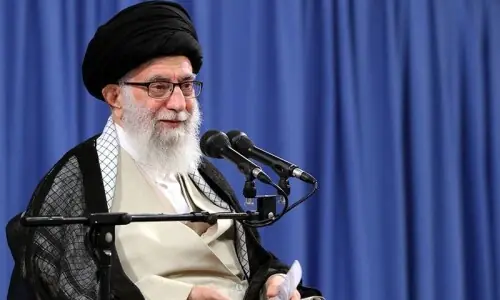
A few years ago, while still in college, I attended a talk by Robert Fisk, the Middle East Bureau Chief for The Independent in UK.
He was in his usual Fisk-ian form. Lambasting western journalists for their false equivalencies, he spoke passionately about the Palestinian and Israeli conflict, recalled the atrocities committed in Iraq that he had had seen personally and basically painted a dismal picture for the future of the Middle East — one of eternal war and endless suffering.
Later on, I was lucky enough to get a few minutes with him alone, at which point I told him I was from Pakistan. He sighed as if a great burden had just descended down on him and gave me a knowing half-smile. I asked him about Afghanistan.
“We don’t read our history books.” he said. “The battles in Afghanistan, the war in Afghanistan, is not about Afghanistan — it’s about Kashmir. Many of the Taliban come from Kashmir, and the Pakistan military and the ISI have boosted their support for the Taliban because they believe the Indians are backing [Hamid] Karzai. By allowing India to control to fate of Kashmir, we have not only helped Pakistan to disintegrate, but ensured that Pakistani forces will help the Taliban, and the war will continue in Afghanistan.”
Fisk isn’t the only one to have voiced these sentiments. In an interview on National Public Radio in Washington DC, Admiral Mullen in 2011 said concerning Afghanistan, “I think unlocking Kashmir, which is a very difficult issue on the Pak-Indian border, is one that opens it all up.”
Kashmir is the reason Pakistan started utilising militant groups as not only proxies, but more specifically as “weapons” against India, in what is commonly known in security circles as Pakistan’s “Bleed India” campaign.
The use of militant groups as proxies has gone ignored by the US despite constant attacks against India. During his tenure, Mullen tried to seek the necessary civilian solutions between the three nation states as the key to solving this problem for all countries, but the efforts were perfunctory at best.
“Engagements with the civilian leaders, engagements with the economic leaders, engagements in the region, I believe we have to continue to try to, all of us, figure out a way to work that as well,” Mullen observed.
The folly in this whole plan to this point, it is said, remains with India, whose constant refusal of outside intervention or mediation and framing the problem as an “internal issue.” The general consensus among many people is that the Indians need to come to the realisation at some point that they must finally show some flexibility in the Kashmir issue.
But that’s only half of the story. For nearly a decade, the US has done little in terms of concrete efforts to improve relations between India and Pakistan. And because of this the ISI still allows Afghan and Central Asian terrorist groups to operate from Pakistani soil and refuses to clamp down on the anti-Indian terrorist groups operating from the Punjab province, including the Lashkar-e-Taiba, which launched the 2008 Mumbai attacks.
US negligence of the realities of the region has allowed foreign militants to radicalise Pakistani Pashtun tribes. Yet Pakistani strategists still think they can crush the homegrown militants while maintaining the Afghan Taliban as a proxy force for a final settlement in Afghanistan.
But while America’s mistakes are many and mendacious, its biggest mistake is its failure to recognise — or its ignorance of — Pakistan’s masochistic obsession with India. It’s been a known fact for decades that Pakistan’s army has historically been consumed with Indian expansion in the region, and has taken the billions in aid from the US to channel into weapons system for the next confrontation with India at great domestic costs. General Ashfaq Kayani has readily admitted to his philosophy on security to be “India-centric.”
While all that may be true, Fisk said, it isn’t really about Indian inflexibility or Pakistani intransigence in supporting militants. In the end, he said, it’s about justice and injustice.
“American authorities need to engage with Pakistan on the issue of Kashmir, and play the even handed role, which they are not playing in Kashmir any more than they are playing in the Palestinian and Israeli conflict,” he said. “And the reason [US and Britain] let the injustices continue is simply because India is the largest burgeoning economy in that area. America and Britain see India as the main buffer state against China and therefore we will support what India wants in Kashmir — not what the people of Kashmir want, but what India wants.”
US Defence Secretary Leon Panetta who has been highly critical of Pakistan’s links with the Haqqani Network, has also recognised the Kashmir-Afghanistan linkage. During a Q&A in Washington last year, he admitted that Afghanistan, Pakistan and India are “all part of a very vital area, a very vital region and that an awful lot of history created incredible complexities and difficulties” for US efforts to bring India, Pakistan and Afghanistan together.
Panetta went on to say that, “we [US] have urged them [Pakistan] to work with India to try to resolve the issues along the border area, because ultimately, until that is done, we are going to continue to have a great deal of instability.”
The remark is a telling representation of the hands-off attitude the US has when it comes to Kashmir.
Before he was elected, Barack Obama suggested he would try to resolve the India-Pakistan rivalry, and the Kashmir dispute that fuels it. But of course, the chasm between campaign Obama and President Obama is where his presidency has lost the credibility he had garnered both in terms of domestic and foreign policy.
While the United States has remained silent on Kashmir, a new Indo-Pak rivalry has erupted over the battle for influence in a post-US-withdrawal world, manifested in terrorist attacks on Indian diplomats and road workers in Afghanistan and, Pakistan claims, Indian-sponsored unrest in Balochistan.
The dichotomy of US policy in the region is that in its attempt to be farsighted in its geopolitical chess game with Russia and China, it has rendered its short term policies to be myopic to the point of foolishness.
This, as Fisk said, “is the equation that turns sand into blood.”
The writer is a reporter at Dawn.com


If India was a Hindu country like how Pakistan is a Muslim country, then Kashmir is a real issue.
Indian constitution guarantees fundamental right to religion and equality to all Indian citizens irrespective of their region, class, etc , So in effect there is no reason for Kashmir issue.
Kashmir was never or is an issue at all. Where did this question came from?
Kashmir has been part of India inspite of having weak Congress leaders – who made the issue worst. The fact is with the way India is progressing and building up its armed forces, it will never ever give up a inch of Kashmir. Now going forward, it is matter of pride of a powerful nation.
Division of the South Asian Muslims in to three countries ( in 1947 and 1971 ) has weakened the effectiveness of South Asian response to West ,s move in countries like Iraq , Afghanistan , Libya etc. India and Pakistan should settle all issues , including Kashmir mutually and then present a united response to all issues including Afghanistan
India will never give up Kashmir. Kashmir is the main source of water for most of the Pakistani rivers and some Indian rivers. Water, is the most precious commodity and may the cause for future wars
Why only Afghanistan, Kashmir was the lynchpin of Bangladesh problem, Balochistan, and Kashmir is the lynchpin of all pakistan's problems. Its a very strange argument the author makes, he is basing his whole argument on some quotes of western leaders that were made to placate pakistan people and trying to say kashmir is the root cause of all problems in the region.
Author,
Please get your facts straight. Most of the Taliban are not from Kashmir. The start of the article itself is so based on such incorrect facts, that it is hard to give time and attention to this whole article.
Arya
we should not be naive to believe that Jehadi problem will go away if India and Pakistan solves Kashmir dispute.
Pakistan should start worrying about its " Strategic depth" as it looks like taliban and USA have a deal without Pakistan. In a nutshell Pakistan is on the way of economic and diplomatic debacle and surely in for total irreverence in the global affairs.
The moment someone says, "Many of the Taliban come from Kashmir", one knows that they've been taken off guard and are grasping for straws.
This article reflects typical Pakistani attitude. Blame others for its problems. The main reason for the problems is that Pak army is not accountable to politicians and this can only continue as long as it can show its people that India is the bogeyman.
Until ISI keep hold of Govt.'s in Pakistan, this problem will not be solved. I speak to many pakistani's they are fed up of ISI. They are scared of their own army. It is high time ISI think good for the country……..
These Britishers like Robert Fisk need a real job, Kashmir is problem created by British using their "Divide and Rule" policy. Now Robert Fisk wanted Britain to resolve this issue – another well know British philosphy called "White Men Burden". British and others should be out of Kashmir so that India can resolve this issue with Pakistan.
" By allowing India to control to fate of Kashmir, we have not only helped Pakistan to disintegrate, but ensured that Pakistani forces will help the Taliban, and the war will continue in Afghanistan.”
This is what the author quotes Mr. Fisk as saying. I'm assuming that Mr.Fisk meant his country UK when he says 'We'. Even if one was to agree with the author's argument of Kashmir and Afghan issues being co-related, I as a proud South Asian takes offense to the language of Mr. Fisk, in which one gets to feel as if he and his country has some kind ownership over these region.
Mr.Fisk does not seem to be very intelligent journalist. ISI has erred in hiring such a confused and irrational person. I am sure, Mr.Fisk himself does not know what he wants to say.
Come on Salman sahib.After partition kashmir was not part of the deal.It was only when Pakistan sent the so called liberators that India sent it's troops.Just because they are majority muslims does not mean you or vested intrests can take over.Kashmir and India are the bogeyman for your army.Without them your army has no enemy other than your internal problems which are basically caused by your own guardians of the nation that misfired onto your nation.This is a pathetic excuse to blame another nation for your problems.If you want to point to kashmir ,India can point to Baluchistan.In fact people in kashmir have more political and property related rights than Baluchistan.Your article just does not wash.
Kashmir is the only issue within the Indo-Pak relation (or lack of it) where I believe India “was” fundamentally wrong. Letting a single person (the Maharaja) decide the fate of an entire people is equivalent to enslaving the people of Kashmir. Does India, or do you, believe in slavery???
Of course a lot has changed since then.
@raika45
Is this, imporbable account, an innocent mistake or due to a convenient loss of memory or perhaps just an 'immaginative creation' rammed down your childish brain as 'facts'. Grow up.
The people of Kashmir wanted to be part of Pakistan. The ruler at the time was blackmailed and threatneded. This sapce is too short to present the real facts.
The Indian army was in Kashmir well before the Pakistani tribesmen entered Kashmir and liberated half of it.
The way we in India understand it, Kashmir Maharaja wanted to be independent of both India & Kashmir. Pakistan, thinking that Muslim majority Kashmir logically belongs to Pakistan tried to coerce Kashmir into joining Pakistan by sending their army in the guise of tribesmen to take over Kashmir. To save himself from the invading Pakistan army, the Maharaja sought India's help. India wanted its pound of flesh and asked the Maharaja to join India, which he reluctantly did. In our opinion if Pakistan had not sent its army into Kashmir, Kashmir would have become an independent country. So we in India squarely blame Pakistan for the problem. That the Maharaja of each state decides which way he wants to go was agreed with the British by all parties. As per your wish, if there had been a plebescite across India, there would have been no Pakistan at all. Past is past! The future lies in not blaming each other but working towards a solution and prosperity for all.
We have major problems on both sides of the border. Pakistan's problem is more visible because of absence of pragmatic leadership and much more corruption on Pakistan's side compared to Indian side.
If you think Baluchistan which has come to more limelight in recent days needs to be a seperate country than you need to divide both countries in more than 30 independent countries due to significant differences between different states. Strong and economically viable Pakistan is in the interest of the whole region.
Pakistan does need sincere, patriotic and caring leadership which it does not have. Even creation of Bangla Desh was because of power hungry leadership in West Pakistan, technically Mujibur Rahman should have been the Prime Minister. Even now, their leadership is not playing their cards right and are more focused toweards their bank accounts.
Regarding Kashmir issue, it is better for all three stakeholders to talk and resolve issue without bloodshed.
it's clear now,the Americans will pin their failures at Kashmir and run away from Afghanistan saying Kashmir is the solution…Kashmir problem existed before the war on terror and it will exist after they(NATO) run away…. afghan situation and Kashmir are 2 different things,but opportunists are using Kashmir to hide their failures….
Very true.
Basically the ball lies in the courts of India and Pakistan. Come on guys… you must leave your ego aside, if the lives of the millions are to be spared.
These two countries must solve Kashmir asap OR we will be seeing first the US and then Russia and China (and who knows which other country) walking into our lands and bringing all sorts of troubles with them.
Kashmir is a very critical issue for both India and Pakistan. From India's point of view, this is a lot more important to India than anything that happens in Afghanistan. In my opinion, the Afghan problem can be solved a lot more easily if others keeps their hands off and let them the Afghans sort it out themselves. The Kashmir issue is a lot more complicated. Each side truly believes it is right and the other is wrong. To say that the kashmir problem should be solved first so that the Afghan jihadi problem can be solved is just not practical. Besides, I do not agree that the jihadi problem will go away once the Kashmir problem is solved. The jihadis will find other reasons to continue.
We fully agree with Nadeem Sahib , We all know Osama 's body was carried to a USA Air Craft Carrier in the Arabian Sea . But it is in both Pakistan and India's interests that the Arabian Sea does not become another Persian Gulf. Western Powers have no emotional attachment ( only geo political aims ) with Afghanistan . Let Pakistan and India settle mutually Kashmir and then proceed to face the West unitedly.
Look at what has Afghanistan become today. A movie on TV showed a young Afghanistan girl who has stomach ache goes to a Doctor . The Hakim who after examining the girl ( through a Purdah ) hands her Rotis / Naan and says ,Take these three times a day " as the diagnosis was hunger.
Rabindra Nath Tagore 's classic " Kabuliwala " never leaves our hearts nor does Balraj Sahni ( Hero of Film Kabuliwala ) 's immortal song " E Mere Pyare Watan E Mere Bichhde Chaman Tujh Pey Dil Qurbaan To Hi Meri Abroo Tu Hi Meri Arzoo–"
Excellent Analysis…I do feel that Kashmir is the central to many of the issues. But my simple question is why should India give away its hold on Kashmir?Will Pak to give up on Baluchistan?
well, dear friend, you cannot compare baluchistan and Kashmir, kashmir is disputed territory according to UN resolution dated 1954, and baluchistan is territory of Pakistan. It's like drawing parallel between indian Punjab and Kashmir, You cannot compare Kashmir and punjab as punjab is part of india and not disputed territory while kashmir is… thanks anyways
By your logic, Pakistan should never have split from India since it was part of Indian territory hundred years ago. Why not let anybody who wants political freedom go free, and bind them together in an voluntary economic union. Everone's happy and evryone's better off.
This philosphy although must relevent in europe and the west will take ions for south asians to realize. Governence along with social and econimic liberty at the lowest level is the answer to all the problems in this world.
It is not the same thing. Pakistan is not a disputed territory, kashmir is. If India had the guts to follow on the UN resolutions which Nehru regretted that he could not do before he died, than we would have had peace in the region years ago.
Baluchistan is a leased out land and the hundred year lease came to an end. When the lease for Hong Kong expired, it went back China. So its not a disputed land it doesnt belong to Pak and there is no dispute.
Kashmir is not the same as Balochistan. Balochistan's people had opted to be part of Pakistan and so would the kashmiri people if UN resolutions mean anything to India. You have to understand two things here: 1 – Kashmiri struggle against India was not started by Pakistan, may be we further fueled it.
2 – We all agree to the peaceful resolution of Kashmir if we want peace and stability in the region. Then we have to stop the rheotric of "Atoot Ang". Strategically, Kashmir is not vital for India at all, or at least not as vital as it is for Pakistan whose water resources depend almost entirely on Kashmir.
Kashmir and Balochistan issues are same
1. Both people want right of self Detirmination.
2. Both are facing Human rights violation from respective Militaries.
3. People of Both are fighting for independent territory.
4. Both want to be independent states.
5. Leaders of both are convincing the world to take notice of their sorrows and help.
6. If pakistan believes in right of self detirmination, they should set an example by giving it to Baloach people. Walk the Talk instead of just Talk the Talk.
Well, by the same token, India should also give up West Bengal along with Punjab since the inhabitants of these states have shown considerable 'displeasure' with the Indian government over the years. The issue at hand, Kashmir, needs to be tackled by both countries without any outside interference or any finger-pointing concerning human rights abuses.
Yes there was sessionist strife in Punjab some years back but that has died down now. Punjab is so completely interwoven with India in every sphere that there is no chance of them opting out of India. That there is sessionist problem in West Bengal comes out of pure imagination or ignorance.
just a handful of people asking for an independent state doesn't mean that the whole population of punjab and w.bengal want an independent country. by that logic quebec in canada would have been a separate country by now. it can not happen because overwhelming majority does not want that.just a few misguided youth can not decide about that. a
Nice article!
People like Robert Fisk, John Pilger and Nadeem Farooq Paracha (NFP) are certainly great names. Either of them can hardly be been seen on a tv screen but still their admirers are in millions (and I’m one of those!). They’ve always kept their intellectual honesty intact in all their articles, books or interviews and this very quality I think is the basis of a true and neutral journalism.
Thank you Nalaik saheb. I admire your name and your honesty. I am sure people who follow nalaiks would come to good and get their hearts desire.