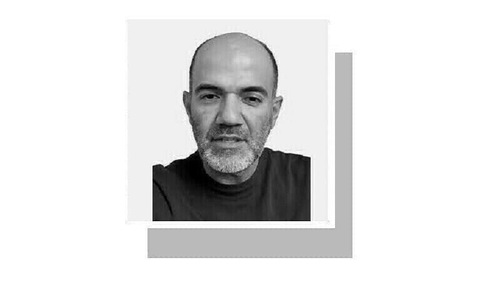
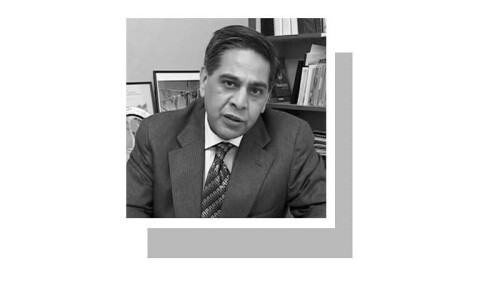
ISLAMABAD, Feb 25: The World Health Organisation (WHO) on Saturday said the alleged fake immunisation conducted by Dr Shakil Afridi had nothing to do with polio campaigns as DNA cannot be collected orally.
Pakistan’s polio campaign came under immense pressure when people in Khyber Pakhtunkhwa and other parts of the country refused to administer drops to their children after reports that Dr Afridi had managed a fake polio campaign for taking DNA of Osama Bin Laden in Abbottabad.
In an interview with Dawn, WHO’s special envoy on global polio eradication and primary healthcare, Dr Hussain A. Gezari said:
“This person (Dr Afridi) was not supported either by the government of Pakistan or any international donor agency for any immunisation campaign, and secondly, we don’t collect blood samples during vaccination campaigns.”
Dr Afridi is currently under the custody of intelligence agencies and has been booked by the government on the charge of treason.
Setting aside rumours linked with efficacy of the vaccination in some section of the media, Dr Gezari said: “The vaccine being used to eradicate polio globally is verified, cleared and checked for quality by WHO and has nothing to do with any type of transmission of disease to any child. No one has ever died or can die of the vaccine. The polio vaccine is sent to any country only for a short period of time and there is no chance for it to expire.
“This is nonsense if someone says that the vaccine will cause death and such people should not be taken seriously,” he insisted.
When told that in Pakistan people attributed a lot of credibility to religious leaders who usually linked polio vaccine with infertility, he asserted: “I have had meetings with Maulana Fazlur Rehman, Maulana Samiul Haq and Qazi Hussain Ahmed and they all support the polio campaign in every way possible. Maulana Samiul Haq even agreed to run an awareness campaign in a few days.”
It may be noted that refusals to administer polio drops to children due to religious misconception have decreased manifold in the country; however, in the troubled parts of Fata and Khyber Pakhtunkhwa it is still a cause of concern.
Asked about the failure of the authorities concerned in eradicating polio, the WHO official said: “There cannot be any other reason than the fact that we are not reaching every child during the polio campaigns.”He explained that China’s population had crossed the mark of over one billion but the country eradicated polio by conducting just four campaigns. On the contrary, so far Pakistan has held more than 100 polio campaigns.
Regarding India’s recent success in polio eradication and the fact that it was on the verge of being declared a polio-free country, he said: “The main difference between Indian and Pakistani polio prorgrammes is that people and the government in India are pumping in their ‘own’ money towards eradication of the disease and they are more serious.”
Commenting on the biggest hurdle in the way of Pakistan becoming a polio-free country, he said the district health officials should be held properly accountable. Besides, in national campaigns officials hire their own relatives and even children as young as seven years of age.
“How do you expect a seven-year-old thumb-sucking kid to implement a polio campaign of the government,” said Dr Gezari.
He added that international polio eradication campaign was started in 1988 and Pakistan joined the group in April 1994.
Dr Gezari said: “The first national campaign was initiated by your government in 1994 and that year Pakistan reported 25,000 polio cases, and the number was just 198 last year, which clearly shows that the programme is working.”
Meanwhile, WHO’s surveillance coordinator Dr Nima Abid told Dawn that two polio cases had been reverted on Saturday. “The cases from Bahawalnagar and Naushahro Feroze were found negative for polio virus upon retesting by an Islamabad laboratory and now the number of polio cases stands at 11, not 13. The samples are again sent to the CDC laboratory in Atlanta, US, for reconfirmation.”