



 0
0

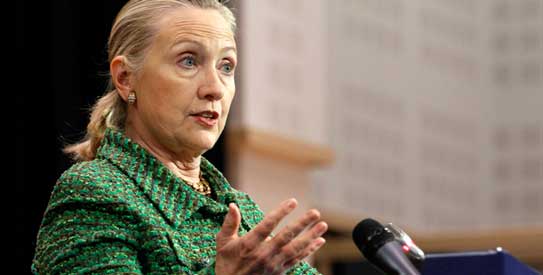
WASHINGTON: The diversion of US military aid to Pakistan’s nuclear programme remains a major concern for the Obama administration even though it has built a firewall to prevent the misuse, says US Secretary of State Hillary Clinton.
In her testimony before the Senate Foreign Relations Committee, Secretary Clinton also stressed the need for Pakistan to curb the materials that could be used to make improvised explosive devices, noting that such devices had killed thousands of Pakistanis as well.
She appeared before a number of House and Senate committees on Tuesday and Wednesday to defend the administration’s foreign aid budget for the fiscal year 2013, which includes $2.4 billion for Pakistan.
During one of the hearings, Senator Jim Webb, a Virginia Democrat, asked the top US diplomat if the Obama administration had a mechanism to prevent Pakistan from using US military assistance for expanding its nuclear programme.
“Well, we certainly have constructed one,” she replied. But, “the fair question is even with the firewall, if you provide aid for other purposes, does that permit the government then to divert funds that should be spent for health, education, energy, etcetera to that programme? And it remains a serious concern of mine, senator.”
The US, she said, was engaged in a “very tough dialogue” with Pakistan about the reforms they needed to make for their own people.
The Pakistanis, she claimed had invested “the great bulk” of their revenues into their military establishment, including their nuclear programme.
This, she said, was done at the great cost of not providing basic education, healthcare, electricity and amenities to their people.
Providing these basic facilities, she noted, would demonstrate to the people of Pakistan they had a government that cared about them and produced for them.
“So, I can answer the direct question, yes we have a firewall but that isn’t the end of the dialogue,” said the US Secretary of State.
“We’re going to keep pressing hard to make sure that the IMF and the World Bank and we and others are working towards the kind of reforms that are going to stabilise Pakistan for the long-term.”
Senator Webb said he also had held a number of discussions with former chairman of the US Joint Chiefs of Staff Admiral Mike Mullen on this subject and urged the US administration to put this at one of their highest security priorities.
“I understand how that could be taken in a different way from the Pakistani side. But you can’t look at the way that they’ve expanded their nuclear programme and not want to try to figure out whether we are indirectly assisting it,” the senator said.




























