0
0

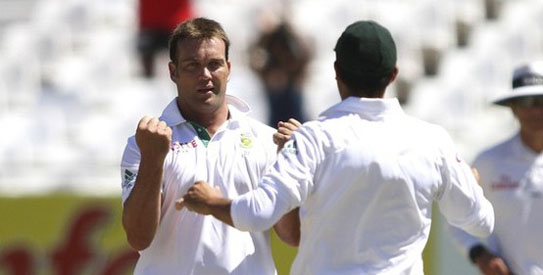
WELLINGTON: The International Cricket Council has backed the accuracy of technology used in the Decision Review System after its developer threatened to withdraw it from the current New Zealand-South Africa test because of criticism from players South Africa all-rounder Jacques Kallis and New Zealand fast bowler Doug Bracewell both questioned the accuracy of the Virtual Eye system after decisions reviewed during the first test at Dunedin went against them.
Kallis said “99 percent” of international cricketers had doubts about the accuracy of the technology. But ICC general manager of cricket and former South Africa player Dave Richardson said his organization had faith in its reliability. Ian Taylor, head of the New Zealand-based Animation Research company, had threatened to withhold rights to the use the Virtual Eye technology for the second and third tests of the New Zealand-South Africa series because of player criticisms. He withdrew the threat on Monday when the ICC restated its support for the system.
“We’ve looked at both decisions (involving Kallis and Bracewell) and are 100 percent satisfied that ball tracking provided is as accurate a result as could have been achieved,” Richardson said.
“As far as we are concerned the majority of players are certainly in favour of using the DRS,” he said. “We have 100 per cent support for its level of accuracy and reliability. The way we use it is totally fit for purpose and we wanted to reassure Ian we support the technology.”
Richardson said examination of the system over several years showed “more than 97 percent” reliability.
“Bottom line is it’s going to be more consistent and accurate than the human eye,” he said. “To people who want to not have the DRS, my argument is if we go back to not having it we are going to have a situation that's worse than it is now.”
Kallis and Bracewell's complaints both concerned lbw decisions. In Bracewell’s case, the ball was judged to have pitched outside leg stump, which conflicted with immediate visual evidence that suggested the ball had pitched on the line of the stumps.