ACCORDING to international surveys, Pakistan lags behind the world corporate community in gender equality.
The Global Gender Gap Report 2011 of the World Economic Forum has ranked Pakistan at 134th place in terms of the ratio of men to women’s earned income among 135 countries selected for the survey.
Women are only 2.4 per cent of the total administrators and managers in Pakistan.
As a subject, gender in management is relatively less researched branch of knowledge in our part of the world though the gender equality increases the stock of human capital, makes markets more competitive and increases productivity. In fact, men and women have complementary capabilities essentially required for effective business management.
In Pakistan, women are mostly seen either teaching in primary or secondary educational institutions, as workers in stitching units, packaging divisions or handicraft related enterprises. A few women are working in the executive positions in large organisations as compared to men. This state of the affairs is embedded in the national cultural ethos.
The UNDP’s Human Development Report 2011 has also ranked Pakistan as the worst performer among South Asian countries in building capabilities of women.
Sri Lanka has been found the best performer in South Asia in terms of women’s wellbeing with respect to their economic participation, educational attainment, political empowerment and health indicators.
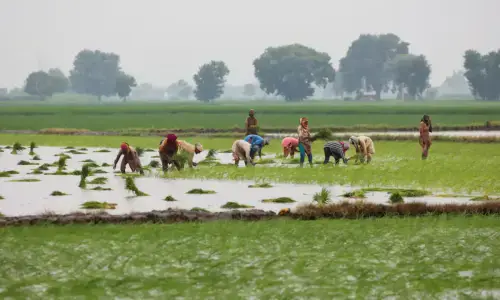
Pakistan has performed better only in political empowerment of women, due to its high rating in the world, in terms of the number of women in parliament. Women hold 29 per cent of parliamentary seats. The work of women in agriculture and domestic sectors has gone largely unnoticed. In recent years, some legislation has been introduced to protect women at workplaces. Several studies have shown that people perceive successful managers to have the characteristics, typically associated with men, though the actual qualities that successful managers possess are a combination of masculine (forcefulness, self-confidence, task orientation, initiative etc) and feminine (concern for people, feelings, and relationships) traits. But discriminatory practices at home and at the work place on the basis of gender bias create more employment for men than women in all walks of life.
However, despite the odds, some significant achievements have been made in the last one decade which shows the potentials of Pakistani women in the field which were traditionally taken as purely men’s turf. The Pakistan Air Force began commissioning women as pilots and engineers. For the first time, 12 women were selected for basic and preliminary flying training.
The first PAF female pilot started flying in October 2005. Sanhia Karim became the first Baloch woman to join Pakistan Navy as a member of squad and this squad comprised of around 53 women officers and 72 sailors. Dr Shamshad Akhtar became the first woman to head the State Bank of Pakistan in 2007. Women also took on tasks as bus conductors, shop attendants and salespersons.
A few Pakistani women have got into the corporates and some other organisations as managers and leaders. However, the general negative attitude towards women managers has not visibly changed. There are a number of reasons of women’s under representation in the corporate world, but the main hurdles in women’s entry is the lingering feudal culture.
The writer is a professor of management and social sciences at SZABIST mustaghis@szabist.edu.pk