0
0

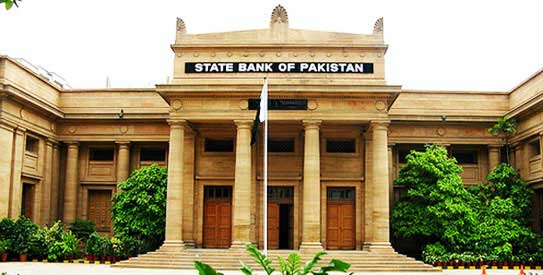
KARACHI: Pakistan’s economy is expected to grow by 3 to 4 per cent in the fiscal year to end-June, though risks to macroeconomic stability have increased in recent months, the central bank said on Tuesday.
This compared to the government’s target for gross domestic product (GDP) growth of 4.2 per cent for the year. GDP expanded by 2.4 per cent in the previous fiscal year.
The risks stem from weaknesses in the external sector and a widening fiscal deficit, which is expected to grow to between 5.5 and 6.5 per cent of GDP in the current fiscal year, the State Bank of Pakistan said in a quarterly report.
“Containing the overall fiscal deficit to its revised target of 4.7 per cent of GDP seems to be challenging,” the report said.
The government had originally set a target of 4 per cent of GDP for the 2011/12 fiscal deficit, but revised it to 4.7 per cent after it hit 2.5 per cent in the first half of the fiscal year.
In order to finance the deficit, the government may borrow from commercial banks, making them less likely to lend to the private sector, which could choke growth.
On the external front, the State Bank of Pakistan projects the current account deficit to range between 1.5 and 2.5 per cent of GDP for FY11/12.
According to the latest data available, the current account deficit widened to $2.952 billion in the first eight months of 2011/12 -- about 1.26 per cent of GDP.
While the current account deficit may not be that big, financing of the deficit poses a grave concern. Amid lack of external funding, the central bank is likely to use its foreign exchange reserves to finance the deficit.
This will draw down its reserves and put pressure on the rupee, which closed at 90.71/75 on Tuesday. It hit a record low of 91.28 in January.
Inflation is projected to be between 11 and 12 per cent for the year ending June 30, compared with the government’s target of 12 per cent.