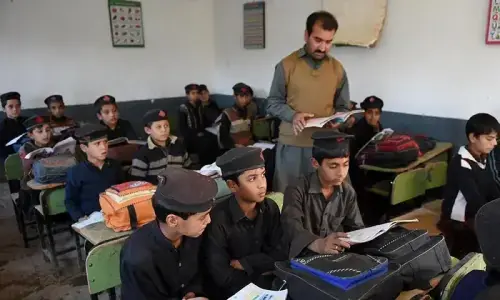
PESHAWAR, March 31: Speakers at a consultation here on Saturday asked the government to pay more attention to primary education as it was foundation of the education sector.
They were unanimous in their views that for bringing education sector on par with the developed world, drastic improvement should be brought in the primary education.
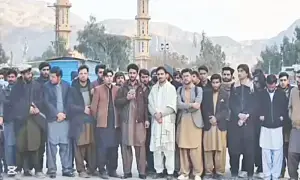
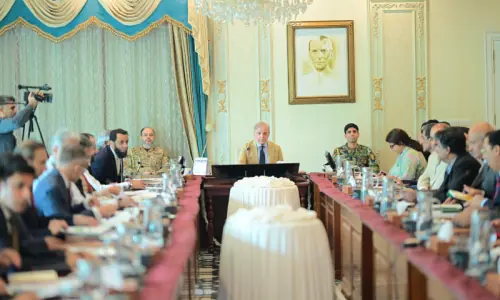
The consultation with political parties titled ‘Effective education financing: an overview of Khyber Pakhtunkhwa province’ was organised by Institute of Social and Policy Science (I-SAPS) in collaboration with Department for International Development (DFID).
The consultation was participated by leaders of different political parties including MPA Noor Sehar, Khwaja Yawar Naseer and Ayub Shah of Pakistan People’s Party and Pakistan Muslim League-Nawaz provincial chief Pir Sabir Shah and Rehmat Salam Khattak and Jamaat-i-Islami provincial chief Prof Ibrahim and Jamiat Ulema-i-Islam provincial secretary information Abdul Jalil Jan.
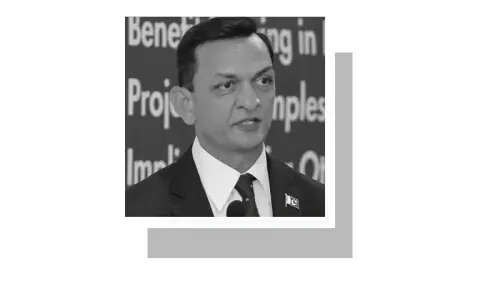
The organiser of the consultation, Ahmed Ali, urged the politicians to discuss the problems of education department while delivering speeches during political rallies and public meetings.
“Education is not only facing technical and administrative problems but it has also ignored by the politicians and they have given so far less important to it,” he said.
Mr Ali said that 40 per cent of children were out of schools in Khyber Pakhtunkhwa. The enrolled students aged five to nine years were 52 per cent while percentage of enrolled students aging five to 16 was 60, he said.
“The college sector has also been ignored in the country and no improvement has so far brought in the last few decades,” he said.
He asked politicians to carefully frame law regarding compulsory education in the light of 18th Amendments, saying everything in the new law should be cleared to avoid confusions in future.
Mr Ali said that it was good to promulgate laws and frame regulations but the politicians should also pursue implementations of such laws.
“Every new government rejects the rules and regulations of the previous governments and makes its own rules. Rules and regulations should be made after thorough research,” he said.
Later, the forum was opened for discussion and politicians were asked to share their views. They said that the prevailing problems in education sector needed drastic reforms.
Some of the opposition politicians were of the view that education standard in government schools was on decline owing to political interference.
They also criticised teachers for not performing their duty and playing with the future of children.