0
0

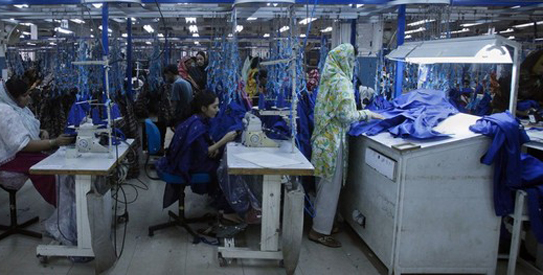
The growth in large-scale manufacturing, which accounts for more than 70 per cent of the industrial output, has posted a growth, though paltry, since December despite acute energy shortages and weak textile performance.
Strong domestic demand led to a growth in food, beverages, tobacco and textile industries. As a result, the overall LSM posted a growth of 1.26 per cent in July-January period this year compared to the same period last year.
Over the past few years, the manufacturing output has widely fluctuated as a result of three main factors: energy crisis, ever rising input cost, and lack of domestic and international market demand.
The industrial production also lacks diversification and international quality standards. Manufacturing supply chain is skewed towards production and assembly of goods that use imported inputs intensively like the auto industry.
Components of the supply chain, such as research and development, design, distribution and marketing, have not been accorded the importance they deserve while. the overall production dipped mainly because of power shortages.
With the increased the weight of food and beverages at 12.37 in this year’s revised industrial base index, there is a surge in its growth.
At the same time, the ministry of industry and Bureau of Statistics have no clue about the layoffs or cut in wages due to low growth in the industrial production.
Chairman of All Pakistan Textile Mills Association Mohsin Aziz rejects the government figures showing positive growth in the industrial sector over the past few months. According to his claim, the industry he represents has witnessed a negative growth of an average of 15-20 per cent since October 2011. He cites power shortages and liquidity crunch as the main factors for ‘negative growth’.
‘Many manufacturing units have also closed down’, Mr Mohsin said, adding no industry has been set up in Pakistan in the recent past.
An allocation of Rs1.548 billion for development of the manufacturing sector was announced in the fiscal year 2010-11 but only Rs946 million was released. In 2011-12, an amount of Rs2.03 billion was budgeted but so far only a meagre amount has been distributed.
The government has projected a two per cent growth for large scale manufacturing, based on expected growth in industries such as chemicals, automobile, pharmaceutical, electronics, leather products, paper & boards, and non-metallic minerals in 2011-12. But the seven months statistics show negative growth in production of chemicals, automobiles, electronics etc, making it difficult to achieve the targeted growth figure.
Going forward, the energy shortages will continue to be an abiding constraint for manufacturing growth, particularly for textile, glass making and fertiliser units. Alternative sources of energy at competitive prices needs to be tapped. Finally, there is a need to carry out an industrial survey to identify loopholes and problems that hampers growth in the manufacturing sector in order to devise a sound policy to check the process of de-industrialisation.