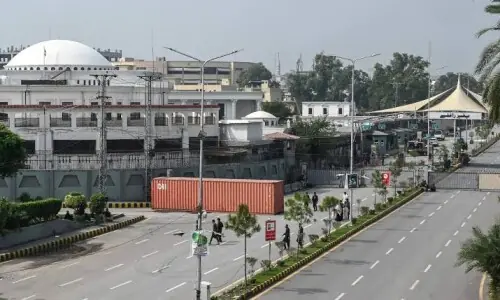
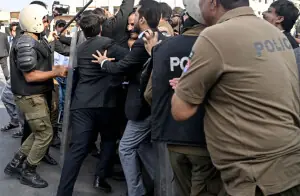
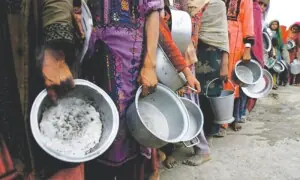
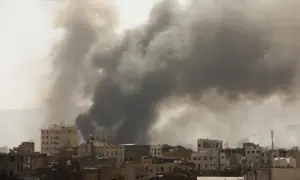
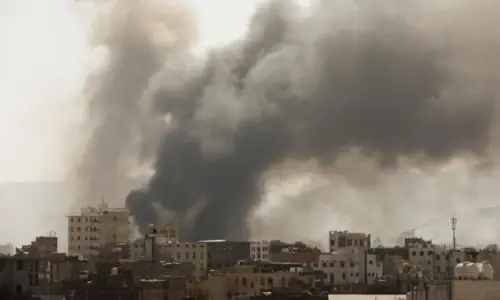
AFTER several days of violence, an army-led crackdown started late Thursday against members of sectarian outfits in Gilgit. The military is being assisted by the local administration, while the local police have been excluded from the operation. Curfew was also lifted for two hours in the Gilgit-Baltistan capital on Friday, giving citizens the chance to stock up on essential items. Violence erupted on Tuesday when a grenade attack targeted protesting workers of the Ahle Sunnat Wal Jamaat (formerly Sipah-i-Sahaba Pakistan) in Gilgit. In related violence, passengers were pulled off buses in Chilas and — reportedly due to their sectarian affiliation — shot by members of a mob, recalling February’s Kohistan tragedy. The violence spiralled from that point on, inspiring more killings and kidnappings. Though the army’s action was needed, matters remain far from normal in the troubled region. There is shortage of food, medicine and cash, while residents are being fleeced by traders. The region is also cut off from cellphone coverage while flights to Gilgit have been suspended. Demonstrations in various towns continued on Saturday.
Yet despite the region being consumed by communal frenzy there are glimmers of hope. It was reported that elders from Diamer helped escort stranded Shia passengers to Gilgit while Sunnis in Shia-dominated areas were also given protection. This points to the fact that the locals of Gilgit-Baltistan — who in many cases have ties of blood despite their religious differences — want harmony, and that sectarian elements — mostly non-natives — are the ones poisoning the atmosphere. Restoring communal harmony may be a distant goal, but the authorities can start by rooting out sectarian parties from the region. The current crackdown is a first step; action needs to be sustained so that banned outfits do not regroup and restart their activities in future. Both the local as well as federal governments need to do a much better job of clamping down on violence. Also, the curfew needs to be lifted as common people are suffering the most because of it. The security forces can increase troop deployment to keep an eye on criminal elements, but people must be allowed the freedom of movement so that they can resume their normal activities.