0
0

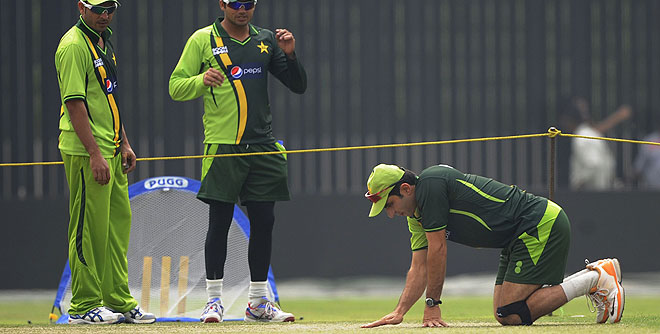
DUBAI: A recent reduction in test draws is due to wickets around the world offering a better balance between bat and ball, International Cricket Council (ICC) pitches consultant Andy Atkinson said on Tuesday.
The ICC, the game's governing body, said in a news release on Tuesday the number of draws in the five-day game had dropped from 38 percent in 2010 to 10 percent last year.
“In tests we are looking for a pitch that is fair to bat and ball and in the last 18 months or so we have got more of that and a lot more positive test results,” Atkinson told Reuters.
He was speaking ahead of a two-day workshop in Dubai starting on Wednesday involving groundsmen from each of the 10 test-playing countries plus three from second-tier nations.
Atkinson has prepared surfaces all over the world and will be a central figure in the discussions at the ICC's offices.
“What we are trying to do is reinforce the message that you need to prepare a different pitch for a five-day test than you would for a one-day game,” he said.
“The balance you are looking to achieve between bat and ball for a five-day game is about 50-50 but, although bowlers might disagree, for a 50-over or 20-over-a-side match it needs to be in favour of the batsmen as people want to see fours and sixes.”
The future of tests has provoked significant debate in the face of the rise of the popular Twenty20 format and ICC chief executive Haroon Lorgat said fewer draws was a positive sign for the longest form of the game.
OUTSTANDING PITCHES
“Curators and groundsmen around the world deserve credit for preparing outstanding pitches which have produced thrilling test match cricket in recent times,” he said in the news release.
Lorgat told Reuters the workshop was not part of a bid to standardise test pitches.
“Definitely not,” he said.
“We want good and fair conditions for both teams wherever they are playing and different climatic conditions and soils will always ensure unique pitch characteristics in different parts of the world.
“What this workshop will do is create a forum for sharing knowledge on the art of pitch preparation in those differing conditions.
“Each participant should expand his own knowledge and, in turn, take back their learnings and pass it on in their home country,” added Lorgat.
“Each part of the world has its own attraction with regards to playing conditions and this must remain. That is one of the beauties of our great sport and long may it continue to test the skills of top-class cricketers.”