0
0

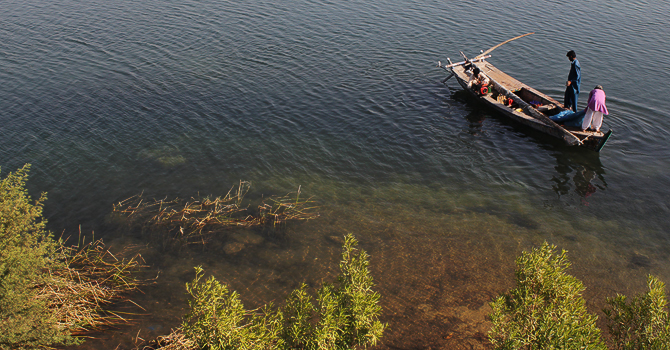
KARACHI, April 19: While the findings of an examination of water samples taken on a request of the Sindh Environment Protection Agency from a ‘polluting drain’ feeding the Keenjhar Lake are expected to be out by Friday evening, a senior official of the irrigation department said that an increase in the lake inflow that some experts recommended to reduce toxicity could not be done due to serious water shortage.
Two government departments had also collected water samples for examination to check the reported contamination, but their results were pending. The findings may help in determining the source of contamination and in evolving a strategy to prevent further deaths of animals and an outbreak of waterborne diseases.
The Keenjhar Lake has been receiving highly polluted water from a storm drain in Jhimpir, a town located about 70 kilometres from Karachi and parts of Thatta district, for the past few days. This is the first time the drain in Jhimpir has turned contaminated, causing the death of fish and around a dozen animals that drank its water.
It is worth noting here that the lake — the main source of water supply to Karachi and parts of Thatta — is a protected site under an international convention and provincial government rules.
Speaking to Dawn, Kotri Barrage chief engineer Mohammad Mithal Abbasi, however, denied the drain feeding the lake had received highly contaminated water and was polluting the lake.
“I have visited the spot today. The drain water is not toxic, though it can be called slightly tainted on account of the recent rains,” he said.
He was of the opinion that the lake’s contamination from the drain was not possible, because the former was located in depression while the lake is situated at a higher ground.
However, he couldn’t justify why the livestock, fish and other animals died if the drain’s water was not toxic.
Asked whether his department tested the drain’s water, he replied in the negative. But he insisted that the samples taken from the Keenjhar Lake had been found fit for human consumption.
Regarding the release of increased water into the lake to reduce the level of contamination, he said currently there was serious water shortage.
“As soon as the situation will improve over the next four to five days, more water will be supplied to the lake,” he said.
Sepa
On the request of the Sindh Environment Protection Agency (Sepa), an expert of analytical chemistry has been conducting analysis of the samples collected from the drain.
“The test samples include that of fish, water and soil,” said the expert, Dr Ahsan Siddiqui.
“I was shocked to see the dead turtle oozing out blood as soon it was taken out of the water. The skin of other dead animals, too, was badly damaged,” he said, “but one must wait for the results, which will be available by Friday evening.”
“Such a strong impact on animal bodies might be the result of high contents of urea or mercury in the drain water while high concentration of inorganic compounds such as lead and arsenic may also be present,” said the expert, who is also a visiting professor at local and foreign varsities.
Though the exact source of contamination could only be known once test results were available, Dr Siddiqui said it was possible that the wind energy companies used some chemicals for blasting that got mixed with some metals and entered the drain during the recent rains.
“Pollution can be effectively managed by the release of adequate quantity of water,” he said, adding that downpour in the area for the next few days would benefit.
In reply to Dawn queries, Sindh Environment Protection Agency Director General Rafiuddin said that the federally-run alternative energy development board was solely responsible for allowing companies to install wind turbines in Jhimpir. “Sepa has nothing to do with the project. However, we have sent teams to the spot and are coordinating with relevant departments. The results of the samples will help us in chalking out a line of action,” he said.
Windmills project
When contacted, the manager of a wind energy project (under Fauji Fertiliser) located near the affected drain, retired brigadier Tariq Aizaz, rejected the perception that chemicals were used in the so-called blasting technique to install windmills.“There is no need to carry out a blast to install windmills. The digging process is carried out with the help of machinery. It’s unfortunate that people point fingers at an environment-friendly project without acquiring its knowledge,” he said.
He hinted at the contamination of dolomite, a carbonate material that was extensively taken out from the area, in the drain’s water, but said it would be inappropriate to blame anyone without having carried out proper tests of the water.
Governor seeks report
Meanwhile, Sindh Governor Dr Ishratul Ibad directed the environment protection agency, irrigation department and the Karachi Water and Sewerage Board to take urgent measures to keep the lake safe from hazardous effluents, adds APP.
He also sought an urgent report in this connection from the KWSB managing director Misbahuddin Farid.
In his report, the KWSB chief stated that the hazardous effluent was coming through two natural storm drains from the industrial area of Nooriabad.
However, he said, the Keenjhar Lake was under the administrative control of the irrigation department.
The governor directed the irrigation department to undertake every step to keep the lake water safe for marine life.