0
0

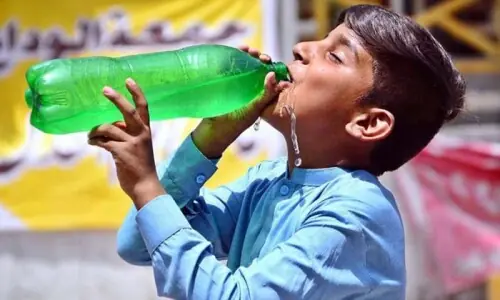
MITHI, April 20: No water releases into the Ran distributary canal for the past one and a half month because of a prolonged water rotation programme has created water crisis in scores of towns and villages in Tharparkar district.
Around 200,000 residents of Mithi, Diplo, Islamkot and scores of villages are supplied potable water from the canal for an hour after 10 days in the beginning and later on once a month through pipeline laid from Naukot to Diplo, Mithi and onwards.
The precious commodity is stored in small tanks in houses in towns and inhabitants of villages near the pipeline fetch water from big tanks built at various locations along the pipeline after trudging on sandy paths for miles.
They bring water in earthen pitchers, plastic cans or rubber bags and take them on foot or on the backs of donkeys and camels.
The villagers who used to drink their livestock water in their villages now drive their cattle to the tanks to get water.
Most of the wells in these towns and villages that remained the only source for water in the past have fallen to disuse over the past couple of years after the pipeline had been laid.
The watermen who owned such wells in towns and earned livelihood by selling water to residents in rubber bags (pakhals), have become jobless and abandoned their business when local municipal committees started supply of canal water to these towns.
The information gathered by Dawn revealed that residents of Mithi, Islamkot, Diplo and score of villages have not been supplied potable water for the past one and a half month through pipes.
Inhabitants of Kaloi, Rahmanabad, Santoro, Dodharo, Khetlari, Rahmanabad and other villages near Naukot are facing the same situation.
Ranshal Das Kolhi, Ali Khan Nohri and other residents of the Kaloi union council said that non-supply of water for a couple of weeks through Ran distributary and other water channels had seriously affected cultivation of crops.
Some landlords had diverted stagnant, brackish water of lakes and ponds to their land but their haris consumed it themselves and fell prey to waterborne diseases, they said.
According to a study conducted by an NGO, Association for Water and Applied Education and Renewable Energy (Aware), 80 per cent of groundwater in Thar is unfit for human consumption but 50 per cent of population is consuming it with total dissolved salts of over 5,000mg per litre(mg/1).
The study said that though normal fluoride level in water is supposed to be 1 ppm but at many locations of Thar it is as high as 13ppm, making it unfit for human consumption.
Imtiaz Ahmed Soomro, SDO of Naukot sub-division of irrigation department, said that water rotation schedule for Ran distributary had caused shortage of drinking water in various areas.
He said that measures were being taken to ensure supply of canal water for drinking to the population of Mithi, Islamkot and other areas of Thar.