0
0
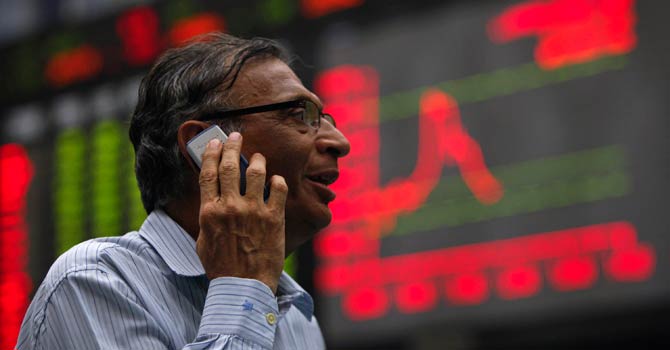
ISLAMABAD: Yielding to pressure from brokers, the government has decided to allow through a presidential order investment of ‘black money’ in the capital market, giving them an opportunity to whiten millions of dollars in undeclared earnings.
A well-placed source told Dawn on Monday that the Federal Board of Revenue had vetted the required ordinance from the law ministry to make way for implementing the controversial decision, the first of its kind in the country’s history.
The FBR will send the draft ordinance to the presidency on Tuesday and President Asif Ali Zardari will promulgate it over the next 24 hours, the source said, adding that the urgency was clear from the fact that the president had convened the National Assembly session on April 25.
Different interest groups, especially stock brokers, have been putting pressure on the government for the past couple of months after its economic team, comprising Finance Minister Dr Abdul Hafeez Shaikh and the Deputy Chairman of the Planning Commission, Dr Nadeemul Haq, promised an amnesty scheme to whiten black money.
The government intended to announce the decision in the budget, but fearing a political backlash it decided to implement the controversial scheme through a presidential ordinance, which has a life of 120 days.
The Security and Exchange Commission of Pakistan (SECP), the regulator of stock market and a supporter of the scheme, has sought suspension of section 111 of the Income Tax Ordinance till June 2014. The section allows officials to tax income, assets and investment of a person whose nature and source are unexplained.
Under the proposed scheme, black money invested in the stock market for 120 days running will be exempted from the section 111. This means that since the FBR will not ask investors about the source of money, it will automatically become legal.
The SECP claimed that investors would invest the money earned by them over the past 36 years in the absence of capital gains tax.
But economists fear the amnesty scheme will open doors for corruption and further delay the much-awaited process of reducing the size of black economy.
A report by an Islamabad-based think tank, Sustainable Development Policy Institute, and the United Nations Office on Drug and Crime (UNODC) projected the size of informal economy at $34 billion in 2010-11. This is one-fifth of the formal economy and needs to be plugged through administrative measures.
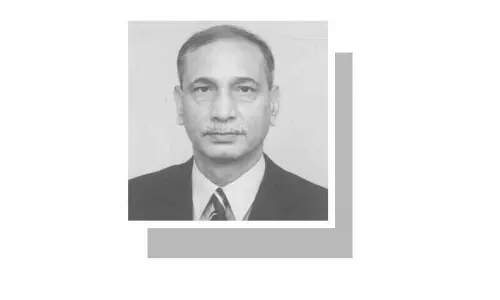
The proposed scheme did not go down well with former economic adviser Dr Ashfaq Hassan Khan. He said the move would promote corruption through ‘legal means’. “We are promoting legal corruption, which is not good for the country. This will encourage people not to pay taxes and indulge in corruption.”
He said the scheme was also not politically viable for the government. “There is a general perception that corruption is at its peak. Bringing such a scheme, in my opinion, will not be politically advisable,” Dr Ashfaq said.
According to the source, tax officials were not in favour of the scheme in private and were of the opinion that the government should encourage the whitening of money through investment in infrastructure funds and treasury bonds instead of the stock market.
Last year the government imposed a 10 per cent capital gains tax (CGT) on holding of shares below six months and 7.5 per cent on holding shares for less than 12 months.
Exemptions were granted to holding of shares above one year. But the government has for failed to implement this decision.
Member Inland Revenue Service Shahid Husain Asad told Dawn that CGT rates would be implemented under the new package. However, he said, there would be a revised rate of eight per cent CGT on holding of shares for more than six months and less than one year and 10 per cent on holding of shares less than six months. He said there would be 0.1 per cent capital value tax on trading of shares as well.
An influential economic manager from Karachi told Dawn that the whitening of black money would create a short-term bubble. In the long-term, he said, the government would have to ensure transparency and investments through other schemes, instead of such unpopular ways.
About the collection of taxes, he said the FBR might generate some money, but tax officials could not locate the persons who paid the money through stock markets.
“Therefore, the scheme will not help in documentation of economy, he said, adding that such scope would again inflate the market artificially. Holders of black money would invest in the market and eventually leave it after whitening the money.
But former finance minister Dr Salman Shah said the scheme had both pros and cons. He said black money would wait for follow-up measures by the government in case no long-term measures were taken for documenting the economy. He said the government should also reduce tax rate and broaden the base. He called for documenting the economy and scrutinising the sources of black economy.
On the positive side, he said, the scheme would facilitate foreign capital inflows into the stock market. This could be followed by foreign direct investment.
Dr Salman ruled out speculations that capital flows would cause bubble in the market because the price-earning ratio in Pakistan was less as compared to other Asian markets.