ISLAMABAD: Pakistan on Wednesday successfully test-fired the Hatf IV (Shaheen 1A) missile which is a nuclear-capable intermediate-range surface-to-surface ballistic missile, DawnNews reported.
“Pakistan today successfully conducted the launch of the intermediate range ballistic missile Hatf IV Shaheen-1A weapon system,” ISPR said in a statement.
According to a statement issued by the ISPR, the ‘Shaheen 1A’ missile is an upgraded version of the ‘Shaheen 1’ with a longer range.
Shaheen 1 is estimated to have a payload capacity of 1,000 kilograms and a range of 750 kilometres. The exact range of the missile was not revealed, but retired General Talat Masood, a defence analyst, told AFP intermediate range ballistic missiles could reach targets up to 2,500 to 3,000 kilometres away, which would put almost all of India within reach.
The test missile’s impact point was in the Indian Ocean.
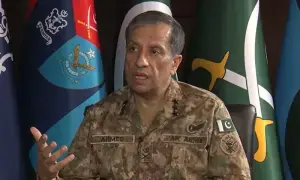
The ISPR statement further added that Director General Strategic Plans Division Lieutenant General Khalid Ahmed Kidwai was also present at the test site.
Lieutenant General Kidwai congratulated scientists and engineers on the successful launch, and the accuracy of the missile in reaching the target and said that the improved version of Shaheen 1A would further consolidate and strengthen Pakistan's deterrence abilities.
Pakistan's arsenal includes short, medium and long range missiles named after Muslim conquerors.
Pakistan's most recent missile test came last month with the launch of the short-range nuclear-capable Abdali, while in April 2008 it tested the Shaheen II, or Hatf VI, missile with a range of 2,000 kilometres.
President Asif Ali Zardari and Prime Minister Yousuf Raza Gilani congratulated the scientists working on the program over the success of the missile test.
The launch comes days after India announced that it had successfully test-launched a new nuclear-capable, long-range missile. The Agni-V has a range of 5,000 kilometres.
India's missile test last week brought a muted international response, with China downplaying its significance, insisting the countries were partners not rivals, and Washington calling for “restraint” among nuclear powers.
This was in sharp contrast to the widespread fury and condemnation that greeted North Korea's unsuccessful test launch of a long-range rocket on April 13.