Where have Washington’s Pakistan experts gone?

| 26th April, 2012
18
Send to Kindle

Something is missing in Washington, and I’m not referring to bipartisanship. I’m talking about Pakistan expertise.

Last year, Shuja Nawaz, head of The Atlantic Council’s South Asia Center, lamented the exodus of Pakistan experts from Washington policy-making jobs. Yet this only represents the tip of the iceberg.

Scan the speaker rosters of the city’s think-tank symposia, study the bylines of policy briefs and commentaries, and scrutinise the talking heads on DC talk shows.

What do you see? The same set of names, drawn from Washington’s small group of esteemed Pakistan-watchers.

Numbering about two dozen, they include diplomats (Teresita Schaffer), scholars (Stephen Cohen, Christine Fair), and those who have engaged both public service and academia (Daniel Markey, Lisa Curtis, Marvin Weinbaum). In more recent years, this fraternity has also taken in transplanted Pakistanis (such as Nawaz).

Yet beyond this venerable group, there is little else. In a city that constantly refers to the immense strategic significance of Pakistan, this deficit of expertise is striking — yet also unsurprising.

Americans, after all, are notoriously uninformed about foreign affairs — and even about a nation that their government insists is so important (my countrymen have been known to confuse Pakistanis with Palestinians).  Also, US public opinion toward Pakistan is strongly negative — a February 2012 Gallup poll found that only 15 per cent of Americans regard Pakistan positively (in the last 10-plus years, only once has this figure exceeded 30 per cent). Such a climate does not exactly encourage Americans to gravitate toward Pakistan.

Even those who wish to become students of Pakistan face obstacles. This is because US higher education doesn’t emphasise Pakistan like it does other nations and regions. A range of universities — the University of Washington, University of California at Berkeley, and SAIS/Johns Hopkins, to name just a few — boast programs specifically dedicated to the study of China. Yet Pakistan Studies programs are rare.

By no means does this signify a paucity of Pakistan-oriented scholarship in the United States — consider, just for starters, Anita Weiss’s work on gender, Sarah Halvorson’s on geography, and Ayesha Jalal’s on history — yet it does suggest that America’s higher education system refuses to place a high premium on Pakistan.

Little wonder many recent graduates flock to careers as China hands or Middle East specialists — yet few vow to become part of the next generation of Pakistan experts. My own experience is illustrative; during the early months of the Iraq War, I decided to pursue a master’s degree in Middle East studies. I entered the South Asia field only later on, through a combination of luck and happenstance (and I’m glad I did).

Wait, you may say: What about that cottage industry of Pakistan experts that has sprouted in Washington in recent years? “Only in DC can you be a Pakistan expert without ever visiting the region,” grumbled Washington-based journalist Huma Imtiaz last year. “Yet your average Pakistan expert, fresh out of college or mid-career, claims to possess a deep understanding of how Pakistan’s politics, military, and society work.”

Alas, this is not a cottage industry of Pakistan specialists — it is one of Af-Pak experts. In Washington, Pakistan is inextricably tied to Afghanistan and to the war that the US is embroiled in there. Little wonder two of the most popular (and best) information portals consulted by Washington Pakistan-watchers — the AfPak Channel and Colin Cookman’s Pakistan/Afghanistan/Terrorism News brief — focus on Afghanistan as much as (if not more than) Pakistan.

Predictably, those representing this new wave of “Pakistan experts” are mostly security specialists fixated on the Afghanistan War; few nurture an abiding interest in Pakistan’s public health woes, its burgeoning IT sector, or Lollywood; they are more concerned about the threat posed to US forces in Afghanistan by militant sanctuaries in North Waziristan, and about Islamabad’s role in the Afghan endgame.

With Washington’s Pakistan-followers effectively proxies for Afghanistan War- watchers, what will happen in 2014, when US combat forces have left Afghanistan? Will a reduced US military footprint in Afghanistan spell an end to Pakistan-heavy policy papers, panels and punditry in Washington? Will there still be ample experts on hand to contemplate Pakistan’s natural resource shortages, economic malaise, and education crisis — long-term challenges having little to do with Afghanistan?

Here is where the narrative grows less gloomy. Washington boasts a promising organisation, the Young Professionals Working Group on Pakistan, which comprises aspiring analysts of the country. Some of the capital’s most insightful Pakistan analysis in recent years has come from new and younger faces — Shamila Chaudhary, Moeed Yusuf, Joshua White, Stephen Tankel. Further afield, a cultural engagement program, Caravanserai, has barnstormed across America, hosting performances and film screenings by Pakistani artists — and hoping to pique schoolchildren’s interest in Pakistan.

Bipartisanship may be a lost cause in Washington. Yet there is still hope for strengthening and expanding the city’s ranks of Pakistan experts.


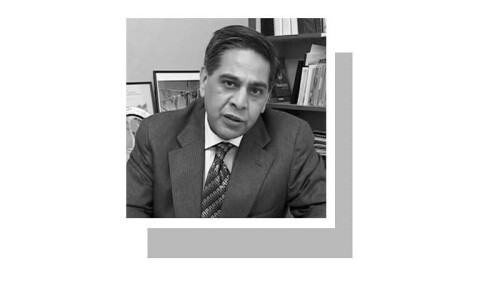
Michael Kugelman is the program associate for South Asia at the Woodrow Wilson International Center for Scholars in Washington, DC. He can be reached at michael.kugelman@wilsoncenter.org and on Twitter @michaelkugelman


The views expressed by this blogger and in the following reader comments do not necessarily reflect the views and policies of the Dawn Media Group.

COMMENTS

  1. Pakistan and US both are behaving like a hypocrite and back stabbing each other. US always act like they want to help Pakistan to strengthen its economy but in real terms they never did it. They, no doubt, provide hefty amounts as loans which have very little trickle-down effect to impoverished masses and fill the pockets of greedy politician. America is well aware of it but still continuing the same practice. If they really want to help Pakistan and help it to get out of this vicious circle of poverty, lawlessness and insecurity then they must do it through trade not by giving loans. US must stop portraying negative image of Pakistan and realize that how much Pakistan has suffered by fighting their proxy war.

  2. You can lead a man up to the university, but you can't make him think.

    - Finley Peter Dunne

  3. A Nice Article, An important topic…But I would like US to leave Pakistan alone….experts or no experts…when ever Pakistan has tried to stand shoulder to shoulder with USA as a friend, USA has always left Pakistan in the lurch….and that is the best expertise taught by life. So I would suggest that USA to keep its billions of dollars and its Washington Experts on Pakistan and in fact it should take Islamabad's (Foreign Qualified) experts on US also… That in itself would bring a better mutual understanding, respect between USA and Pakistan…..

  4. While not exactly Washington based, Anatol Lieven's recent book – Pakistan – A Hard Country, is a fantastic body of work, that deserves to be given particular credit …perhaps even more than Steven Cohen's work at this point of time. The expertise is there…it is just scattered around and personally I would trust these people more than the security focused ones -as the latter always have an eye for profit rather than people.

  5. Michael, You are our ambassador there. With all the UG_Lee stuff in the motherland , you are a ray of hope.

    You can do better, this country needs you. I can see you want to improve it ,make it better .I salute you for that..

  6. Amit-Atlanta-USA

    The weirdest aspect is the US (both the liberal media and the govt.) relies on mostly Pakistani experts themselves to report on the goings on in Pakistan, to explain all things Pakistani, while totally disregarding other sources such as India who have a solid understanding of Pakistan, its society & its geopolitics.

    Anyone with a bit of commonsense would say that you can't but be partial in your reporting, unless you step away from the melee and view it from a distance. There is also the fear factor in Pakistan looking at what happened to many eminent bold, irrepressible journalists such as Saleem Shahzad, and Murtaza Razvi.

    Also liberal media such as CNN are infiltrated by commentators such as the blatantly pro-Islamic Indian Mr. Fareed Zakaria with a deep bias against the US, West, Russia, India and even the Pakistani govt.(NOT the Pakistani people). These networks have upped their censorships to remove any comments/opinions that do not subscribe to their views, be it on Pakistan or any other issue.

    Arguably it only makes perfect sense to listen to both sides of a story, and let unfettered discussions to help readers formulate a balanced view of the goings on.

  7. A very important issue has been raised. I think this is probably one of the reasons why Washington's policies on Pakistan and not very well received. Pakistan is indeed a complex country where the public opinion is often completely opposite to the one our leadership propagates. Also, sadly, the latter does not very well represent the former. Hence, the public holds America in the same contempt it holds the current leadership. I think one mistake the advisors on Pakistan for Washington make is that they formulate their policies to cater to the leadership rather than being sensitive to how the public would react. No wonder, we feel that the leaders we've had so far are merely stooges of America. Both appear to function in a bubble completely detached from the ground realities and emotions on the steets. No wonder we never get to hear good news from Washington.

  8. Grass root organizations like the Taliban do a much better job of "rationalizing our life experiences" and helping us form a educated opinion about events. While analysts do have a flair for lingo and also coin public consumption phrases like "war of terror" etc. Their word is not believable and in essence ask us to look at the other side of coin. In the end we decide ourselves and the experts are a waste of money.

  9. A great article indeed. Tying Pakistan with Afghanistan is a fundamental mistake by Obama Admn. As Michael correctly pointed out, the focus moves towards miliary conflict or terror related incidents rather what's happening in daily life of Pakistani politics, economy and other aspects. AfPak term has been and will continue to hurt US interests in Pakistan. Well, US is paying price of its arrogance in big ways.

  10. To be quite honest I am sick and tired of ALL experts. They do have their uses, but unfortunately instead of providing factual information they are mostly involved in giving their opinions.

  11. the demise of Pakistani experts have been driven largely due to the hipocritical policies of America…it is not surprising.It is American arrogance & distrust that has led to mess in the region…from Iraq, Afghanistan to Pakistan…

  12. In America it is widely believed that if you claim to be a friend, be one. Experts on no experts, I believe that the PAK policies of the last few decades have resulted in loss of most of its support and sympathy even from the best of the friends. Every country has suffered one way are the other as a result and have a bitter taste about Pakistan. It is unfortunate but true.

    • Sir;
      In fact American belief going back a century is that there are no permanent friends and no permanent enemies

  13. All for the better. Soviets and Americans stomping about in the region have made a mess and people of the region are paying a heavy price for it now.

  14. I am glad at the demise, if this is the case, of Pak experts in the USA. It is their expertise that has led the region into the present mess.