ISLAMABAD, April 26: Pakistan has spelt out in no uncertain terms that US drone aircraft strikes against militants inside its territory must stop, but Washington is not listening, Foreign Minister Hina Rabbani Khar has said.
“On drones, the language is clear: a clear cessation of drone strikes,” Ms Khar said.
“I maintain the position that we’d told them categorically before. But they did not listen. I hope their listening will improve,” she said during an interview.
The attacks by the unmanned aircraft from Afghanistan, which US officials say are highly effective against militants, fuel anti-American sentiment in Pakistan because they are seen as violations of sovereignty that inflict civilian casualties.
Ms Khar’s sharp comments on the drone strikes came ahead of a two-day visit to Islamabad by the United States’ special envoy for Afghanistan and Pakistan, Marc Grossman.
Ties between Pakistan and the United States, allies in the war on militancy, have lurched from crisis to crisis as they spar over security, assistance and the future of Afghanistan.
An unannounced raid on Pakistani soil by US special forces who killed Al Qaeda leader Osama bin Laden last May plunged relations to a low, and tensions were further stoked in November when a Nato attack across the border from Afghanistan killed 24 Pakistani soldiers.
After a review of ties with Washington, a Pakistani parliamentary committee laid out a series of demands, including an end to US drone strikes.
Ms Khar said other methods should be used to take out militants in the border region between Afghanistan and Pakistan.
“We have to look at effective tools which are mutually acceptable. The cost of using tools which are not mutually acceptable is far, far too high. We’re looking at alternatives,” she said, without elaborating.
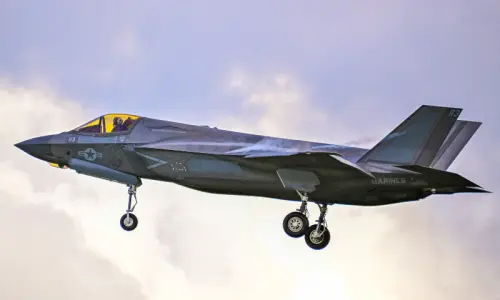
The commander of the corps in Pakistan’s northwest said last week that one alternative would be for the United States to share intelligence so that its ally’s F-16 fighter jets could target militants there.
According to Ms Khar, the military, which has dominated the country for much of its turbulent history, now has less sway over foreign policy. The military has largely controlled foreign and security policies, and has taken the lead in relations with Washington.
Ms Khar said new dynamics were now taking hold in Pakistan, one of the most unstable countries in the world. “I want you to also understand that things have changed in Pakistan,” she remarked.
“I think this overbearance of the role of the military in the foreign policy of Pakistan is something which will recede as time passes.”
Some may question Ms Khar’s assessment of the military’s role in foreign affairs given the long dominance of the generals.
But the military’s standing suffered dramatically after US special forces mounted a unilateral raid that killed Bin Laden on Pakistani soil. Since then, civilian leaders have grown more defiant of the military.
“I think all institutions in Pakistan are realising that there is a place and role for every institution,” said Ms Khar, 35, Pakistan’s first woman foreign minister.
“And it is best to serve Pakistan’s interests that each of the institutions remains within the boundaries of the roles which are constitutionally defined. It’s a new sort of equilibrium.”
US-educated Khar said the current government’s staying power in a country prone to coups had given it sway and room to manoeuvre, on issues ranging from ties with the United States to trade with India.
“As far as the new equilibrium... you have consistent four years of democracy, it’s the longest term a democratic government has had in Pakistan,” she said.
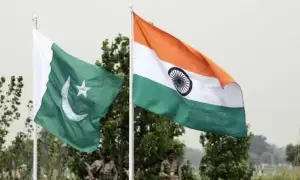
Ms Khar also said the government’s approach towards India suggested that Pakistan’s democracy was becoming more robust and the military’s grip on policy had loosened.
“Don’t underestimate the importance of what this government did with trade with India. Since 1965 there was no political or military government that could open up trade with India. And it was considered a no-go area,” she said.
“And that to me shows, one the maturity of democracy, the maturity of views, and the maturity of the decision-making exercise in Pakistan.” —Reuters