ISLAMABAD: While journalists and media organisations are all set to enthusiastically observe and celebrate ‘World Press Freedom Day’ on Thursday, a new report released by the United Nations Educational, Scientific and Cultural Organisation (Unesco) may leave them with very few reasons to do so.
The report alarmingly ranks Pakistan as “the second most dangerous country for journalists the world over”.
The report titled ‘Safety and the danger of Impunity’ says that a dramatic increase in the number of media staffers killed in Pakistan has been witnessed from two and six killings registered in the two previous reports, respectively, to 16 during 2010-11. Mexico, it claims, is the worst affected country in the period as far as risk for the journalists’ fraternity is concerned.
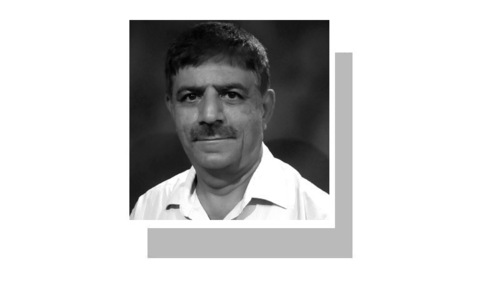
While the president of Pakistan sounds loud and clear in his commitment, though in mere words, that his party and the government were determined to uphold the freedom of media, Pakistan Federal Union of Journalists (PFUJ) President Pervaiz Shaukat pleads that media will not accept any sort of curbs since it has rendered sacrifices.
He said the PFUJ has submitted proposal to the government for setting up a Press Complaint Commission and demanded that the government should now consider it seriously.
President Asif Ali Zardari, in his special statement for the day, said that the liberalisation of media in Pakistan owed a great deal to the struggle of the journalists and the support given to it by Pakistan People’s Party (PPP) no matter whether it was in government or in opposition.
The president further said the government believed in providing genuine access to information for the sake of transparency and accountability and had decided to repeal the old Ordinance of 2002, and bring in a new Act of the Parliament in consultation with all stakeholders.
However, the statistics compiled by the Committee to Protect Journalists (CPJ) tell an entirely different story, saying as many as 42 journalists have been killed in Pakistan since 1992.
While freelance journalist Mukarram Khan was killed by two gunmen on January 17, 2012 in Shabqadar area near Peshawar, at least 14 journalists who lost their life in the line of duty the previous year included: Javed Naseer Rind of Daily Tawar, Faisal Qureshi of London Post, Shafiullah Khan of The News in Wah Cantonment, Asfandyar Khan of Akhbar-i-Khyber in Peshawar; Saleem Shahzad of Asia Times Online, Nasarullah Khan Afridi, freelance journalist, and Wali Khan Babar of Geo.
Similarly, Pervez Khan of Waqt TV and Abdul Wahab of Express News were among the journalists killed in 2010.
“The prevalence of conflict and financial hardship across Pakistan has a direct impact on the risks, and individuals are more prepared to take the dangerous jobs for which they might be paid,” a recent report of International Federation of Journalists (IFJ) disclosed.
An in-depth analysis of the Unesco report reveals a worrying proportion of freelance journalists among the victims. Nearly 20 per cent of the toll consisted of freelancers who faced more danger than regular staffers.
The UN has endorsed a ‘Plan of Action’ on the Safety of Journalists and the Issue of Impunity, led by Unesco which aims at creating a free and safe environment for journalists and media workers in both conflict and non-conflict situations, with a view to strengthening peace, democracy and development worldwide.
“The safety of journalists is essential to upholding Article 19 of the Universal Declaration of Human Rights that guarantees the right to freedom of expression,” says Unesco Director-General Irina Bokova.
To mark the day, the regional offices of Unesco in Pakistan, Iran and Afghanistan are holding seminars to take stock of the real and present challenges on safety issues faced by journalists on ground. Information ministers of Pakistan and Afghanistan will address the seminars.
The International Federation of Journalists (IFJ) is also launching its ‘State of Journalism in Pakistan 2011’ report under the auspices of the PFUJ here on Thursday.
The IFJ says that the press freedom day comes at a time of momentous challenges for journalism in South Asia. Journalists in the region have responded to these challenges by seeking a manner of professional engagement that reflects all South Asia’s rich diversities.
The PFUJ on the occasion will stage a demonstration in front of the Aiwan-i-Sadr in support of press freedom.