0
0

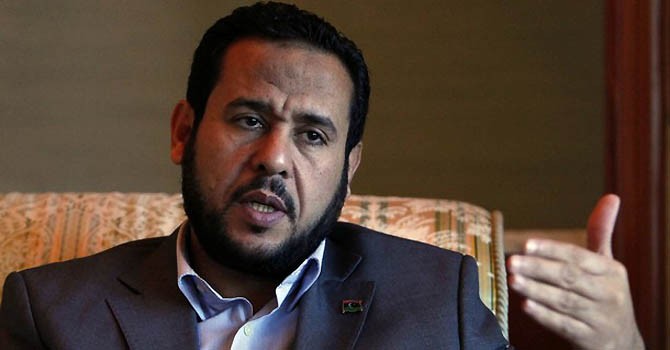
TRIPOLI: Abdel Hakim Belhadj, one of Libya’s most powerful militia leaders, is quitting to devote himself full-time to politics, an aide said on Monday, in a vote of confidence for the fragile transition from rebellion to democracy.
Belhadj, a former Islamist militant who helped topple former Libyan leader Muammar Gaddafi in last year’s revolt, is to resign his post as head of the Tripoli Military Council and set up a political party, his aide said.
His party is unlikely to be able to register in time for Libya’s first ever election on June 19, for a transitional assembly which will draft a constitution.
But with Islamists gaining in influence since Gaddafi’s overthrow, Belhadj’s party will be well placed to compete in fresh elections to be scheduled by the new assembly.
“He will announce his political party,” Anis Al-Sharif, head of Belhadj’s office, told Reuters, adding that Belhadj had sent a letter to the ruling National Transitional Council on his resignation.
“He also feels that the revolutionaries have done their job to oust the Gaddafi regime and now it's time to rebuild Libya, to move to a political state,” he said.
The military council will meet to elect a replacement for Belhadj, the aide said.
Belhadj is a former leader of the Libyan Islamic Fighting Group, which waged an insurgency against Gaddafi in the 1990s. He spent time with Islamist militants in Afghanistan, though he said he was not allied with Osama bin Laden’s al Qaeda.
He was captured, detained by British and US intelligence services, and sent to Libya in 2004, where he was jailed. He renounced violence and was released from jail a few months before the uprising against Gaddafi’s 42-year rule.
After rebel fighters expelled Gaddafi’s forces from the capital, Tripoli, Belhadj became head of the Tripoli Military Council, a heavily armed force of about 25,000 men.
It was among the most powerful of the volunteer militias which have held real power in Libya in the vacuum left by Gaddafi’s downfall. In the past few months, though, it has ceded some functions to the newly created national police and army.
Belhadj ran the operation from a suite of rooms at the Radisson Hotel, overlooking Tripoli’s port. Initially he held meetings in camouflage fatigues, but later swapped those for a suit as he tried to re-model himself as a civilian leader.
Lawyers acting for Belhadj are suing the British government, its intelligence services and a former British foreign minister, over his transfer back to Libya in 2004.
Belhadj alleges that Britain colluded in his “rendition” from Malaysia, where he was arrested in 2004, back to Libya, even though British officials knew he faced torture at home.