0
0

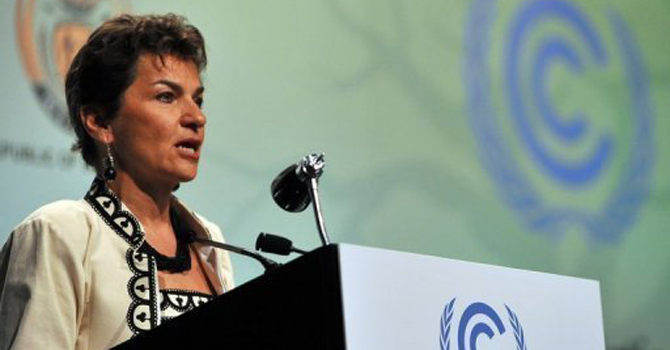
PARIS: UN members on Thursday took their first steps in a marathon to negotiate a new global pact by 2015 that for the first time will place rich and poor under a common legal regime to tackle climate change
Meeting in Bonn, the 195 parties to the UN Framework Convention on Climate Change (UNFCCC) began wrangling over how to work towards the target enshrined at their landmark conference in Durban, South Africa, last December.
Maite Nkoana-Mashabane of South Africa, who presided over the maiden session, urged countries as they embarked on the long road to set aside “old and unhelpful negotiating practices,” a reference to the bickering that typically dogs climate talks.
“Time is limited and we need to take very seriously the desperate calls of some of our brethren, especially the small island states,” she said, referring to low-lying nations threatened by rising seas.
The inaugural session of the ad-hoc working group, webcast over the Internet, took place in UNFCCC talks at senior level running in the former German capital to May 25.
If all goes well, a new accord will be wrapped up in 2015 and take effect in 2020, placing rich and poor under the same legal roof for tackling greenhouse-gas emissions that drive climate change.
At present, legal constraints under the UN's climate banner are divided among developed and developing countries — a format dating back to the 1990s that critics say is badly out of date.
Rich countries bear most of the historical responsibility for global warming today. But they say it is unfair to shoulder the burden for fixing the problem in the future.
Their places in the league table of emitters are being taken by emerging giants such as China, India and Brazil, which are massively burning coal, oil and gas as they battle to rise out of poverty.
Small-island states and African countries on Thursday sounded a loud alarm over the “ambition gap” — the difference between pledges for cutting emissions and what is needed to avoid dangerous warming.
Scientist say current emissions are stoking possible warming of four degrees Celsius (7.2 degrees Fahrenheit), twice the 2 C (3.6 F) goal set by UNFCCC parties in 2011 as a safe maximum.
“The inadequate mitigation pledges ... risk temperature increases that will have catastrophic impacts worldwide, and particularly for Africa,” said Seyni Nafo, spokesman for the African group.