0
0
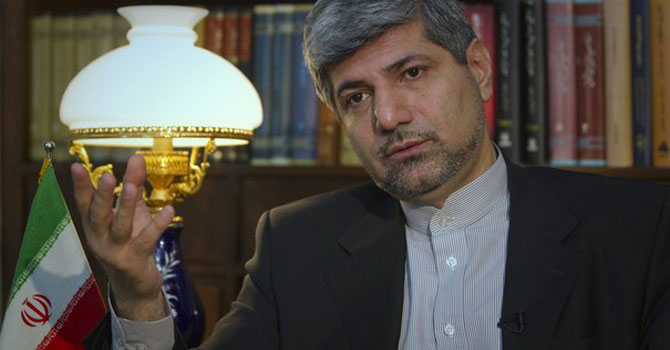
TEHRAN: Iran on Saturday said sanctions over its disputed nuclear program should be lifted in talks with world powers next week in Baghdad, but maintained the punitive measures would not compel it to abandon its atomic “rights.”
Foreign ministry spokesman Ramin Mehmanparast told the government daily Iran that the lifting of sanctions would display “the first signs” that the West is changing its “wrong” approach towards Iran and its nuclear work.
Mehmanparast reiterated Tehran's assertion that the sanctions have no legal basis, but admitted “no one in Iran is happy about the sanctions” and that they “may cause problems.”
But he insisted that “sanctions do not really have a significant effect.”
Iran on May 23 is to meet representatives of the so-called P5+1 group, comprising the five permanent UN Security Council members plus Germany, in Iraq's capital for the second round of talks which were revived in April in Istanbul after a 15-month impasse.
Iranian leaders have been increasingly demanding that the sanctions targeting its trade and banking sectors as well its oil exports be lifted, while insisting that they were ineffective.
Mehmanparast reiterated that Iran would not give up its atomic work.
“If the West thinks we will give up our rights due to sanctions, they are definitely mistaken,” he said.
He added that claims that the Western sanctions are disrupting the Iranian economy from within are part of a “propaganda and psychological warfare” launched by the West against the Islamic republic.
Iran denies Western allegations its nuclear program may have a military component to develop atomic weapons. The Islamic republic is under a series of unilateral Western sanctions.
Iran's economy has taken a significant blow by the gradual tightening of the measures since 2010 despite official assertions that the sanctions have been so far ineffective, foreign experts in Tehran said.
Sanctions on the banking sector have disturbed or slowed down imports, whose cost have increased on average by 20 per cent, according to the testimonies of Iranian importers.
Sanctions have also led to late payments to Iran from its oil sales, sometimes forcing Tehran to accept payments in the form of gold, local currencies or sign barter contracts.
And the European Union embargo on Iranian oil, poised to be fully implemented from July 1, is beginning to show its impacts as several major customers of Iranian crude, including India, Japan and Turkey, have announced a reduction in imports.
Tehran has always denied that the sanctions have caused it difficulty to produce and sell its oil, claiming to have found new customers without naming them.
Several specialist websites, however, have reported in recent months a significant increase in storage of unsold crude in Iran.
And the oil cartel OPEC has reportedly said that Tehran's crude production has declined by 15 per cent in past two years.
OPEC estimates showed that Iran produced 3.2 million barrels per day in April, its lowest level in 20 years.