


Today, a unique name is good enough to be different. Had Manoj Kumar started his career in the present times he’d have happily carried on being Harikrishna Giri Goswami, rather than picking a screen name inspired by one of the many characters played, oddly enough, by Dilip Kumar. Looking at the current crop of actors who are considered great and you would notice how each one of them believes that the more mysterious the character, the greater chances of their brilliance being recognised. Aamir Khan didn’t cut his hair for two years while playing Mangal Pandey in The Rising- The Ballad of Mangal Pandey (2005), he didn’t bathe for few days to look convincing as an auto mechanic in one scene from Ishq (1997) and yet Dhobi Ghat (2010), where he almost mimed his real life, physicality got him greater laurels than anything else. Dilip Kumar’s reputation of being a complex actor was crafted by playing simple characters. So, when he ‘felt’ some emotion on the screen, you ended up feeling the same. It is a trait that Aamir Khan follows more closely in his off-screen avatar, where he connects with the common man at all level. His understanding of the common person and everyday life is beyond doubt and while his roles factor in this facet of his persona, his films are turning out to be events that lose their essence once the spotlight dims. Unlike a Qayamat Se Qayamat Tak (1988) or a Jo Jeeta Wohi Sikander (1994) the charm of his characters comes across as far too studied in 3 Iditos (2009).
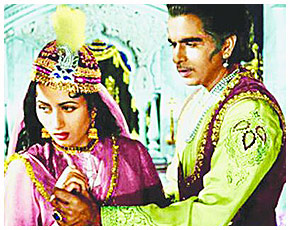
One argument to gauge any actor’s work is to look at the work done in the latter half of their careers. Laurence Olivier was as great in The Marathon Man as he were in any of his earlier films. Actors manage to experiment with their roles with greater ease in the initial stages of their career and once they become stars, the mannerisms start calling the shots. Dilip sahab partially fell victim to this phenomenon in films like Mashaal (1984), Karma (1986) and Saudagar (1991), yet he is better off than Amitabh Bachchan or Shahrukh Khan. Had Dilip sahab been an actor today, he would have to play unique roles, which in Bollywood is better referred to as ‘different’ and could be as unimaginative as playing a Muslim character. Barring Shehzada Salim in Mughal-e-Azam (1960), where there wasn’t any other possibility. Dilip Kumar has never played a Muslim character but had Mughal-e-Azam been made in this day and age, everything barring his acting would be in focus, much like Shahrukh Khan playing Amjad, the Pathan friend in Kamal Hassan’s Hey Ram (2000). In one of his most nuanced roles ever, Shahrukh portrayed Amjad in every possible stereotypical interpretation and then some, but during the release everything about him being in the film hovered around him playing a Pathan.
Would Dilip Kumar not become the colossus that he is had he remained Yusuf Khan? There is hardly any doubt about the stature of Dilip Kumar as the greatest actor of Hindi cinema, but would it be possible for someone as great as Dilip sahab to be an actor in this day and age?

The views expressed by this blogger and in the following reader comments do not necessarily reflect the views and policies of the Dawn Media Group.





























