ISLAMABAD: Minuscule tax revenues, mismanagement and overgenerous subsidies mean Pakistan is heading for a new financial crisis, say diplomats and analysts, with this week's budget unlikely to offer any respite.
The budget deficit stood at 6.6 per cent of GDP last year, according to the central bank, the State Bank of Pakistan (SBP), which warned that government borrowing was crowding out the private sector from access to credit.
That reduces the prospects for economic growth in a country that is on the front line of the war against al Qaeda and where more than 5,000 people have been killed in bomb and gun attacks by insurgents since 2007.
External forecasts for the current fiscal year see the budget deficit rising to about seven per cent of GDP, while economists warn the government is running out of ways to fund it — and reluctant to embrace reform with polls looming.
Some see little alternative to a major financial crisis or a return to the IMF, which bailed out Pakistan with an $11.3 billion loan package in 2008 that stopped last November after Islamabad rejected strict reform demands.
“I think it's possible they could have a real financial crisis by the middle of this year or the fall. I don't think it's a question of if, but when they go back to the IMF,” one Western diplomat said.
Pakistan's tax revenues are among the lowest in the world at just 9.8 per cent of GDP in fiscal 2010-2011, says the Asian Development Bank, and less than two per cent of the population pays tax on their income.
On top of this, the government shells out huge sums on electricity subsidies — about 1.5 per cent of GDP in 2010-11, according to the IMF — for a sector so blighted by mismanagement that most of the country suffers crippling power cuts.
Pakistan has also missed out on payments from the United States for its efforts to fight militancy under the Coalition Support Fund (CSF).
This brought around $8.8 billion into Pakistan's coffers between 2002 and 2011, including $1.5 billion in 2009-10, but Islamabad stopped claiming the money as ties with Washington collapsed in the wake of the raid that killed Osama bin Laden last year.
“There's not really any money coming in, and that being the case, the government is financing itself by borrowing from the local banks and the local banks aren't seeing deposits coming in to keep up,” said Liz Martins, an economist with HSBC.
The pressure on finance houses “means they have very limited money to lend to the private sector,” she said.
“There's no money coming from the IMF, no money coming from the bond markets, and international investors are very cautious.”
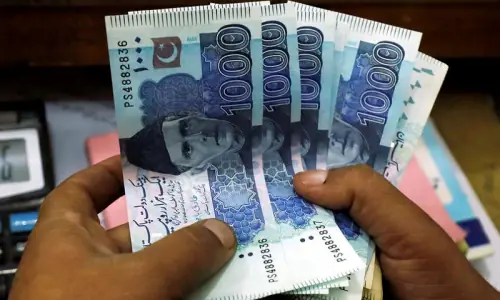
Islamabad borrowed 365 billion rupees ($4 billion) from the banking system — both private banks and the SBP — in the first half of the current financial year, the central bank said in its second quarter economic report.
With inflation already running at around 11 per cent, the alternative of printing money to pay debts opens the way to the nightmare of hyperinflation.
The IMF says Pakistan needs to raise tax revenues substantially to reduce the deficit sustainably, but with an election due within months analysts do not expect Finance Minister Abdul Hafeez Shaikh to follow its advice in his budget on Friday.
“I don't think the government is able to bear the terms that come with going back to the IMF,” said Sartaj Aziz, former finance minister and vice chancellor of Beaconhouse National University.
The situation was already serious, he warned. “The total expansion of currency is higher than ever, so it is already reaching dangerous levels. It has to be arrested by drastic remedial measures,” he said.
Officials from the finance ministry were repeatedly contacted by AFP, but declined to comment on how they planned to finance the deficit.
In Pakistan, once a general election is called, an interim government takes power for three months while campaigning is under way and Aziz said he thought this would give the government a way to duck difficult budget decisions.
“I think the government will be happy to wait until the election is called and hand the problem over to the caretaker government,” he said.