0
0

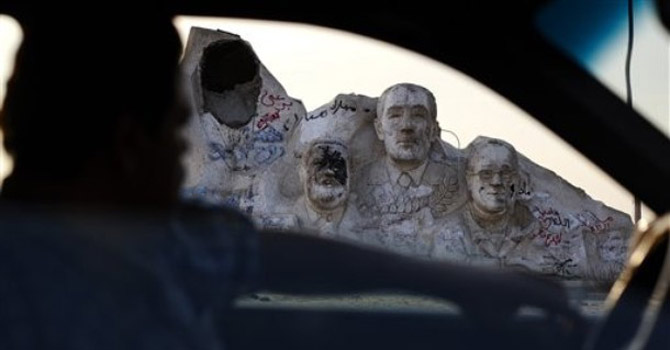
CAIRO: Hosni Mubarak, who governed Egypt for 30 years before a popular uprising toppled him last year, will hear a judge rule on Saturday on whether he is guilty of graft and complicity in the killing of protesters.
Hundreds of police surrounded the court set up at the Police Academy on Cairo's outskirts. Protesters gathered outside holding up images of those killed in the uprising and calling for Mubarak's execution.
“Dear God, take Mubarak and those with him!” they chanted.
If convicted, the 84-year-old former president could face anything from a few years in jail to the death penalty.
Few Egyptians expect he will go to the gallows, even if some think that is what he deserves. Protesters have often hung his effigy from lamp posts since he fell on Feb 22, 2011.
Mubarak's two sons, standing trial with their father, alongside his former interior minister and six other senior officers, arrived at the court, state media reported.
It is the first time an Arab leader ousted by his people has been placed before a regular court. Mubarak's trial had Arabs glued to the television last year and sent a message to other autocrats battling rebellions what fate might await them.
“Mubarak's trial has the potential to set a meaningful regional precedent for accountability for human rights abuses and for upholding international fair trial standards,” Human Rights Watch wrote in a report before the session.
But the ruling could not come at a more sensitive time for Egypt, right in the middle of a fraught presidential election that pits a figure from the Muslim Brotherhood, banned under Mubarak, against the deposed leader's last prime minister.
The verdict could herald more political turmoil, although Judge Ahmed Refaat, who has already had three months to consider his decision, could postpone it if he needs more time.
“It cannot be that, after 15 months of the revolution and the crimes committed, Mubarak is not punished. This would destroy any trust in the judiciary,” said engineer Saad Ali, 35.
An acquittal or a light sentence could send protesters back on the streets.
Many are already angry that the hated police force, blamed for about 850 deaths in the uprising, and other pillars of Mubarak's rule have survived his downfall intact.
Wheeled into court
A conviction would prompt demands for Mubarak to be transferred to prison from the hospital where he has been held in custody. The other defendants, who include his two sons, Gamal and Alaa, his former interior minister Habib al-Adli and six senior security officials, have been held in a Cairo jail.
Egyptians saw Mubarak as they had never seen him before when his trial opened on Aug 3, about six months after he was ousted. The man once at the centre of ceremonial state events was wheeled into the court on a hospital gurney.
He has appeared on a stretcher for each session since then, suffering from undefined ailments, and flown in by helicopter from a military hospital on the edge of the sprawling capital.
His sons have stayed close to him in the cage for defendants used in all Egyptian criminal courts. The trial has unfolded in a special courtroom in a police academy on the edge of Cairo.
He has rarely spoken except to declare his presence and deny the charges, including accusations that he was behind brutal police tactics used to quell mass protests that erupted on Jan 25, 2011. He was driven from office 18 days later.
Outside the court, Mubarak's supporters and his opponents have often clashed, hurling stones and abuse at each other.
Those divisions are now playing out in the presidential race. In a June 16 and 17 run-off, Ahmed Shafiq, an ex-air force chief like Mubarak, will face the Brotherhood's Mohamed Mursi.
Shafiq has called his former boss a role model. His Islamist rival says that if he becomes president he will ensure enough evidence is produced to keep Mubarak behind bars for life.
“It is not possible to release Mubarak,” Mursi told Reuters on Thursday. “I promise the martyrs (of the uprising) will retrieve their rights in full, God willing.”