0
0

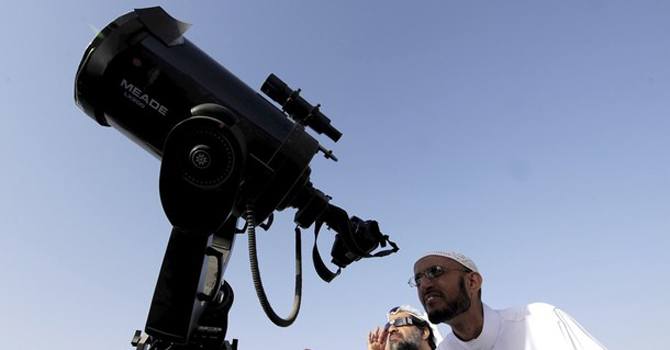
LONDON: A 1.1 billion-euro project to build the world's largest optical telescope will go ahead after the European organisation overseeing it said it won backing from most of its members.
The European Extremely Large Telescope (ELT) will directly image planets outside the solar system and those orbiting other suns in so-called “habitable zones” to perhaps answer the question of whether there is life elsewhere in the universe.
It will use a mirror 39 metres in diameter that will give a more detailed and deeper view of the universe than ever before.
Most large ground-based telescopes currently have mirrors eight to 10 metres across.
The large mirror on the ELT, made up from nearly 800 hexagonal segments, will gather 12 times more light than the largest optical telescopes operating today. It will be able to see objects that are much more distant and faint.
“Its unique combination of sharp imaging and huge light collecting area will allow us to observe some of the most exciting phenomena in the universe in much better detail,” said Isobel Hook, a scientist at Oxford University who is working on the project.
“For example we'll be able to observe distant galaxies in the process of formation, see the effects of massive black holes on their environment and even search for planets in 'habitable zones' beyond our solar system, where life could exist.”
The European Southern Observatory's Council met at its headquarters in Garching, Germany, on Monday where 10 countries gave the project full or conditional support.
Representatives from Austria, the Czech Republic, Germany, the Netherlands, Sweden and Switzerland voted to start the programme while Belgium, Finland, Italy, and the United Kingdom backed the project pending confirmation from their governments.
The remaining four – Denmark, France, Portugal and Spain – said they continue to work towards approval.
Brazil plans to join the ESO Council this year and Chile, which will play host to the telescope on top of the 3,060-metre Cerro Armazones mountain in the Atacama Desert, is also involved.
“Today's announcement is an important step towards construction, though the final go-ahead depends of course on obtaining approval by a number of governments ... to such a long-term financial commitment,” said John Womersley, chief executive of the UK Science and Technology Facilities Council.