0
0

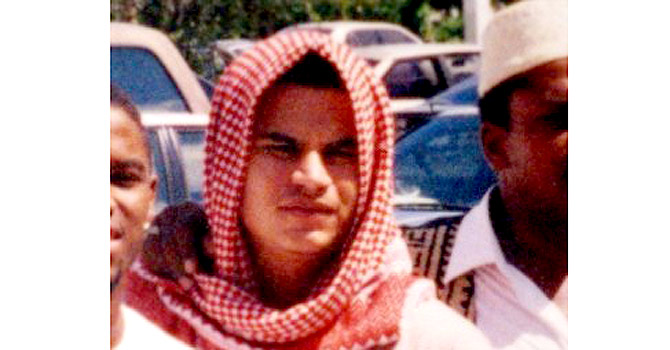
WASHINGTON: The US Supreme Court on Monday refused to tackle a complaint an American citizen who claims he was tortured while held as an “enemy combatant” and wanted sue current and former government officials.
Jose Padilla, a former Chicago gang member and Muslim convert, was convicted in 2007 of aiding a homegrown al Qaeda cell and later sentenced to 17 years in jail after being detained without charge for nearly four years.
He alleges it was during this time that he was subjected to a range of abuse and subsequently sought to sue former defence secretary Donald Rumsfeld and current Pentagon chief Leon Panetta, among other senior US officials.
The Supreme Court, without comment, affirmed an earlier appeals court ruling that said Rumsfeld and Panetta are immune from the suit for actions taken in their official capacity, and that Padilla's detention was a matter of national security policy under the purview of the executive and legislative branches.
The American Civil Liberties Union (ACLU), which had appealed the lower court's ruling together with Padilla's mother, Estela Lebron, expressed dismay at the US high court's decision.
“The Supreme Court's refusal to consider Jose Padilla's case leaves in place a blank check for government officials to commit any abuse in the name of national security, even the brutal torture of an American citizen in an American prison,” said Ben Wizner, the ACLU's head counsel on the case.
“To date, not a single victim of the Bush administration's torture regime has received his day in court.” Padilla has long been a symbol of the George W. Bush administration's alleged legal overreach following the September 11 attacks, when hundreds of so-called “enemy combatants” - the vast majority of them foreigners captured in Afghanistan and Pakistan - were detained without formal charges or trial.
He had gone to Egypt in the 1990s to study and later traveled to Afghanistan. He was arrested in 2002 as he returned to the United States for an alleged “dirty bomb” plot.
Padilla is serving his time in a maximum-security prison in the western US state of Colorado.
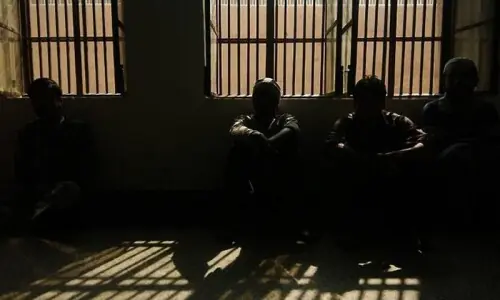
The ACLU says Padilla was prevented from speaking with his lawyer or family for two of the four years he was held in a South Carolina navy brig, in conditions similar to those at the US prison facility in Guantanamo Bay, Cuba.
It says he was placed in stress positions for several hours at a time, deprived of sleep, beaten and threatened with torture and death.
US authorities had initially justified his detention by saying he was an “enemy combatant” who had planned to explode a radioactive bomb in the United States, a charge that was later dropped.
The Supreme Court is also considering another appeal by Padilla, which protests a 2011 ruling by an appeals court calling for his prison sentence to be increased. It is expected to make a decision by the end of the month.