0
0
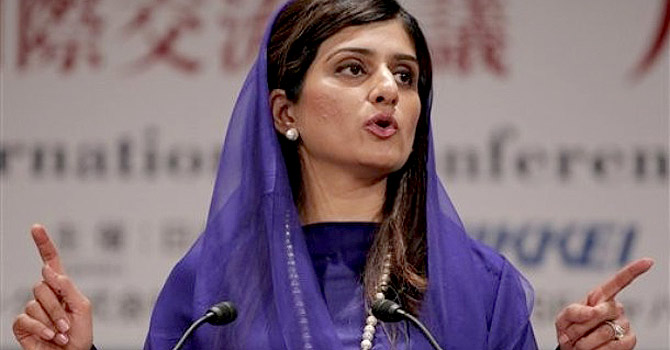
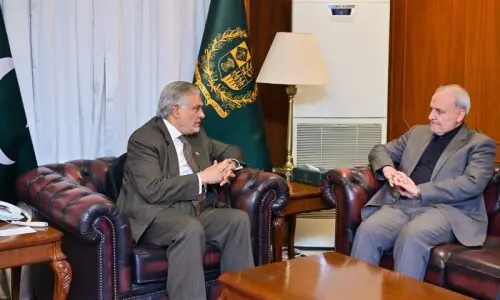
ISLAMABAD: Pakistan's foreign minister said on Tuesday difficult talks with the United States to repair frayed ties and re-open Nato supply routes to Afghanistan were not being thwarted by a Pakistani demand for high tariffs on the supplies.
Pakistan cut the routes for Nato supplies in November last year to protest against the death of 24 Pakistani soldiers killed in cross-border fire from Nato aircraft.
The supply lines for goods shipped in to the Pakistani port of Karachi and trucked in to landlocked Afghanistan have been vital for US-led forces over their more than 10-year involvement in Afghanistan.
Now, the routes are seen as important for the withdrawal of most foreign troops from Afghanistan before the end of 2014.
But talks on getting the routes re-opened have become snagged on a Pakistani demand for a substantial increase in the fees Pakistan charges on the supplies, media has reported.
But Foreign Minister Hina Rabbani Khar rejected that.
“Pakistan is not in any sort of price-gouging debate right now. So these impressions are indeed incorrect, wrong and must be dispersed as soon as possible,” Khar told reporters.
“The US side knows very well the needs and requirements to enable us to move in that direction, to enable us to take that decision,” she said, referring to re-opening the routes.
She did not elaborate.
The two trucking routes, one to the southern Afghan city of Kandahar and the other to the capital, Kabul, accounted for almost a third of all cargo shipped to Nato forces in Afghanistan before they were suspended.
The United States has rebuffed Pakistan's demands for an apology for the air strike in November in which the 24 Pakistani soldiers were killed and ties have become severely strained.
The two sides failed to agree on the tariff and the United States said on Monday it was withdrawing negotiators from Pakistan without securing a deal after six weeks of talks.
A senior US official told Reuters on Tuesday that Pakistan's civilian government should “bite the bullet” and re-open the routes to ease tension.
With the Pakistan routes unavailable, Nato has turned to countries to the north of Afghanistan for more expensive, longer land routes.
Resupplying through the northern route is about 2-1/2 times more expensive than through Pakistan, a US defence official told Reuters.
Nato Secretary-General Anders Fogh Rasmussen said on a visit to Australia on Wednesday Nato still hoped to reopen the routes despite securing transit deals with three Central Asian states.