0
0

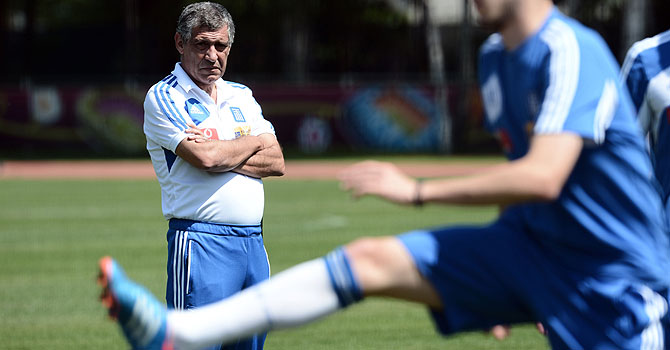
PARIS: Germany play Greece in a potentially highly-charged Euro 2012 quarter-final on Friday because of Berlin's leading role in pushing Athens to impose tough austerity measures to combat the country's crippling debt.
The game, though, is not the first to be seen in more than purely footballing terms:
1962 World Cup - Chile v Italy
The second-round game in front of 66,000 predominantly Chilean fans became known as the “Battle of Santiago”, as the hosts looked to pay back the Italians for some highly-critical articles about the tournament.
The tournament took place despite the damage wrought by an earthquake two years before that left several thousand dead and provoked a tsunami that swept across the Pacific.
Ironically, the Italians were the ones who had two players sent off, with one -- Giorgio Ferrini -- having to be forcibly taken off by the police.
Several Chileans, too, were lucky to stay on the pitch, notably Leonel Sanchez who punched Mario David behind English referee Ken Aston's back and broke his nose.
The victim turned avenger a few minutes later, kicking his aggressor in the head but this time in front of the referee, who sent him for an early shower.
Chile won the match 2-0 and Ashton -- a headteacher and former lieutenant-colonel during World War II who sat on a war crimes tribunal involving Japanese defendants -- admitted later: “It was uncontrollable.”Ashton, who was accused by the Italian media of being “hostile and provocative”, went on to be responsible in 1966 for the introduction of red and yellow cards -- inspired by traffic light signals.
1970 World Cup - North American qualifying round - Honduras v El Salvador
Like the assassination of Archduke Franz Ferdinand in 1914 that led to World War I, the game that provoked the “Football War” was the spark in a long-running dispute over land reform and immigration between the two central American countries.
With the stage set, Honduran fans did not disappoint and kept the Salvadoran players awake throughout the night on the eve of the first leg that Honduras won 1-0.
But it was pay-back time for the second leg, when El Salvador fans threw dead rats and other missiles into the hotel rooms of the Honduran players and they had to be taken to the game in armoured cars.
El Salvador won 3-0. Afterwards, two Honduran fans were murdered and Salvadorans were killed in reprisal attacks in Honduras.
As a result, diplomatic ties between the countries were cut and almost a month later El Salvador bombed Honduras. Thousands died in four days of fighting before a truce was declared, although a peace treaty took another 11 years to be signed.
1986 World Cup - Argentina v England
The 1966 meeting between the two countries had been tense enough, leading then England manager Alf Ramsey to call the Argentinians “animals”.
But the backdrop to the 1986 quarter-final in at the Estadio Azteca in Mexico City meant there was a lot more at stake than just a place in the last four.
It was the first competitive meeting between the two sides since the 1982 Falklands War, which began after the Argentinian army overran Britain's tiny South Atlantic Ocean protectorate to claim sovereignty.
Britain eventually retook the islands, known in Argentina as Las Malvinas, in what was effectively London's last colonial war.
Argentina won the match 2-1 thanks to two goals by Diego Maradona -- one a stunning individual effort but the first a clear foul after the player knocked in the ball with his hand in a challenge with England goalkeeper Peter Shilton.
Maradona, who claimed afterwards it was “the Hand of God”, made clear how much winning the game had meant to the team.
“Although we had said before the game that football had nothing to do with the Malvinas war, we knew they had killed a lot of Argentine boys there, killed them like little birds. And this was revenge,” he said.
1998 World Cup - Iran v United States
There was a collective intake of breath when the draw for the finals in France was made and the avowed political enemies -- who had no diplomatic ties since the 1979 Islamic revolution that deposed the pro-American Shah -- were drawn together.
Iran's Supreme Leader Ayatollah Ali Khamenei forbid his players to walk towards the Americans and shake hands, as FIFA protocol demanded, and the match in Lyon was played amid tight security and fears of protests or worse.
Iran had the last laugh on the pitch, winning 2-1 to ensure the Americans went out.
It was clear, though, that the players felt the game was secondary to the symbolism of the two meeting.
“We did more in 90 minutes than the politicians did in 20 years,” said US defender Jeff Agoos at the time.