0
0

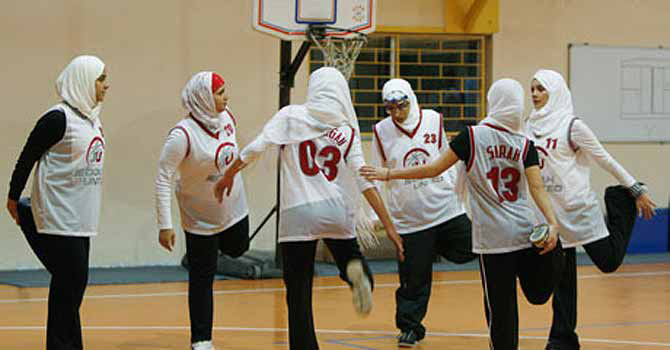
LONDON: Saudi Arabia has moved to send female athletes to the Olympics for the first time at the London Games.
The Muslim kingdom is one of three countries which have never included women in their Olympic teams, along with Qatar and Brunei.
The International Olympic Committee says talks have been ongoing with Saudi Arabia to ensure participation.
''The Kingdom of Saudi Arabia is looking forward to its complete participation in the London 2012 Olympic Games through the Saudi Arabian Olympic Committee, which will oversee the participation of women athletes who can qualify for the games,'' the Saudi Embassy in London said in a statement.
An official in Saudi Arabia, who spoke on condition of anonymity on Monday, says an announcement by King Abdullah about Saudi women's participation in the Olympics was expected some days ago, but was postponed after the death of Crown Prince Nayef. The official spoke on condition of anonymity because of the sensitivity of the issue.
Discussions on sending women to the games have been wrapped in secrecy for fear of a backlash from the powerful religious establishment within a deeply traditional society, in which women are severely restricted in public life and are not even allowed to drive.
Saudi officials have been sending mixed signals for months. While some were saying they had been working on an arrangement with the IOC, top sports officials in the kingdom were adamant in publicly denying the possibility of female athletes competing at the Olympics.
Saudi Olympic Committee president Prince Nawaf said in April that female participation had not been approved by the country's leaders and that Saudi-based women traveling to London would be contrary to the country's traditions and norms.
Nawaf left open the possibility of Saudi women who are studying abroad being able to compete outside of the team as independent athletes. However, that option was quashed after pressure from human rights groups and the IOC.
Human Rights Watch said Saudi Arabia's announcement is ''an important step forward,'' but cautioned that gender discrimination in the country remains ''institutional and entrenched. It is only right that the Saudi government should play by the Olympic rules,'' said Minky Worden, director of global initiatives at Human Rights Watch, in a statement. ''But an 11th-hour change, of course to avoid a ban, does not alter the dismal and unequal conditions for women and girls in Saudi Arabia.''
There are no written laws that ban or restrict women from participating in sport in Saudi Arabia, home to Islam's holiest shrines. The stigma of female athletes is rooted in conservative traditions and religious views that believe giving freedom of movement to women would make them vulnerable to sin.
Saudi women bear the brunt of their nation's deeply conservative values. They are often the target of the unwanted attention from the kingdom's religious police, who enforce a rigid interpretation of Islamic Shariah law on the streets and public places like shopping malls and university campuses.
Women do practice sports in the conservative kingdom, some even compete in clandestine football and basketball leagues. There are no national competitions, however, that would allow Saudi women to compete in order to qualify for international events.
If the Saudis do send women to the games then female athletes in judo and in track and field are considered possibilities for the games, sports officials familiar with the negotiations told The Associated Press while speaking on condition of anonymity.
Because Saudi women may not meet the international qualifying standards, the IOC may grant them Olympic entry based on ''special circumstances,'' an IOC official told The AP in March.