India rejects mandatory video technology

| 26th June, 2012
14
Send to Kindle
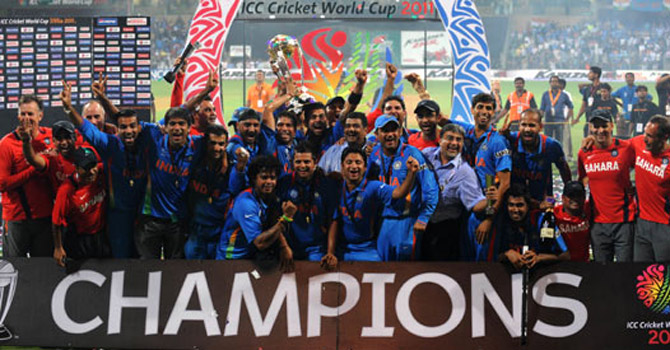
Indian team celebrating after winning 2011’s Cricket World Cup.—File Photo

Indian team celebrating after winning 2011’s Cricket World Cup.—File Photo

KUALA LUMPUR: India’s powerful cricket board has maintained its opposition to mandatory video technology despite backing for the system from the sport’s world chiefs meeting in Kuala Lumpur.

Indian officials said their stance on the Decision Review System (DRS) was “unchanged” despite a recommendation for the technology to be compulsory in all Tests and one-day internationals, costs allowing.

“The BCCI continues to believe that the system is not foolproof,” the Board of Control for Cricket in India said in a statement released on Monday.

“The board also sticks to its view that the decision on whether or not to use the DRS for a particular series should be left to the boards involved in that series.”

The comments set the stage for more controversy over DRS, which uses ball-tracking and thermal imaging to verify umpires’ decisions. It was made optional last year, rather than compulsory, at India’s insistence.

India, which accounts for the lion’s share of global cricket revenues, has been suspicious of DRS since making a number of unsuccessful referrals during the 2008 Test series with Sri Lanka, when the technology was on trial.

But most other cricketing nations including England and Australia support the system.

At the weekend, Pakistan coach Dav Whatmore was incensed when DRS was not used during the first Test against Sri Lanka, reportedly for cost reasons.

Pakistan suffered from a number of umpiring errors in the match.

The recommendation for mandatory DRS, made by the chief executives’ committee of the International Cricket Council on Monday, will now be considered by the body’s board at a meeting on Tuesday and Wednesday.

COMMENTS

  1. DRS is MUST!

  2. muhammadanasabbasjamal

    May be DRS system is not foolproof, I remember the event when sachin was given out against Pakistan in 2011 World cup and was given not out by DRS system, there were lots of criticism occurred. but there should be DRS system,that kind of incident occurs once in a blue moon.

  3. Umpires are not perfect either. So why have umpires for India games????

    • There is only one solution for the problem don't do the mistake of supporting India in ICC or in any forum cause when it gets power the narrow mindedness will be there for you & I bet had any other country at the chairman seat of ICC this Indian controversy would not been there

  4. Every match in the world does not involve India! Why can't the 2 playing teams decide on this. Say if there is a match between Pakistan and Srilanka – go for DRS all the way. Even if India is against it, let the remaining teams of the world adopt this and see how it goes – at least 80% of the matches will then have DRS. India is against DRS but its no wat stopping the rest of the world from using DRS.

  5. The current ICC rules allow the participating countries to implement DRS in the series. So Pakistan and Sri Lanka could have decided to have DRS in place for the ongoing series.
    The issue is less about BCCI opposition and lack of faith in DRS, and more about who will bear the cost of technology. In this case, Sri Lankan board did not want to bear the cost of DRS, and hence did not opt for it.

    Also, we must keep in mind that India like others is only a member nation of ICC. BCCI has no special rights and has only one vote, its financial clout not withstanding. The other member nations can vote on their conscience.
    The responsibility of ICC's decisions lies with all the members and not just one.

  6. So the defeat in Sri Lanka is due to another conspiracy by India..!!GREAT!!!!!!

    • Take a chill pill dude ! No one said this. The issue is, why india does not support a system which reduces (if does not eliminate) chances of biased and poor umpiring decisions.

      • (Dr.) B.N. Anand

        Sir, let all other ICC members vote in favor of DRS system in all tests and one dayers. After all, India has one vote and the motion can be carried out by majority vote. It is so easy, why debate and then postpone the decision.
        BNA

      • "India, which accounts for the lion’s share of global cricket revenues, has been suspicious of DRS since making a number of unsuccessful referrals during the 2008 Test series with Sri Lanka, when the technology was on trial."

        That say it all !!!!!!!!!!!!!!!!!!!!!!!!!!

        India made numerous unsuccessful referrals therefore DRS has been banned.

        WHAT A LOGIC!!!!!!!!!

  7. DRS should be part and parcel of cricket matches to rectify the wrong and bias decisions made by some umpires. As we witnessed the wrong decisions in Pak vs SL test match which cost the match to the tourist. In my opinion ICC should take decision to implement the DRS in the best interest of the game and shuld ignore the pressure from India in this matter.

  8. Am an ardent Indian fan and in my view India should agree to mandatory DRS. I agree that it is not perfect, what than what is perfect in this world ? It is a step in the right direction while we keep on finetuning it to perfection.

    • DRS is accurate when it comes to giving line decisions like in runouts, stumping, boundary decisions etc. The floor mat is accurate when it comes to deciding regarding point of impact. It is ball tracking and in snicks or low height catches that the technology is woefully inadequate. The problem with DRS was exposed during world cup (remember the series of LBW decisions interpreted to go against India) and in the India England series. The fact is the technology providers would like to make a lot of money from broadcasters but this does not mean that a cash rich board like BCCi needs to kowtow to such demands. There is a need to use accurate available technology first instead of forcing inaccurate & unreliable technology.

      • The question is not whether DRS is accurate or not. There is no machine technology that is 100% accurate, however employing most technologies improves human interaction. So the question everyone should be asking from BCCI is "does usig DRS actually imroves the chances of better decsion or not?"

        With DRS, matches will continue to have controversial decisions, but the frequency of such decisions is likely to go lower and lower.