0
0
PESHAWAR, June 26: A national nongovernmental organisation helping the government mobilise support for anti-polio vaccination in North and South Waziristan agencies has appealed to the US to stop drone attacks in the tribal areas, saying it will pave the way for immunisation campaigns meant for better child health.
The appeal comes as the Taliban ban the administration of oral polio vaccine to children in North and South Waziristan.
“The ban will adversely affect 318,000 children in the two agencies,” Tehseenullah Khan, coordinator of National Research and Development Foundation (NRDF), told Dawn on Tuesday.
Mr Tehseenullah said NRDF, which had Islamic scholars as members, had been promoting the government’s efforts for promotion of vaccination in North and South Waziristan for over one year.
“Local members of NRDF had addressed more than 6,000 immunisation refusal cases in both the agencies but this time, the situation could go out of hand. The spillover affects will soon be felt in FR Bannu, Tank and Dera Ismail Khan,” he said.
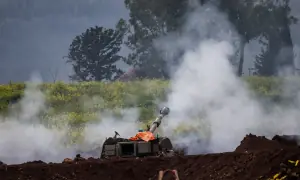
He said drone attacks in tribal areas cost local children dearly and therefore, the US should stop conducting such strikes on humanitarian grounds to save children from disabilities.
The NRDF coordinator said on June 15, the North Waziristan Taliban banned vaccination denying administration of polio vaccine to 1, 61,000 children. He said the two agencies had so far recorded one confirmed case of polio each this year suggesting that the virus was in circulation and could cause an epidemic.
Mr Tehseenullah said the situation could slip away if urgent measures were not taken.
“Stoppage of drone strikes by the US could safeguard children against host of diseases. Fata is the only active hub of active polio virus transmission in the country that has contributed more than 50 per cent of the total polio cases this year,” he said.
He said 11 of this year’s nationwide 22 polio cases were reported in Fata.
An official of the Federally Administered Tribal Areas health directorate claimed that great success in polio eradication efforts had been achieved over the last one year.
He said the country had reported a reduction of 73.4 per cent in polio incidence this year compared with that of the last year.
“Sixty-six fresh cases of polio were reported until June 26 last year but the number decreased to 22 only during the corresponding period of this year,” he said.
The official said the Taliban ban on vaccination was a serious blow to anti-polio efforts and thus, exposing children to disability.
“We have had troubles in Khyber Agency, but as we were getting closer to resolve security crisis in Khyber, this new blow to the programme from North and South Waziristan may bring our worst fears come true,” he said.
According to him, the ban on vaccination was first slapped in North Waziristan but was later extended to South Waziristan.
“It means that 157,000 children needing immunisation will not receive vaccination against eight preventable childhood diseases,” he said.