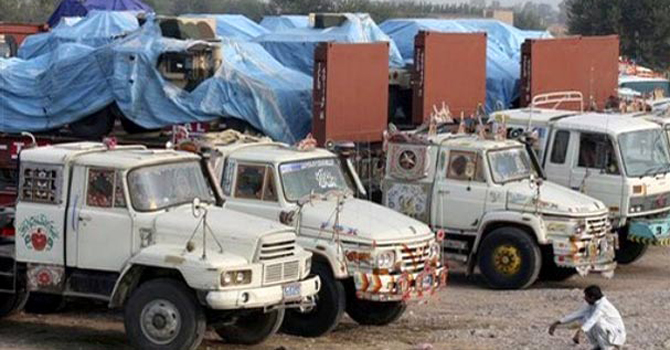
WASHINGTON/ISLAMABAD: The United States and Pakistan appear to be close to resolving the dispute over the reopening of Nato supply routes to Afghanistan, official sources in both the capitals told Dawn on Sunday.
The sources pointed out that two new developments — Secretary of State Hillary Clinton’s call to Prime Minister Raja Pervez Ashraf and the presence of a high-level US delegation in Islamabad — had raised hopes that the dispute might soon be resolved.
According to informed sources in Islamabad, an important meeting between the two sides took place on Sunday shortly after the arrival of Commander of International Security Assistance Force General John Allen on his second visit to the country in four days.
The Pakistani side at the talks included Foreign Minister Hina Rabbani Khar, Finance Minister Dr Abdul Hafeez Shaikh and Chief of the Army Staff General Ashfaq Parvez Kayani, while the US side was represented by Deputy Secretary of State Thomas Nides, Isaf Commander General John Allen and US Ambassador Cameron Munter.
The meeting coincided with Secretary Clinton’s call to Raja Pervez.
While congratulating Mr Ashraf on assuming the office of prime minister, she said Pakistan and the United States were partners in the war on terror and would succeed in defeating the common enemy.
Official sources in Washington said that “both sides are rapidly moving towards resolving this issue” but refused to give details for fears that “a media leak at this stage may derail the process”.
A US team, which includes senior members of the White House National Security staff, is believed to have come with the draft of a proposal that “meets Pakistan’s demand for an apology without embarrassing” the Obama administration, the sources said.
The sources in Washington are linking Secretary Clinton’s call to the prime minister to these developments.
Washington’s diplomatic and political circles say that the State Department is strongly supporting the proposal to accept Pakistan’s demand for an apology over the Nov 26 US air raid that killed 24 Pakistani soldiers.
Initially, US Secretary of Defence Leon Panetta and other officials said that the Pakistanis were focusing on increasing tariff rates for using the supply routes – from $250 to $5,000 per container.
But the Pakistanis later made it clear that this was not their focus and that they were even willing to give up the demand for a tariff increase if the US apologised over the Salala incident.
The Americans, however, insisted that they could not tender a one-sided apology as their own investigations showed that US and Pakistani soldiers based near Salala were both responsible for the incident.
The US Defence Department, once considered a traditional ally of the Pakistani establishment, however, opposed the proposed apology. The US Congress not only opposed apologising to Pakistan but also demanded punitive actions against the country for allegedly sheltering Osama bin Laden, backing the Haqqani network —charges that Pakistani strongly rejects — and for jailing Dr Shakil Afridi.
But since the State Department backed the Pakistani demand for an apology, it made sense for Secretary Clinton to take a lead in resolving the dispute.
Pakistan’s Ambassador Sherry Rehman and her team also played a key role in this process.
They held dozens of meetings at the White House, the State Department, and the Pentagon and in the Congress over the past three weeks, strongly advocating Pakistan’s case.
Diplomatic sources in Washington, however, warn that the dispute is far from resolved and even a small glitch can derail the whole process as it has happened at least three times in the past two months.
Recently, a US team spent weeks in Islamabad, discussing various aspects of the dispute but returned to Washington earlier this month without an agreement.
But both US and Pakistani officials later said that this team of US experts had finalised all technical details of the Nato routes dispute with their Pakistani counterparts.
“What both sides need now is a political will, so we are now waiting for a political decision,” a senior US official told Dawn in a recent meeting.
Diplomatic observers in Washington say that Secretary Clinton’s call to Prime Minister Ashraf “perhaps indicates that both sides are now coming close to this political will needed to resolve the dispute”.