0
0

BEIRUT: Iraq asserted Thursday that al Qaeda insurgents are streaming out of the country to carry out attacks in Syria, an ominous development as the Syrian conflict enflames an already hostile region.
Extremists have been making inroads as the 16-month-old uprising against President Bashar Assad grinds on, bringing a dangerous new element to the forces fighting to topple the regime.
The militants are taking advantage of the chaos and the violence gripping Syria, which the head of the country’s UN observer mission said Thursday had reached “unprecedented levels.”
Iraqi Foreign Minister Hoshyar Zebari said authorities are worried that extremists could gain another foothold in Syria, posing a new threat to the stability of the entire region.
“We have solid information and intelligence that members of al Qaeda’s terrorist network have gone to Syria,” he told reporters in Baghdad. Zebari did not elaborate or provide details but said his main concern is “extremist, terrorist groups taking root in neighboring countries.”
It’s a turnaround from the height of the Iraqi war six years ago, when weapons and fighters would cross from Syria to aid fellow Sunnis in Iraq.
Zebari said Baghdad has for years warned Damascus about al Qaeda traffic between Iraq and Syria.
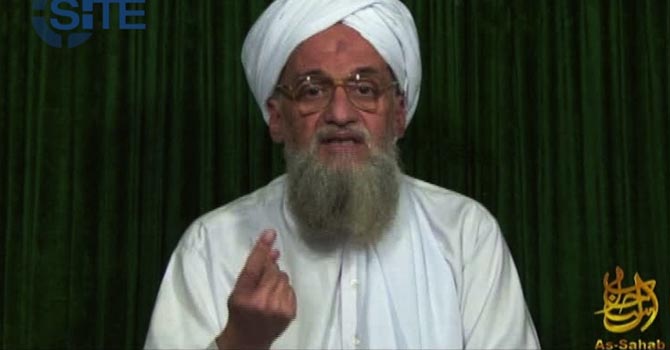
In February, al Qaeda leader Ayman al-Zawahri called on Muslims from Iraq, Jordan, Lebanon and Turkey to join the Syrian uprising, which began in March 2011 with mass protests inspired by the Arab Spring, then grew into a bloody insurgency as the opposition took up arms to fight a fierce government crackdown.
Rebel fighters have launched increasingly deadly attacks on regime targets, and several suicide bombings that bear the hallmark of al Qaeda in Iraq indicate extremists are joining the fray.
Activists say more than 14,000 people have been killed since the revolt began. Syria severely restricts the media in the country, making it difficult to gain a credible account of events on the ground.
On Tuesday, the SITE monitoring group, which tracks militant chatter on the Internet, said the Al-Nusra Front released statements on extremist websites in late June saying the string of attacks were to avenge the killings of Syrians by the government.
Military defections also have been on the rise.
The Britain-based Syrian Observatory for Human Rights and other opposition websites said Thursday that Brig Gen Manaf Tlass, a member of the elite Republican Guards and a son of a former defense minister, reportedly had defected and fled to Turkey. If confirmed, the defection would be a major blow to Assad.
Tlass is a top Sunni general in a regime made up mostly of members of Assad's Alawite sect and was once a close confidant of the president’s.
The Observatory quoted “multiple sources” in Syria as saying that Tlass had left Syria and was expected to formally announce his defection. Turkey did not immediately confirm the reports.
The violence already has drawn in Syria’s neighbors.
The bodies of two Turkish pilots were recovered from the seabed Thursday after US ocean explorer Robert Ballard, best known for discovering the wreck of the Titanic, helped locate them nearly two weeks after their jet was shot down by Syria.
A Turkish official said Ballard, aboard his deep-sea exploration vessel R/V Nautilus, found the bodies Wednesday nearly 16 kilometers off the Syrian coast after the Turkish navy had pinpointed the area. The official spoke on condition of anonymity because he was not authorized to speak publicly.
The June 22 incident fueled tensions between the two neighbors and Turkey quickly deployed anti-aircraft missiles on the border.
The head of the country's UN observer mission said the violence in Syria has reached unprecedented levels, insisting a cease-fire is needed in order for his teams to resume their work.
About 300 UN monitors were sent to Syria to provide an unbiased look at the violence as part of a peace plan put forward by UN-Arab League envoy Kofi Annan, but a truce has failed to take hold and the observers have been confined to their hotels since June 15 because of the bloodshed. “The escalation of violence, allow me to say, to an unprecedented level, obstructed our ability to observe, verify, report as well as assist in local dialogue,” Norwegian Maj Gen Robert Mood told reporters in the Syrian capital Damascus. He urged both sides of the conflict to have the “moral courage to break out of the cycle of violence” and engage in dialogue.