QUSAYR: In Syria's rebel-held city Qusayr, which has been besieged by government forces for months, the shelves are empty and the market practically destroyed as residents prepare for a difficult Ramadan.
“There are only 50 grocery stores still standing in the whole of Qusayr, and their shelves are empty,” sighs merchant Nadim, with the annual fasting month just days away.
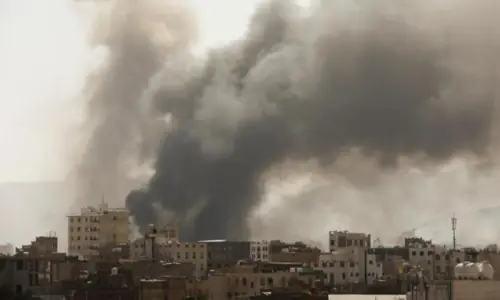
Of Qusayr's original 30,000 residents, most have fled and just 10,000 remain. Regime troops have relentlessly bombarded the besieged city in the central province of Homs near the Lebanese border.
The army has destroyed most of the town market, and the siege has cut off all the main supply lines. Any food supplies that do make it into Qusayr have to be smuggled in.
“Ramadan starts in 10 days and the situation is bound to get worse,” says Nadim, concerned that supply lines may be hit.
During Ramadan, Muslims fast from dawn to dusk and strive to be more pious and charitable. Families traditionally share generous evening meals to break their fast.
But this year, for those trapped in Qusayr, hope is fast waning amid the violence and food shortages.
“We have to feed some 2,000 people because they have lost everything,” says Abdel Karim Yarbad, a wealthy merchant from Qusayr who manages the stock of food supplies that are smuggled in.
“We never had poverty here before. Now, were it not for us, some people would starve to death.”Among the products handed out as assistance are sugar, rice, pasta and pulses, says Yarbad. Milk powder is available for families with children, but sunflower oil for cooking is in constant shortage, he adds.
Most of the food that is smuggled into Qusayr is paid for by donations from abroad.
“Many Syrians living in Europe or the United States send us money to help us buy staple food products,” Yarbad says.
“Qatar, Saudi Arabia and other Arab countries only cover about five percent of our needs. Every once in a while, we receive donations from inside Syria,” he adds.
Residents have started to stockpile food in case Qusayr becomes completely cut off. “We don't know what is going to happen tomorrow or the day after,” warns Yarbad.
“It's better to stock up in case supplies come to a total halt.”
Every day, vehicles bringing in supplies manage to circumvent regime troops surrounding the city.
“Several smugglers bring us food from Damascus and Aleppo” in northern Syria, says Yarbad. “Every day they risk detention or execution for trying to help us.”
For the city's besieged residents, there is no choice but to rely on smugglers. “Most shops closed down a long time ago, when their owners decided to flee,” says a shopkeeper who stayed, identifying himself as Hassan.
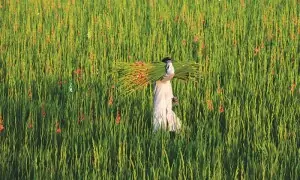
The fields surrounding Qusayr have also become out of bounds, as regime troops control most of them. “They have even mined many of the fields, and caused much destruction, to make us go hungry,” Hassan adds.
Farmers trying to reach their fields are detained if troops catch them.
Back in the heart of Qusayr, Omar laments the bitter loss of the traditional market. “This street was once home to Qusayr's market,” says Omar, whose grocery shop was destroyed by shelling two months ago.
The market is now completely abandoned, and shelling has ripped shops to shreds.
“The market was one of the regime's first targets,” Omar says. “Its goal was to deprive residents of food so we wouldn't be able to resist the siege for long.”