WHAT is being spun by Pakistani officials as a great diplomatic triumph is in effect an embarrassing climbdown. All it took was an ambivalent ‘sorry’ to melt our lofty claims of ‘honour’ and ‘sovereignty’.
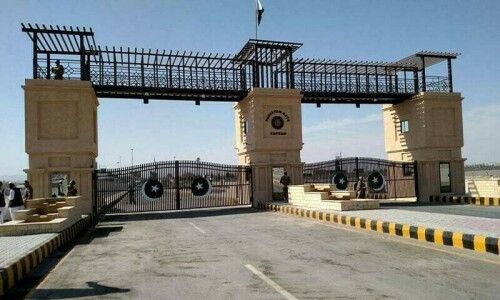
After seven months of confrontation, Pakistan last week agreed to reopen the supply routes for the US and Nato forces in Afghanistan ending a bitter stand-off with the US.
The supply trucks got into action hours after US Secretary of State Hillary Clinton in a telephone call to her Pakistani counterpart read out a calibrated statement saying, “we are sorry for the losses suffered by the Pakistani military”.
Not only did Ms Clinton avoid using the word ‘apology’ which Pakistan has sought after the death of 24 of its soldiers in American air strikes in November, she was persistent with the US position that the incident was the result of mistakes by both sides.
The Pakistani foreign minister reportedly agreed with the US assertion which is quite contrary to the military inquiry committee report that the US attack on the Salala post was deliberate.
Not to forget that this conflicting version of the incident was the major reason behind Pakistan’s decision to close down Nato supply routes and to review its relationship with Washington.
Have we now rejected our own report? If so, should we not acknowledge our mistake publicly and apologise to the families of the soldiers killed in the incident? That also raises questions about the actions we have taken following the fatal strikes resulting in a complete breakdown of our relationship with the US.
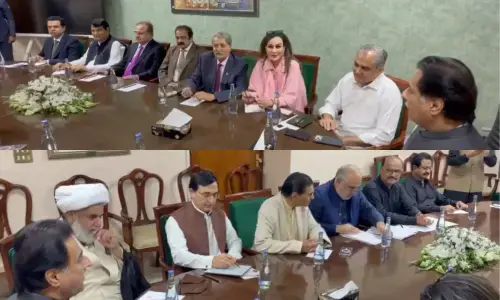
Indeed, the US statement exacted after weeks of intense behind-the-scenes negotiations between the finance minister Hafeez Shaikh and the US undersecretary of state Thomas Nides was approved by the military leadership sitting on the Defence Committee of the Cabinet as well.
It was in the meeting between President Zardari and Hillary Clinton in Chicago in May that the two officials were assigned the job to thrash out a deal for the reopening of supply routes. In the following eight weeks, they worked on a compromise solution to what had become a very complex issue.
Only the top leadership including the president, the prime minister and the army chief were in the loop as the final text of the deal was discussed. With all the effort put into it, the agreed statement has nothing much to offer that will bring any dramatic change to the situation.
It is merely an acceptance of a status quo ante by Islamabad as Washington turned the screw on Pakistan. The government seemed to be so eager to wind up the deal that the US secretary of state was informed about the decision to reopen the ground lines of communication even before the DCC and cabinet meetings.
There was never even a remote possibility that the Obama administration would relent on the issue of apology especially as the presidential elections came close.
Besides, the environment in Washington has turned increasingly hostile to Pakistan with growing voices in the Congress for cutting off aid to the country. That has also toughened the White House stance.
The closest the US came to apologising was in February this year when Ms Clinton was to meet Pakistani foreign minister Hina Rabbani Khar in London. There was a clear sign of softening in the White House stance. But then the Pakistani government advised Washington to hold on to it till the parliamentary policy review was completed.
Several months were then wasted in the parliamentary debate on guidelines for resetting bilateral relations. That prolonged process and the 35-point parliamentary recommendations made the negotiations more complex.
The window of opportunity was lost as the Obama administration took its apology off the table after the bloody attack in April on Kabul by the Haqqani network which American officials allege is being backed by the Pakistani military and the ISI.
In fact, Pakistan boxed itself into a corner from where it became extremely difficult for it to negotiate new terms of engagement with Washington.
The civil and military leadership watched helplessly as the CIA intensified drone strikes ignoring the parliamentary resolution that called for cessation of all such actions inside Pakistani territory.
Instead of taking a long-term strategic view of the critical relationship, Pakistani officials initially centred the negotiations on extracting higher transit fees on the supplies going through Pakistan.
That provoked a strong reaction not only from the US but also from other Nato countries. This mercenary approach diverted focus from other critical issues straining bilateral relations. The demand for a higher transit fees was finally dropped as part of the deal, but the damage had been done.
Similarly, an apology was important, but it was not the only issue the two countries needed to resolve to end the stalemate.
Salala was not the cause, but a symptom of a deep-rooted problem resulting in a complete breakdown in the relationship.
While the coercive policy of the Obama administration may have been a major reason for the estrangement, the miscalculations of the Pakistani civil and military leadership, a lack of a clear policy direction and ambivalence in cracking down on the Haqqani network in North Waziristan have also added to the widening trust gap.
The reopening of supply routes may help lower the temperature in bilateral relations, but the main sources of tension between Washington and Islamabad persist.
A double drone strike that killed some two dozen people in North Waziristan just a few days after the agreement does not give people much faith in the claims by the Pakistani officials that the relationship between the two countries are on the mend. Relations will remain broken unless major policy differences are resolved.
The writer is an author and a journalist.