0
0

Reviewed by Shagufta Naaz
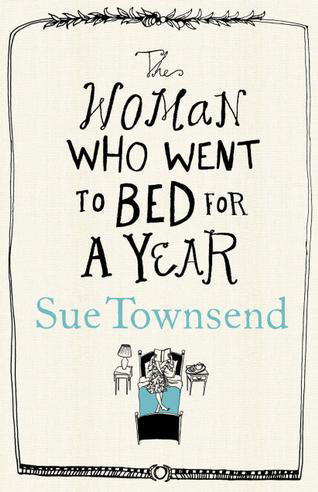
IF there’s one woman who deserves to go to bed for a year, it would be Sue Townsend, author of the phenomenally successful Adrian Mole series.
Struggling to raise three children after her divorce, she often worked three jobs at a time (one for each child, she jokes) while writing in her spare time. She got her break in 1982 with the publication of The Secret Diary of Adrian Mole, which went on to become the best selling book of the decade in Britain. Over the next 30 years she wrote seven more Adrian Mole books as well as a number of stand-alone novels, plays and non-fiction. Though chronic diabetes has robbed Townsend of her eyesight, she is still going strong and has not lost her trademark sense of humour and strong appreciation of the ridiculous, as is apparent by the title of her latest offering, The Woman Who Went to Bed for a Year.
Anyone who has read The Queen and I, a delightful account of the British Royal Family struggling to survive in council housing after the end of the monarchy, knows that Townsend loves to play with the preposterous. And what could be more preposterous a scenario than a woman taking to her bed for a year.
Eva Beaver has been married for 25 years to a man she discovered she didn’t love exactly 11 minutes after she married him. She has devoted her life to making a home, caring for her family and keeping everything functioning smoothly until the day her two children leave for university. That’s when she decides to go to bed — and stay there.
Her husband calls it empty nest syndrome and panics about who will cook, clean and basically run his life for him. His mistress of eight years (yes, he can’t make breakfast for himself but he can have an affair with a woman almost half his age) believes Eva is making a desperate bid to keep her husband from leaving; Eva’s mother envies her — “wish it was me in that bed” — and her mother-in-law thinks she’s drunk. But what does Eva think? Why is she in that bed and what does she really want? Eva doesn’t have an answer to that.
As we gradually get to know Eva through her soliloquies we find that all her life she has been so busy being what others expected her to be that she has forgotten who she truly is — or perhaps she never knew.
Perhaps one of the most poignant scenes in the book is when Eva indulges in a tomato and mozzarella salad; clearly the first time she’s had a dish put together for her own pleasure rather than that of the family. But unfortunately, the holiday is short-lived. Even in bed, Eva finds herself the object of others’ expectations. People drop in at odd hours for advice; a young woman claims to have discovered Eva’s image in a chapatti and before she knows it, Eva is being hailed as a saint.
The Woman Who Went to Bed could have been a delightful study of how other people’s perceptions mould our lives; it could have been a fantastic statement about a woman discovering her true self and rising phoenix-like from the ashes of her dreary past. Unfortunately it dissolves into a morass of unlikable characters who flit in and out of the pages at will — it seems even their creator doesn’t like them enough to give them some kind of a coherent plot thread, or breathe even a spark of life that would raise them above caricatures of themselves.
There is a moment when one feels a flash of sympathy for Ruby, Eva’s mother, who takes out two mugs for coffee before she remembers her husband is dead, but it’s just a short moment and then Ruby goes back to being a soulless rendition of a crotchety old woman. And it’s the same with every character except Alex. The handyman who falls in love with Eva (one has to wonder why) and becomes her self-appointed caretaker is the only person the reader might like enough to hope that he will get out of this madhouse before it’s too late.
Weak as all the characters are, the biggest disappointment has to be Eva, the person we all pinned our hopes on. From the moment Eva takes to her bed we wait for an ‘aha’ moment; the point when she will become the woman we all want her to be — strong, confident, in control of her life.
Unfortunately what we get is a woman who devolves into a spoilt child; throwing tantrums and making life difficult for anyone still paying attention to her. In a strange kind of way, there may even be a point to this: perhaps Eva has decided she is not going to live up to anyone’s expectations, not even the readers’. If you can live with that, and if you have a rather strong masochistic streak, this may be the book for you.
The Woman Who Went to Bed for a Year
(NOVEL)
By Sue Townsend
Penguin Books,UK
ISBN 071815715X
448pp. £18.99