0
0

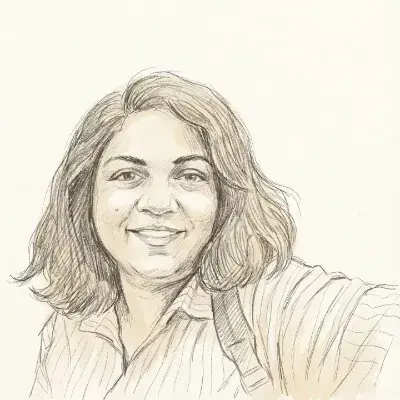
KARACHI: “Pakistan Scrabble Association [PSA] may believe that I am here on their invitation but I am really here for the youth. It was their enthusiasm for the game which drew me to this country,” laughs Karen Richards, chairperson of the World Youth Scrabble Organisation Committee.
The woman is in Karachi with her 20-year-old son, Alastair Richards, who happens to be one of the best scrabble players in the world today. He just won the Penang Open Championship in Malaysia two weeks ago where he defeated the reigning world champion, Nigel Richards, four times and is a serious contender for the world title.
This is the duo’s first visit to Pakistan although they have been to India several times. “We felt very welcome and right at home the moment we handed our passports to the airport official at the desk who said to us ‘Welcome to Pakistan!’
“We have travelled to many countries but no one has welcomed us like that. But then maybe there aren’t that many tourists coming to Pakistan,” Karen wondered aloud.
Asked if they had any reservations about coming here, Alastair says, “Well, we had heard that Pakistan is a dangerous place to visit.
“But then on our visits to other countries we hear strange things about our country, too, and are often taken aback by them.
Like someone in Europe told us scary things about the Brisbane Flu. Now we live in Brisbane and don’t think it to be that big a deal. So we know firsthand how the media tends to blow things out of proportion, and never really believed that Pakistan could be as dangerous as people thought it to be.
“The only thing that I found odd was the amount of forms we had to fill for the visa application and one of the questions in there about our blood group. I mean, where did that come from?” she added.
Karen is in Karachi to conduct training sessions for youngsters as well as adults. She and her son also participated in the two-day scrabble tournament held at Beach Luxury on July 14 and 15.
About scrabble and what drew them to it in the first place, the mother said that she started playing about 50 years ago when she was seven years old. “We had no television as we didn’t even have electricity so seeing me having nothing to do in my spare time, my grandmother thought of teaching me scrabble and cards. And then she stopped playing scrabble with me after I started beating her at it,” Karen laughs at the memory. “But I only started competing 15 years ago,” she added.
The son says that he was taught the game by his mother at the age of five and he started competing at the age of seven, which he has been doing regularly for 13 years now.
Alastair, who has been home schooled, went to university early, when he was 16 years old to graduate at 19. He is soon to join med school, where they will start him on patient rounds immediately as he has already finished university. “And he is only 20 at the moment,” his mother pointed out.
Asked if scrabble had anything to do with his doing so well academically, the mother said: “Yes, it must have. Our younger generation is only whiling away time watching TV. They are not challenging their minds.
“Scrabble is a great way to get the brain going. The letter patterns are similar to those in mathematics or music. So people who like mathematical puzzles and are also into English vocabulary find it an interesting pastime. Then there is also a social side to it,” she explains.
“Work study is your ammunition in scrabble,” she says while waving the big scrabble dictionary she had in her lap. “Practice and study are the keys to do well in scrabble. And since the game exercises the mind I want it to become a regular school activity,” she said.
“Schools in Thailand have made scrabble a school activity for 25 years now. And Malaysian schools have had it for 10 years.
You should see how smart the kids in these two countries are and how ahead they are in scrabble,” she said.
“But then it was a pleasant surprise for me to see that children from Pakistan do so well in the World Youth Scrabble Championship [WYSC] on their first attempt in the 2010 event. They did even better last year and now we are here to inspire them even further and help them do better by giving them techniques. My son will also help in this as he explains strategy better,” said Karen, who is the brain behind the WYSC, the most exciting event on the scrabble calendar, and organised its first edition in 2006. She also hopes her visit would help prepare Pakistani youth even better for the next WYSC to be played in England in December.
“A scrabble championship is also a big social event. It is like the United Nations with people from all over the world participating and your children are the ambassadors from your country there. I have seen Indian youth playing very well, too.
But from my visits to that country and now here, I can see how much time and effort the PSA is spending on the youngsters here. You will soon get ahead,” she concluded.